Computer simulations of quad bike risks do not reflect reality

Guest contributor David Robertson discusses the  differences between risk simulations and real risk data in relation to quad bike safety:

“The motion picture blockbuster “Avatar”, for the time we are in the cinema, would have us believe that Sam Worthington can turn into a giant blue man on a faraway planet.  James Cameron used computers to deliver us this illusion. In science (and particularly with safety) we must be able to distinguish between computers that are valuable tools and computers that don’t represent reality.  Dynamic Research, Inc.(DRI) chose 113 actual quad bike (ATV) accidents to simulate in a computer model.

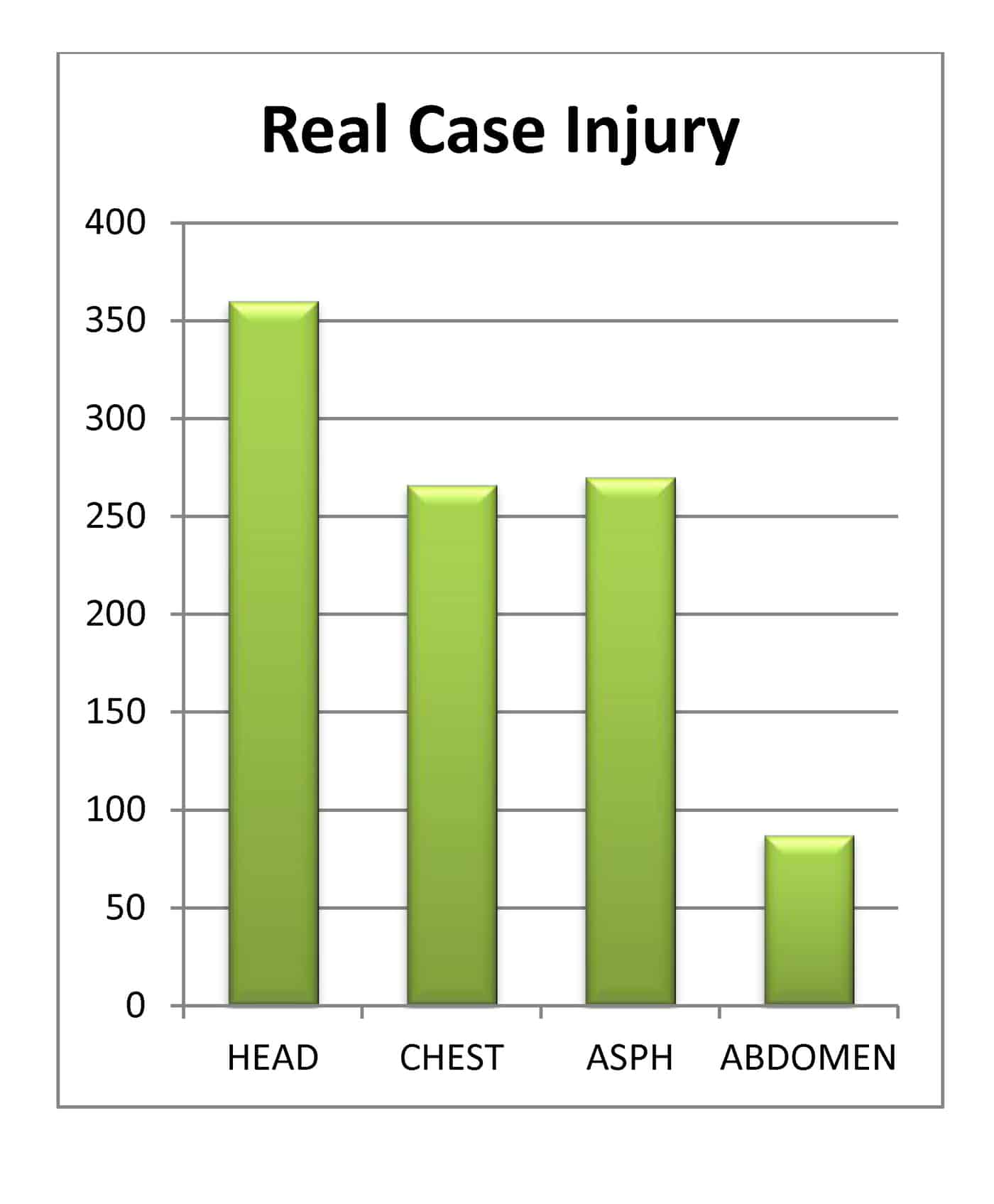
The first table below shows the injuries DRI record as what really happened from all the 113 cases, but represented as approximate normalized injury cost (ANIC)*.   When DRI’s computer runs the same cases, one would expect a similar result.  The results are shown in the second table (ANIC), note the scale on the left has had to be changed (table 2 should be about 10 times taller if the same scale in table 1 was used) because head injuries rose from 360 points to well over 3000. Equally astonishingly is that abdomen injuries have vanished altogether and chest injuries dropped from 266 to a next to nothing (23). Asphyxiation was not even included in the computer model. Continue reading “Computer simulations of quad bike risks do not reflect reality”

Radio National OHS program

On 21 September 2010, Radio Australia’s regular program Australia Talks conducted a live interview concerning occupational safety and health.

For those who have been listening to the show for some time would have been surprised that the program covered much of the same old OHS ground.  Similar statistics, similar questions of what are the most dangerous occupations, similar assumptions and the same misunderstanding that discussions about OHS law are the same as discussions on safety management. Continue reading “Radio National OHS program”

UK case exposes the hypocrisy of leadership commitment

Most safety professionals can tell stories about how workplace injuries are hidden so that bonuses or rewards are still distributed even though they are not warranted.  Most of these examples are at the shop-floor level where rewards, although much anticipated, are minor – first aid kits, movie tickets, sometimes money – and where peer pressure can be quite overpowering.  But occasionally a situation is revealed where senior executives also rort the system in order to obtain a reward or a bonus.  In September 2010, the UK union Unite has revealed just such a case in Network Rail, a case where the chairman has acknowledged that greed played a role. Continue reading “UK case exposes the hypocrisy of leadership commitment”

Confusion over bullying and sexual discrimination on display in air traffic controller media reports

The Australian media is providing considerable coverage to the legal claim by two female workers against Airservices Australia over bullying and sexual discrimination.  Airservices Australia is a government organisation that control aircraft movement over Australian airspace.

The details of the harassment mentioned in the media are quite offensive and have no place in the modern workplace.

There are a couple of OHS related issues that pertain to the legal action and the media articles.  Firstly, the media struggles to differentiate between sexual discrimination, sexual harassment and workplace bullying.  Bullying has the most direct relationship to occupational health and safety but the others generate stress in the workplace and therefore the impacts, if not the actions, fall within the OHS purview.  The Australian Financial Review (AFR) (page 7, not available online) has a headline “Flight controllers sue for sexual discrimination” yet the article reports on bullying.   Continue reading “Confusion over bullying and sexual discrimination on display in air traffic controller media reports”

An executive decision leads to over six deaths

“Don’t put all your eggs in the one basket”.  The first time we hear such a saying is likely to be from our parents or our grandparents but it could equally apply to all the applications of risk management.  Clearly someone at Sundance Resources forgot this wisdom when its board members boarded a plane in Africa to visit a mining site.  The plane crashed and all on board died.

The remaining Sundance executives quickly acknowledged the error in media conferences shortly after the incident even though the decision was understandable.  In safety and workplace parlance, the board took a “shortcut” in safety, an act that would have been soundly disciplined for most workers.

Everybody takes shortcuts at work and sometimes these shortcuts lead to injury or death.  It is easy to say that the cause of an incident is a specific decision, the shortcut but it was not only the Sundance executive’s decision that contributed to the death.  In this instance the board entered a plane that later fell from the sky.  If they had made the same shortcut but on a different plane the outcome would have been very different.

Deaths always have a context to them and present a variety of “what-ifs” when we investigate.  A specific combination of events/decisions/actions/shortcuts lead to a death.  The Sundance shortcut was clearly the wrong decision, at the wrong time, in the wrong place and with the wrong mode of transport but there are more contributory factors that will become evident when the wreckage is fully recovered. Continue reading “An executive decision leads to over six deaths”

New Zealand farm advocates talk briefly on quad bike safety

New Zealand’s Accident Compensation Corporation (ACC) has released some statistics on quad bike incidents in support of its attendance at field days in mid-June 2010 and the release of three new agricultural safety publications.  The media release quotes research from the Otago University.

“Three farmers or agricultural workers died and nearly 300 were injured in quad bike accidents on farms last year, according to ACC claims figures.

Recent research from Otago University forecast that in any given year farm workers will lose control of quad bikes on approximately 12,645 occasions, resulting in about 1400 injuries.  Not all of these will be registered as workplace injury claims with ACC.”

The risk of jumping to conclusions from these statistics is that the ACC is not only concerned with workplace incidents and hence the conditional sentence at the end of the quote. Continue reading “New Zealand farm advocates talk briefly on quad bike safety”

Comcare at Senate Estimates – enforcement performance indicators

Comcare is often seen as a minor player in OHS regulation in Australia because, although it has national coverage, it limits its OHS and workers’ compensation activities to specific industrial and public service sectors.  Although it is limited, it has a monopoly in those sectors and is powerful.  Its role in Australia’s harmonisation program seems to be just another OHS regulator but it has a unique role and structure.

Recently, Comcare’s CEO, Paul O’Connor, and Deputy CEO, Steve Kibble, addressed the Australian Senate’s Education, Employment and Workplace Relations Legislation Committee in the annual Estimates hearings.  Hansard reports Kibble’s comments (around page 32) on the enforcement activity of Comcare:

“Comcare has initiated 16 civil court proceedings in relation to alleged breaches of the OHS Act since 2004…..

Recent prosecutions include a matter in relation to a federal agent of the Australian Federal Police for a breach of his individual duties of care.   Continue reading “Comcare at Senate Estimates – enforcement performance indicators”

Concatenate Web Development
© Designed and developed by Concatenate Aust Pty Ltd