Workplace Health Management programs save one hospital around $200k

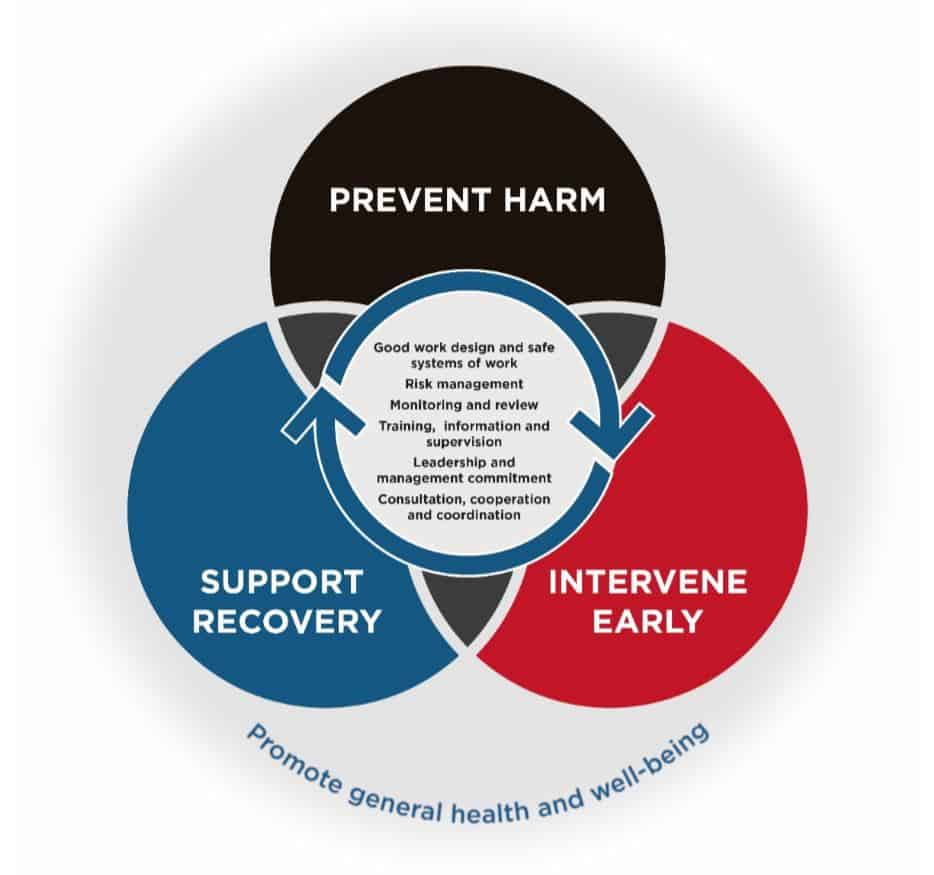
It is always good to see researchers assessing issues related to workplace health and safety rather than relying on overseas data.  Recently researchers from the Australian Catholic University and St Vincent’s Hospital in Melbourne looked into “measuring the effectiveness of workplace health management programs” .  The research adds to our understanding of these programs but the relevance to occupational health and safety (OHS) is limited.

The researchers,

Subscribe to SafetyAtWorkBlog to continue reading.
Subscribe Help
Already a member? Log in here

Front page OHS article gives half the story

Years ago I was advised how to read a newspaper article – the first two paragraphs and the last.  The exclusive front page article in The Australian ($ paywalled) on August 15 2018 about occupational health and safety (OHS) management at Sydney’s light rail construction project is a good example of what journalists choose to write and what they are obliged to write.

“A pedestrian had ribs broken, workers have been run over and fallen in holes, and there have been near-misses that could have caused deaths or serious injuries in hundreds of safety breaches on the Sydney CBD light rail project over the past 18 months.

The extraordinary catalogue is detailed in CBD and South East Light Rail Advisory Board minutes obtained by The Australian.”

and

Subscribe to SafetyAtWorkBlog to continue reading.
Subscribe Help
Already a member? Log in here

Stop whingeing and manage OHS properly

The Australian Securities Exchange (ASX) regularly updates the Corporate Governance Principles and Recommendations administered by its Corporate Governance Council.  The Council has recently closed submissions on its consultation on the Fourth Edition.  The submissions are worth looking at to see how occupational health and safety (OHS) fairs, and it is also worth looking for mentions of the “social licence to operate”.

The 3rd edition of the principles provides examples of what it means to be a “good corporate citizen” (page 19),

Subscribe to SafetyAtWorkBlog to continue reading.
Subscribe Help
Already a member? Log in here

The future of work and OHS – yeah, but…..

ASHPA, the Australian Safety and Health Professional Associations has been quiet for a while but sponsored La Trobe University to undertake some research into the future of work and its impacts on occupational health and safety (OHS) professionals, hygienists, ergonomists and others.  It is an interesting insight into the thoughts and perspectives of safety and health professionals but it also cries out for interpretation and analysis.

The report, not yet available online, is based on the responses of 733 safety and health professionals to an online survey.  The statistical profile of the profession in Australia is useful and the key findings

Subscribe to SafetyAtWorkBlog to continue reading.
Subscribe Help
Already a member? Log in here

Queensland enforces its labour hire laws while Victoria is still working theirs out

Sunset over Lockyer Valley, in South East Queensland, Australia.

The Queensland government was the first Australian State to introduce a licencing scheme for the providers of contract workers and temporary labour.  As a result, enforcement activity by the regulator there will likely set the scene for similar actions in other States particularly as Victoria has opened it public consultation on its labour hire regulations. Sadly workplace health and safety seems to have been overlooked in Victoria’s draft labour hire regulations and current consultation process.

Last week the Queensland Government

Subscribe to SafetyAtWorkBlog to continue reading.
Subscribe Help
Already a member? Log in here

Firefighting, WorkCover and OHS

Melbourne, Victoria, Australia – 2011 July 10: Fire fighters supporting colleague on roof gaining access to a garage on fire in an residential area.

Some years ago there was a rumour that no workers’ compensation claims by firefighters employed by the Metropolitan Fire Brigade (MFB) were investigated and/or rejected by the MFB. The reason was that the United Firefighters’ Union would question any investigation on behalf of its members which would likely result in increased industrial relations tension.

Workers compensation data obtained by SafetyAtWorkBlog from the MFB under Freedom of Information seems to have scotched that rumour but does provide some interesting information which may also justify radical workplace health and safety thinking for this sector.

Subscribe to SafetyAtWorkBlog to continue reading.
Subscribe Help
Already a member? Log in here

Don’t let safety culture be an excuse for doing nothing

It is a common tactic for procrastinators to acknowledge a problem and then point to an ill-defined, fluffy concept as the problem because that fluffiness makes it almost impossible to change, some use the phrase “wicked problem” similarly.  The fluffy concept may be too difficult for most to understand, or the benefits will not be quick enough or not fit into an unrealistic preconceived schedule.  “Safety Culture”, or the currently preferred term “organisational culture that includes safety”, is often used to justify this procrastination.

At the end of August 2018,

Subscribe to SafetyAtWorkBlog to continue reading.
Subscribe Help
Already a member? Log in here
Concatenate Web Development
© Designed and developed by Concatenate Aust Pty Ltd