Workplace mental health and wellbeing strategies must consider suicide

There is an increased blurring between the workplace, work and mental health.  In the past, work and life were often split implying that one had little to do with the other except for a salary in return for effort and wellness in preparation for productiveness.  This split was always shaky but was convenient for lots of reasons, one of which was the management of occupational health and safety (OHS).  However that perceptual split is over, now that mental health has come to the fore in many OHS considerations.

Recently
Subscribe to SafetyAtWorkBlog to continue reading.
Subscribe Help
Already a member? Log in here

Passing the OHS baton

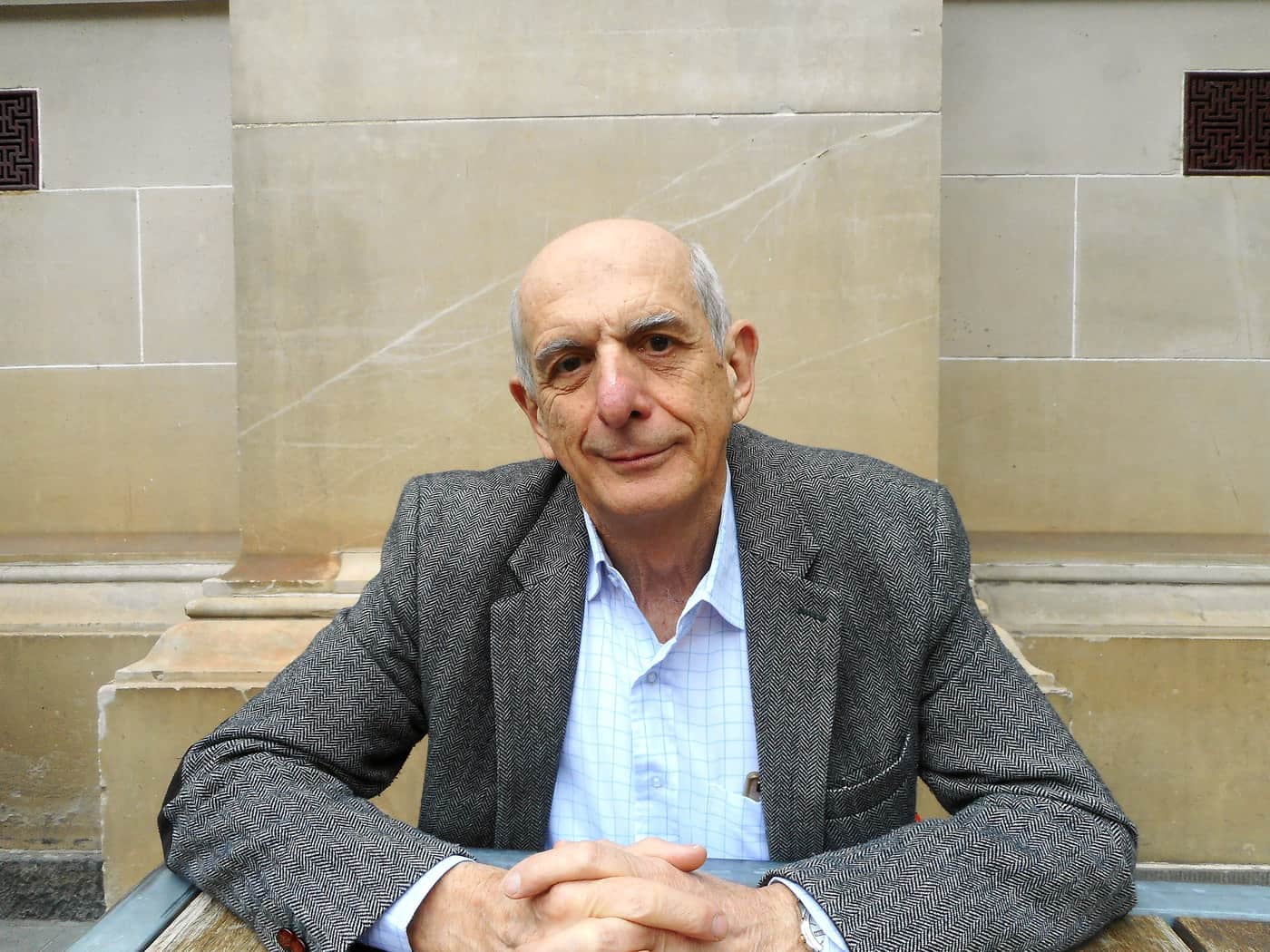
Leo Ruschena has been a fixture in the occupational health and safety (OHS) scene in Victoria Australia for many years.  In a short while he retires from his work as an OHS Lecturer with RMIT University.  Retirement often means that knowledge and wisdom becomes less accessible to the public so SafetyAtWorkBlog spent some time with him recently and asked him to reflect.

Ruschena began his career as a chemical engineer with an economics degree working for nine years at Mount Isa Mines. In the mid -1970s he received a scholarship to study occupational hygiene in London UK, achieving his Masters.  At that time OHS was an emerging area of study, legislation and political discourse.  As Ruschena sees it:

Subscribe to SafetyAtWorkBlog to continue reading.
Subscribe Help
Already a member? Log in here

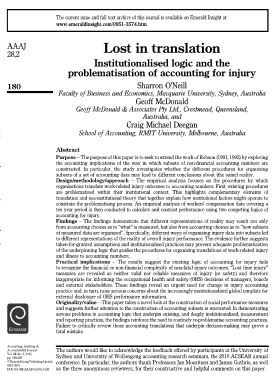
Is the future of OHS based on a flawed past?

It seems that we are constantly being urged to innovate, to be creative and to think differently.  This is equally true in the discipline of occupational health and safety (OHS), but part of thinking differently in the future should also involve reassessing the past.

It is often said that many the OHS performance indicators, predominantly Lost Time Injury (LTI) calculations, have shown a “plateau-ing” of safety performance.  From this common position, companies have moved to new OHS training strategies that involve behaviours, values, cultural norms, safety culture and other employee and organisational recalibrations.  But what if the case in support of these strategies was not as strong as first thought?  What if the “plateau-ing” did not exist or the increase in performance was not as strong as the LTI-based data seemed to indicate?

Academics,

Subscribe to SafetyAtWorkBlog to continue reading.
Subscribe Help
Already a member? Log in here

Leadership conference was hit and miss

The Future of Leadership roadshow was only partly about its topic.  Much of it felt like a professional development day with interesting speakers and storytellers.  By providing stories of failure, reconciliation, and unlearning the organisers could argue that they were also creating future leaders.

A previous article briefly discussed Dan Gregory’s presentation.  One additional element was the catalyst for his Directorship of White Ribbon – a poster which reframed the issue of violence against women as an issue that men can affect. Gregory was advocating being open to alternative perspectives of your reality, your lived experiences, career, communication and profession.  He challenged the audience, as Daniel Hummerdal does his safety audience, to look differently, to look creatively and to analyse our personal and organisational motivations.

Like all good conference speakers, Dan Gregory does not tell you what to think but how to think, and treats the audience like adults who are in charge of their own decisions.

Subscribe to SafetyAtWorkBlog to continue reading.
Subscribe Help
Already a member? Log in here

Half time at the Future of Leadership

This month the “Future of Leadership” conferences are travelling Australia.  The Melbourne stop, on 21 September, started really well with three on-topic speakers but declined strongly after morning tea with at least one speaker who had nothing to say about leadership.  At the half-time break, one hopes that the conference gets back on track because when it was, it was very good.

This leadership conference is very different from occupational health and safety (OHS) conference because it talks about a concept in such general terms that the audience can impose whatever context it chooses.  As this blog is about workplace safety, predominantly, OHS context was paramount.

Subscribe to SafetyAtWorkBlog to continue reading.
Subscribe Help
Already a member? Log in here

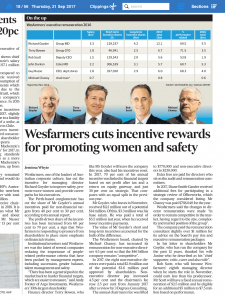
Financial targets preferred over OHS

Today’s issue of the Australian Financial Review (AFR)  contained an article that shows that the trend for companies and boards embracing their occupational health and safety (OHS) obligations is not uniform.  The article “Wesfarmers cuts incentive rewards for promoting women and safety” reports that the Managing Director’s share of annual incentives paid for non-financial targets, which includes OHS, has been reduced from 40% to 30%. Continue reading “Financial targets preferred over OHS”
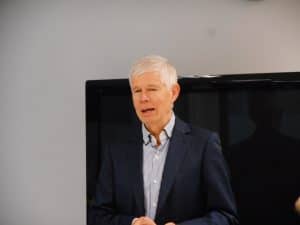
David Caple provides the latest in reality-based OHS thinking

Recently David Caple gave his annual address to the Central Safety Group in Melbourne.  Caple (pictured above) is a prominent ergonomist, an adjunct professor at the Centre for Ergonomics & Human Factors, La Trobe University, a representative on several government OHS-related committees and has an enviable information network.

Fresh from the Singapore OHS conference, Caple speculated on the future of the workplace safety profession at a time when many are indicating an increasing demand for OHS services and advice.  He used a graph of the membership of the Safety Institute of Australia to illustrate part of the challenge.

Subscribe to SafetyAtWorkBlog to continue reading.
Subscribe Help
Already a member? Log in here
Concatenate Web Development
© Designed and developed by Concatenate Aust Pty Ltd