
I travelled to the 21st World Congress on Safety and Health in Singapore as a delegate and a media representative from my home in Australia. Was it worth attending? Yes and no. That may seem a weak answer but I attended in two capacities with two purposes – as an occupational health and safety (OHS) professional and an independent media representative. Both were satisfied a little bit and both could have been better. Here’s a personal report on my professional and media experiences at the World Congress.
Category: Uncategorized
Recent safety videos
The recent World Congress on Safety and Health at Work held a quite extensive media stream under the banner of the International Media Festival for Prevention. One of the entries, “Shoelaces“, has already been mentioned on this blog but there was a much greater variety.
These videos may be several years old (the Congress is held every three years) and can be watched from several perspectives. Several, like “Shoelaces”, offers an immediate emotional impact. Others require or deserve several views. Almost all of them should be appreciated for the creativity that they have applied to the topic of occupational health and safety. Continue reading “Recent safety videos”
Vision Zero, Zero Harm, … WTF?
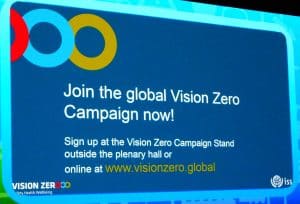 The launch of a “Vision Zero” campaign about occupational health and safety (OHS) was a major element of the recent World Congress on Safety and Health at Work but it has created confusion and some alarm.
The Secretary-General of the International Social Security Association (ISSA) Hans-Horst Konkolewsky told SafetyAtWorkBlog that Vision Zero “is not a Zero Harm campaign”. However confusion appeared on the first day of the Congress when an organisation was given a Vision Zero award for a safety program that the organisation has just and repeatedly described as “Zero Harm”.
The best solution to this confusion is to ignore the Vision Zero branding and look at the intentions and resources behind the razzamatazz. If you do, there is a lot of good information.
Singapore’s Prime Minister shows mature approach to OHS
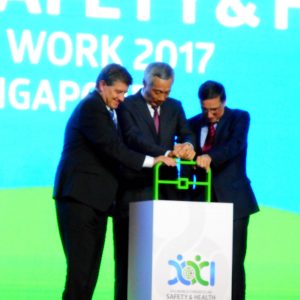
It has been noted that the recent World Congress on Safety And Health at Work had “Vision Zero” as one of its three themes. It was curious that the opening remarks of Singapore’s Prime Minister, Lee Hsien Loong (pictured right), did not mention Vision Zero at all. In fact he was quite measured in his speech which placed him in a better position to argue for real safety targets and initiatives.
In contrast to many business leaders, and some of the speakers at the World Congress, the Prime Minister stated that
“workplace accidents and injuries are almost always preventable.”
The OHS profession urged to have a good look at itself
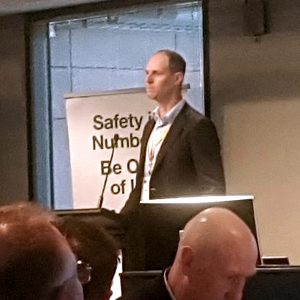 Every safety conference needs a Dave Provan. Provan (pictured right) is researching the occupational health and safety (OHS) profession and discussed this research at a recent conference organised by the Safety Institute of Australia. One of his earliest comments was also the most confronting:
“the safety profession is entirely discretionary”.
Provan’s perspective, shared by thought leaders in Australian OHS deserves further discussion as businesses may be investing in unnecessary people.
Cancer survivors returning to work
 If occupational health and safety (OHS) is to include the “whole-of-life” for workers, companies, products and projects, OHS professionals need to expand their pool of knowledge to meet the demands for an inclusive organisational culture. One recent research paper supports this approach by looking at the return to work of cancer survivors.
Zero Harm evidence is “dubious”
The 21st World Congress on Safety and Health in Singapore has closed. The next will be in 2020 in Toronto Canada. But before the closing ceremony the range of symposia continued. One discussed best practice in occupational health and safety (OHS) and I had the chance to speak about the downside of Zero Harm. The…