Worker’s compensation explained in new social welfare book

Occupational health and safety (OHS) is an integral element of social welfare, even though the practitioners of the discipline self-silo. A new Australian book about Australia’s social services uses workers’ compensation and OHS as a case study for a change.

The Careless State – Reforming Australia’s Social Services” by Mark Considine illustrates the Venn Diagram overlap of public health services, the National Disability Insurance Scheme (NDIS), aged care services, workplace safety and compensation and more. The book is very timely, as many of the social services essential for social harmony and justice have been neglected over the last decade under various State and Federal conservative governments.

Subscribe to SafetyAtWorkBlog to continue reading.
Subscribe Help
Already a member? Log in here

Notable books on safety and work

This end-of-year list is more complex than one of unread books because of the qualitative elements. In writing this article, off-the-cuff, I thought of the three or four books that I could readily remember reading in 2022; those that stuck in my mind for several reasons.

The book that most readily comes to mind from 2022 is the Jessie Singer book “There are no Accidents“. Singer makes the same point as many occupational health and safety (OHS) people have – accidents are not an “act of God”. There is always a cause IF we choose to look. There is always a social, corporate, economic of ethical environment that either encourages or fails to discourage decisions that can lead to harm.

Continue reading “Notable books on safety and work”

Unread books on safety and work

I always separate the books I have yet to read from those I have read, or else I lose track and can miss important books. Below is a list of those books in the hope that subscribers could tell me which they found to be useful and important if they have read any of them.

I have provided links to the books, usually publishers’ pages or reviews if you are interested, and check for special offers. Not all the books are new but new to me.

Continue reading “Unread books on safety and work”

A fair dinkum fair go?

A New Work Relations Architecture is a radical book for Australia. Radical because its authors are proposing industrial relations reform, and Australia has had very little of this since Prime Minister John Howard‘s attempt with Workchoices in 2005. Radical also because it has taken inspiration from the Robens approach to occupational health and safety (OHS) laws.

The new “architecture” (thankfully, the cliche of “ecosystem” was not used) is described as:

Subscribe to SafetyAtWorkBlog to continue reading.
Subscribe Help
Already a member? Log in here

Inspired by OHS but ignoring the shortcomings

A new Australian book has been structured around a “new work relations architecture“. Amazingly, a whole chapter is devoted to the role of occupational health and safety (OHS) in this new structure.

This chapter is written by prominent law academic Ron McCallum AO, offers a good summary of OHS laws and identifies the challenges to those laws in the near future, but its discussion is more reserved than it could be.

McCallum sticks to the suitability of the Robens model of OHS laws which McCallum describes as a type of “managed decentralism”. He highlights challenges to the laws and their operations that will be familiar to readers:

  • climate change
  • gig work
  • working from home
Subscribe to SafetyAtWorkBlog to continue reading.
Subscribe Help
Already a member? Log in here

2022 review indicates the amount of OHS work needed in 2023

The end-of-year reviews are starting to emerge from Australia’s law firms. The most recent release is from Maddocks, who have released several short reports on occupational health and safety (OHS) hazards and suggested controls for employers to apply. So this is a year-in-review for 2022, but it is also a forecast of what needs to be changed in 2023.

Subscribe to SafetyAtWorkBlog to continue reading.
Subscribe Help
Already a member? Log in here

HR, welcome to the OHS world and start getting used to it

In an article on burnout in The Sydney Morning Herald and The Age on December 10 2022 (paywalled), there was a peculiar quote and some paraphrasing of Sarah McCann, chief executive of the Australian Human Resources Institute (AHRI), indicating the size of the challenges facing human resources professionals in preventing psychosocial harm in Australian workplaces.

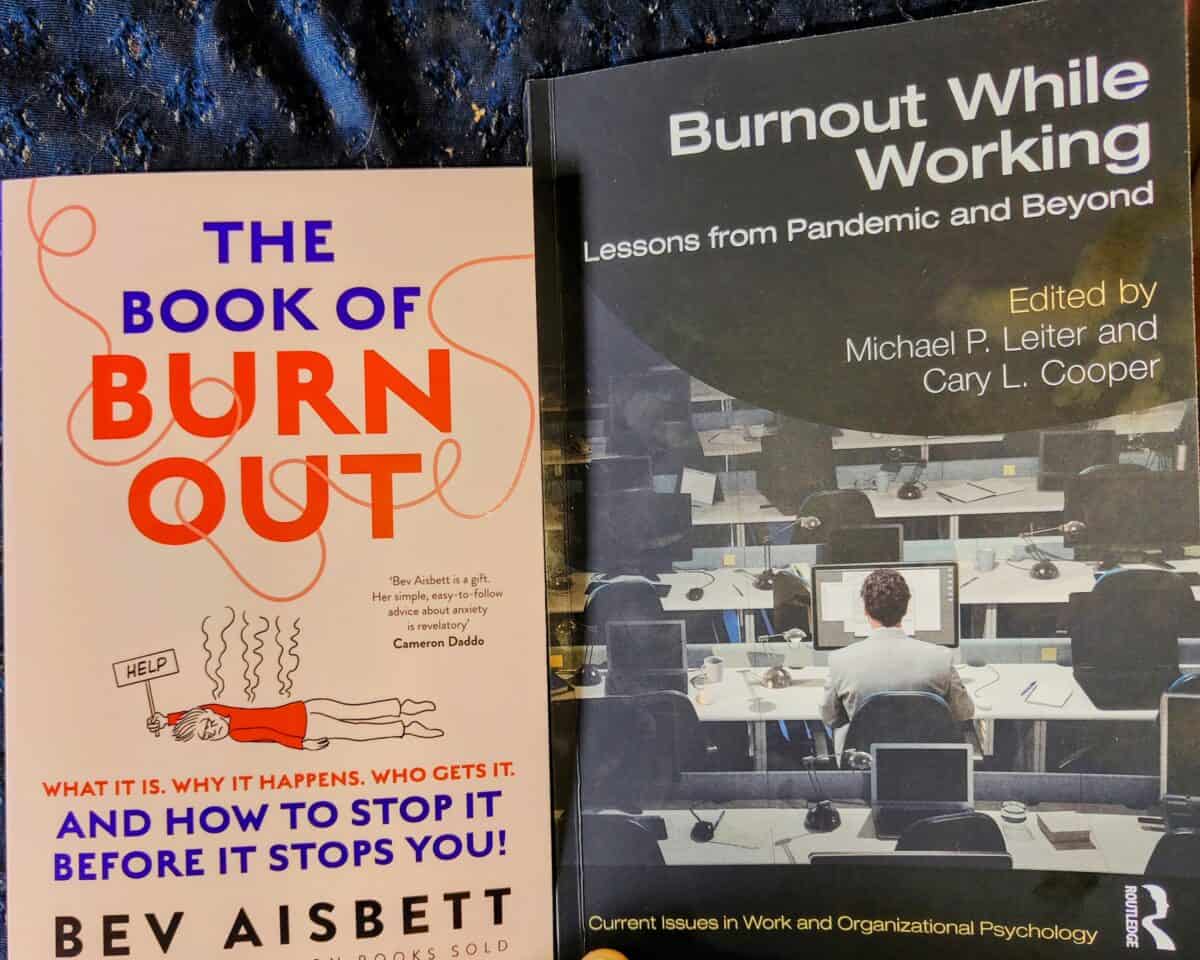
The article is a peculiar one. It states that burnout has been categorised as an occupational risk by the World Health Organisation but then reports on psychological support organisations who are applying the concept outside of work activities. The justification for this is that the work undertaken at home or in caring for a family is unpaid work but still work, so the occupational definition applies. That’s a stretch, but it’s possible.

Subscribe to SafetyAtWorkBlog to continue reading.
Subscribe Help
Already a member? Log in here
Concatenate Web Development
© Designed and developed by Concatenate Aust Pty Ltd