

In the Weekend Australian newspaper, workplace relations journalist Ewin Hannan reported on a presentation (paywalled) made by the Employment and Workplace Relations Minister Tony Burke to the Attorney-General’s Department staff. (Safe Work Australia, currently, exists in this department) From Hannan’s report, the focus seems to have been on industrial relations but it’s useful to consider Minister Burke’s words from an occupational health and safety (OHS) perspective given that it is highly likely that Safe Work Australia personnel were one of the “hundreds” attending or listening in. Burke said:
Category: union
Safety (funding) differently
When Tony Abbott was the (Liberal) Prime Minister, he reduced the commonwealth grants program substantially as part of his austerity and “debt” and deficit” strategies. This resulted in defunding many occupational health and safety (OHS) support and research units of trade unions, industry associations, etc. OHS has been poorly served ever since. The new (Labor) government has an opportunity to resurrect some of these OHS units by allocating some level of funding and, perhaps, expanding it beyond the traditional consultation triumvirate.

OHS change
Recently I have been critical of political speeches concerning occupational health and safety (OHS) for being bland, safe, unadventurous and lacking vision. Recently a reader sent me these words:
Continue reading “OHS change”“In recent years occupational health and safety has become the forgotten element of national workplace relations policy. It’s now time to focus on its importance – to protect lives and livelihoods and to ensure the future strength of Australia’s workers compensation schemes. There’s too much in the balance to let the system decline in effectiveness and increase in cost. Lives are at stake.
Can you vote for OHS?
Australia is in the last few weeks of its federal election. Because it is a national election and occupational health and safety (OHS) is almost totally regulated at the State and Territory level, workplace health and safety is rarely if ever mentioned directly in campaign pledges. However, OHS does have a political campaign context if one accepts that some workplace hazards are caused or affected by social and government policies.
Australian Labor Party
The Australian Labor Party’s suite of campaign policies includes several items that could reduce the mental anguish in the community, thereby encouraging people to take jobs and making applicants more attractive to employers but there are no direct pledges on OHS. It states in its “Secure Australian Jobs” policy that:
Two steps forward and one back
Employers are less criticised about their workplace health and safety performance than the government, even though it is employers who have the primary duty of care for their workers’ occupational health and safety (OHS). The Federal (conservative) government and Prime Minister remind us regularly that the responsibility for OHS sits in the State and Territory jurisdictions. No one seems to accept their own responsibilities for OHS, so it is little surprise that worker health and safety has no effective national coordination.
Recently the Australian Council of Trade Unions (ACTU) released an OHS report entitled “Morrison Missing in Action on Work Health and Safety“. It is also looking in the wrong direction. Of course, the Prime Minister is missing in action – employers have the primary duty of care, which local jurisdictions enforce.
Although this document has good OHS information, references and statistics, it is primarily part of the current federal election campaign, reporting information that the politicians mostly already know.
Continue reading “Two steps forward and one back”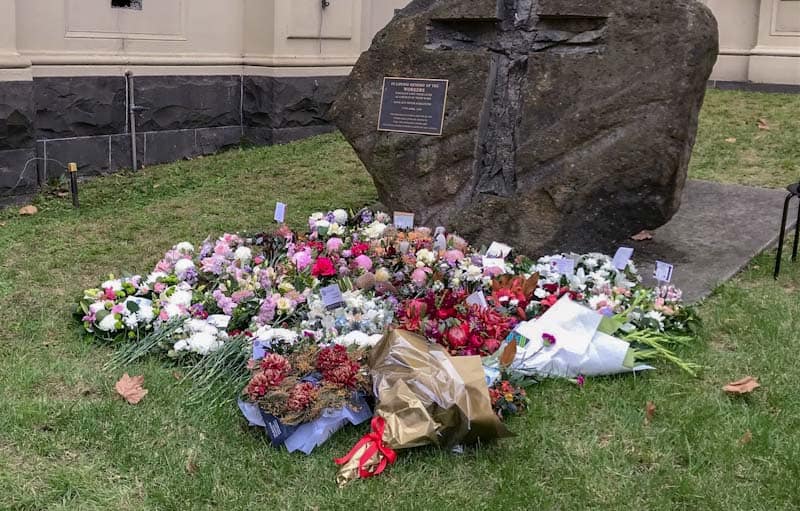
Anger is an energy*
Last week a Victorian politician and a senior bureaucrat spoke about occupational health and safety (OHS) at the Worksafe Victoria awards night. On April 28, 2022, the same bureaucrat and a couple of other politicians spoke at the International Workers Memorial at Trades Hall in Melbourne. Did they say anything useful? Did they say anything that changes or progresses OHS? And who was the audience?

How will people know you’ve won a safety award?
Modern-day events such as conferences, seminars and awards nights rely on social media strategies to maximise the value of the event and the communication opportunities they afford. This year the WorkSafe Victoria Awards night seems to have applied a thin social media strategy even though it has important stories to tell.
Usually, signs, brochures, information booklets and even tables mention the social media hashtag that the event organisers want the audience to use to promote and record the event. This year WorkSafe Victoria mentioned #WSAwards21 at the night’s start and never again. The hashtag was nowhere to be seen. This may be a major factor in the very low Twitter activity.
As of the time of writing, Twitter had 29 mentions of the #WSAwards21 hashtag, most posted by WorkSafe itself. I tweeted five of them. The audience members or finalists have tweeted only three times.