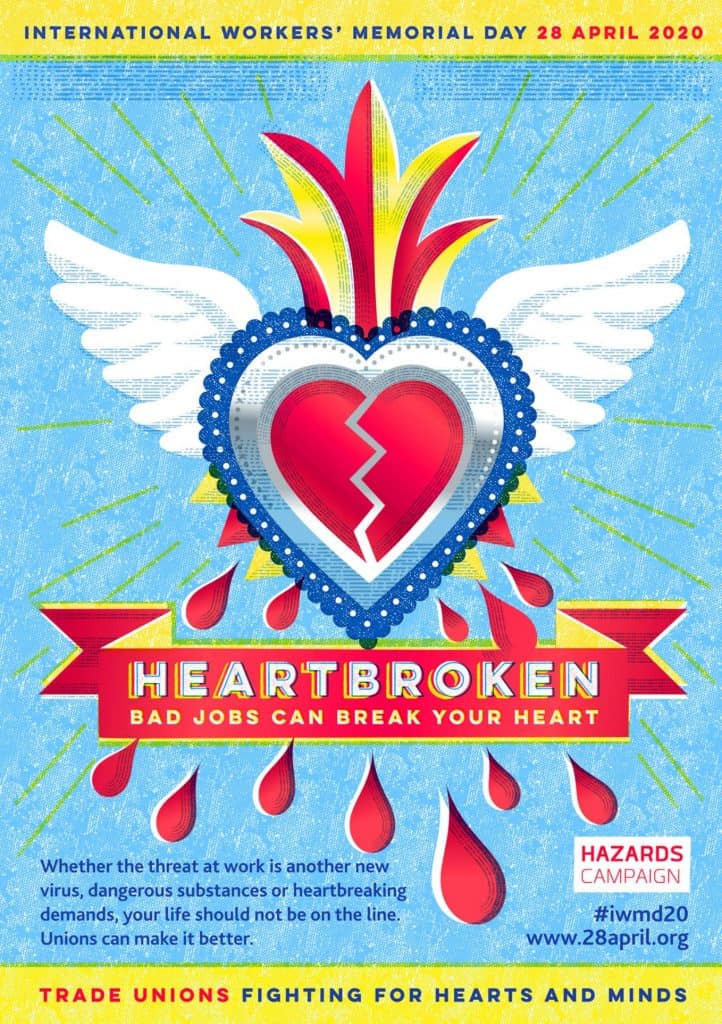
ILO’s World Day on Safety and Health at Work occurs each year on April 28. Events are centred around monuments and places in capital cities and towns, speeches about the importance of occupational health and safety (OHS) are made and symbolic gestures are given.
The World Day is intended to be an acknowledgement of the importance of OHS for all workers and people of all political stances. The aim is to focus on workplace deaths, and the practical actions to prevent those deaths, not the politics of those deaths, but far more prominence is given to the trade union movement’s International Workers Memorial Day held on the same day.
So how will these memorial days work in this year of COVID19?