Australia’s Wellbeing Budget and Living Standards Framework is on its way

Australia’s new Treasurer, Jim Chalmers, shows an awareness of the importance of good mental health in Australia’s citizens and workers but his strategy, which remains in its infancy, has some problems.

In one of Chalmers’ first interviews after the Australian Labor Party won power last month, he was asked about the Budget he will be releasing in October 2022 (the same month as National Safe Work Month!):

Subscribe to SafetyAtWorkBlog to continue reading.
Subscribe Help
Already a member? Log in here

The new approach to mental health at work may need a new profession

Managing psychologically healthy and safe workplaces makes me extremely nervous. I don’t think that anyone in Australia is suitably qualified to meet the new occupational health and safety (OHS) regulations and expectations imposed by OHS regulators in response to community demands and needs. Perhaps we need a new category of professional.

Continue reading “The new approach to mental health at work may need a new profession”

Prohibition on Administrative Controls for psychological health at work

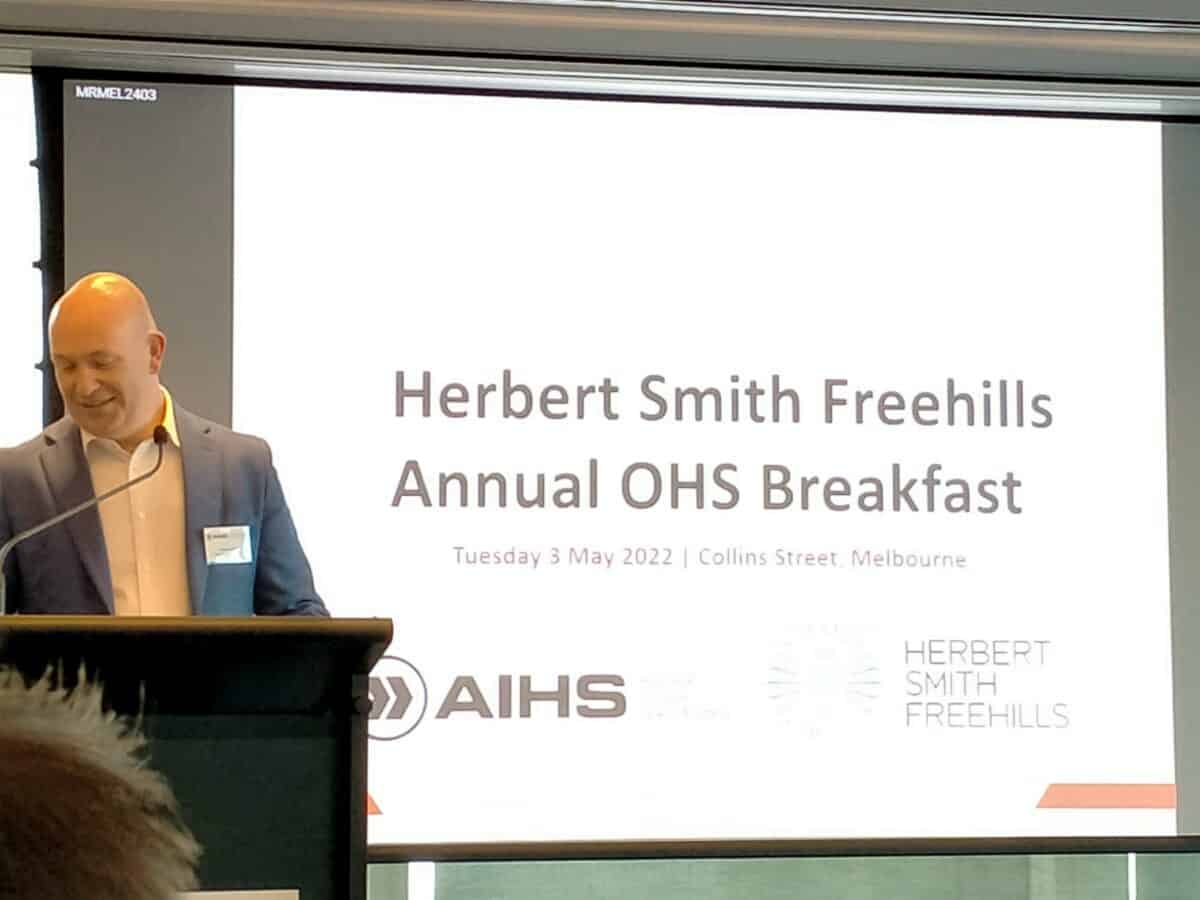
The Australian Institute of Health and Safety (AIHS) and Herbert Smith Freehills (HSF) annual breakfast physically returned this month after a few years of enforced absence. It kept its traditional structure – speeches from the local OHS regulator WorkSafe Victoria, representatives from HSF and AIHS and a summary of a salary survey report focused on occupational health and safety (OHS) professionals. The presentation that made the expense worthwhile came from one of HSF’s Regional Heads of Practice, Steve Bell, concerning new regulations for psychologically healthy workplaces.

Subscribe to SafetyAtWorkBlog to continue reading.
Subscribe Help
Already a member? Log in here

Assessing the best places to work

On April 27 2022, a leading Australian business newspaper, the Australian Financial Review (AFR), included a supplement called the “Best Places to Work” (paywalled). I purchased a hard copy (yes, they are still available) to look for occupational health and safety (OHS) mentions.

“Best” is hard to define. It could mean safest, it could mean best paid, it could mean friendliest. Because the supplementary allocates awards for the best places to work, the judging consultants, Inventium, included its criteria. You can already guess some of the focus of the awards as Inventium is described as “Australia’s leading behavioural science consultancy”. The assessment of the applicants involves:

Subscribe to SafetyAtWorkBlog to continue reading.
Subscribe Help
Already a member? Log in here

Burnout causes are organisational. Who knew?

This blog has written frequently about “burnout” in workplaces, especially since the condition was defined by the World Health Organisation in 2019. I have seen it used many times as a shortcut, or synonym, for workplace mental health but usually only at the corporate, executive level. Workers have breakdowns, but executives seem to suffer burnout.

Recently a book was published in the United States called “The Burnout Epidemic, or The Risk of Chronic Stress and How We Can Fix It”, by journalist Jennifer Moss. What is most outstanding about this book is that the recommended fix is organisational. Usually, burnout books from the States focus on the individual worker or executive. This fresh US perspective makes the book essential reading for if the US recognises how to fix burnout and chronic stress, any country can.

Subscribe to SafetyAtWorkBlog to continue reading.
Subscribe Help
Already a member? Log in here

You can lead an opera company to water, but you can’t guarantee it will drink

Recently accusations of bullying have been made by members of Opera Australia. The details are reported in Limelight, but the newspaper article by Nathaneal Cooper is more illustrative of the general workplace mental health challenges of those in the performing arts. Performers are one of the most visible and fragile sectors of insecure and precarious work. Solutions to hazards and clues to strategic improvements might be more evident and practical if the bullying was assessed through the prism (and legislative obligations) of occupational health and safety (OHS) and insecure work.

Subscribe to SafetyAtWorkBlog to continue reading.
Subscribe Help
Already a member? Log in here

Political point-scoring misses the point

Last week the Australian Financial Review (AFR) caused a bit of a political stink by reporting that:

“….Australian Bureau of Statistics figures show the share of casual employment was 22.8 per cent in February – 1.3 percentage points lower than in February 2020, just before the pandemic hit the economy.
The casualisation rate is 4.8 percentage points below the peak of 27.6 per cent in 2003.”

AFR, April 12 2022 – Albanese’s casual jobs claim is ‘wrong’, according to ABS data

The figures seem accurate but do not tell the whole story. How are employment statistics relevant to occupational health and safety (OHS)? Job insecurity is a significant factor in work-related mental health.

Subscribe to SafetyAtWorkBlog to continue reading.
Subscribe Help
Already a member? Log in here
Concatenate Web Development
© Designed and developed by Concatenate Aust Pty Ltd