Whitlam’s dismissal diverted workers compensation reform

In October 2014, one of Australia’s Prime Ministers, Gough Whitlam, died at the age of 98.  Whitlam introduced major social reforms, many which still exist today (just).  One reform he valued but was not able to achieve was a national accident compensation scheme. It is worth noting when reading of the current economic and moral arguments over workplace responsibility and over-regulation that Whitlam’s national accident compensation scheme included workers compensation.

In 1974, during Whitlam’s time as the Prime Minister of Australia, the New Zealand government established a no-fault accident compensation scheme following the 1967 Royal Commission of Inquiry into Compensation for Personal Injury in New Zealand chaired by Owen Woodhouse.  Woodhouse was invited to assess the likelihood of a similar scheme being introduced in Australia.  He completed his inquiry (not available online) for such a scheme and legislation was drafted. The bill was in the Australian Parliament when the Whitlam government was dismissed by Governor-General John Kerr.  As a result of the political machinations of the Liberal Party of Australia, Australia missed the opportunity to have a national accident compensation scheme. Continue reading “Whitlam’s dismissal diverted workers compensation reform”

Shadow IR Minister addresses trade union OHS conference

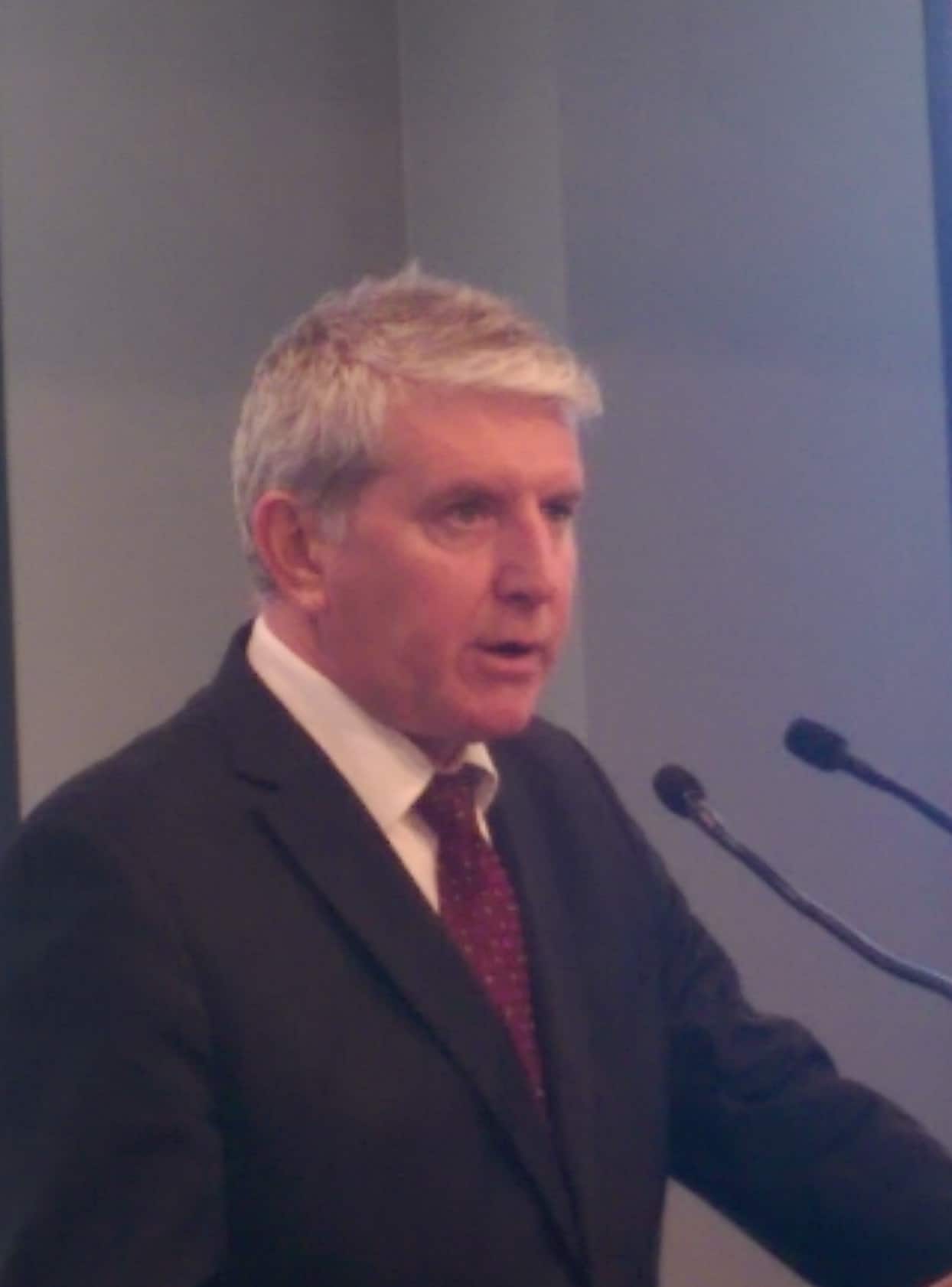
O'Connor photoAs part of Safe Work Australia month, or perhaps coincidentally, the Australian Council of Trade Unions held its annual occupational health and safety (OHS) conference in Melbourne, Australia.  On the morning of day 2, the conference heard from the Shadow Minister for Employment Relations, Brendan O’Connor.  The Minister is from the Australian Labor Party (ALP) and had a sympathetic audience but he made several interesting points, particularly when he diverged from the scripted speech (which will be available online shortly) and when he took questions.

Royal Commission into the Home Insulation Program 

O’Connor supports the ALP position that the Home Insulation Program (HIP) Royal Commission was a purely political affair to target previous ALP government ministers.  He emphasised that the Royal Commission was the last in a long line of inquiries into worker deaths and OHS prosecutions related to the HIP program and that this inquiry has achieved very little change.  O’Connor said (ad libbed)

“…. that Royal Commission has not recommended any changes to the regulations or obligations on employers to do the right thing at the workplace. It’s almost worse than doing nothing, than to use the health and safety of the workers as a political weapon against your political opponent. That’s how dismissive this government is with respect to health and safety.

Let’s set up a Royal Commission. Let’s summons a former Labor Prime Minister and other Ministers but, of course, all of which we could accept and we supported the establishment of the Royal Commission if that’s what they chose to do, with one caveat – that was, go ahead with the eleventh inquiry into these tragic deaths but make sure that when there are findings about the deficiencies in the law that protects the interests of working people, particularly young workers, do something about it.

Well we’ve seen nothing. We’ll see nothing in terms of changing the law by this government because that was purely a political exercise. To me this underlines how cynical this government is when it comes to health and safety. It only saw it as a political exercise and, I’m afraid to say, you won’t see too many good policy changes as a result of that Commission.”

Subscribe to SafetyAtWorkBlog to continue reading.
Subscribe Help
Already a member? Log in here

If everyone claimed compensation for work-related stress in Australia, the estimated annual cost would be $83 billion

Lucinda Smith of Esteem People Management has made some excellent points about stress and mental health in her article – “The People Risk of Work-Related Stress“.  On determining the cost of mental stress she acknowledges authoritative government estimates but, significantly, states of the data:

“Although not fully exploring the issue of workplace stress because it only applies to accepted claims,…”

This is the core of much of the frustration in the OHS profession that injury and illness is always underestimated because data is based on workers’ compensation statistics.

Where Smith progresses the argument, though, is by comparing several important pieces of data.  Quoted in a Safe Work Australia report, Medibank Private estimated in 2008 that the direct cost of work-related stress was

“…$14.81 billion to the Australian economy, and $10.11 billion to Australian employers because of stress-related presenteeism and absenteeism.” (page 3 of the Safe Work Australia report)

Subscribe to SafetyAtWorkBlog to continue reading.
Subscribe Help
Already a member? Log in here

“Put the human being first”

One of the most contentious issues in safety management is the treatment of workers compensation claimants.  On 18 August 2014, a small qualitative research report into this area was launched in Melbourne.  The report, “Filling the Dark Spot: fifteen injured workers shine a light on the workers compensation system to improve it for others”* identified four themes in the workers’ stories:

  • a sense of injustice
  • a lack of control and agency
  • loss of trust, and
  • loss of identity.

These themes, or at least some of them, are increasingly appearing on the occupational health and safety (OHS) literature.  To establish a successful sustainable workplace culture, one needs to establish and maintain trust.  Workers also seem to need some degree of control, or at least influence, over their working conditions and environment.  Also workers, and managers, need to receive a fair hearing, what most would describe as “natural justice”.

Subscribe to SafetyAtWorkBlog to continue reading.
Subscribe Help
Already a member? Log in here

How can an OHS regulator get the management of its own staff so wrong?

How can an OHS regulator get the management of its own staff so wrong?

In June 2014, a NSW Parliamentary inquiry released its final report into Allegations of bullying in WorkCover NSW, that State’s occupational health and safety (OHS) regulator. The report found that

“…Workcover has a significant organisational problem with bullying.  This problem is a longstanding one and operates at a cultural level.” (page x)

The Committee Chairman Hon Fred Nile MLC, wrote that

“more effective leadership and governance is essential.” (page x)

Longstanding bullying problems?  Problems with leadership and governance?  Many companies and public sector organisations have had similar issues ambulances, police, fire services, research organisations, to name a few, and are working them through. What happened in New South Wales?

Subscribe to SafetyAtWorkBlog to continue reading.
Subscribe Help
Already a member? Log in here

Citi Research report provides insight into Australian corporate safety performance

On 29 January 2014 Australia’s Fairfax newspapers published an article called “Safety performances at Australia’s top companies is serious business” written by Adele Ferguson.  The article is based on an analysis by Citi Research of the safety performance of companies listed in Australia’s ASX100 share index.  Citi Research (Citi) has kindly provided SafetyAtWorkBlog with a copy of this report developed for its fund manager and superfund clients.  It is a terrific reference document providing a useful insight to the OHS performance of prominent Australian corporations.  It cannot be definitive but we know of nothing else like it in Australia.

In the Fairfax article Ferguson wrote:

“While safety is a complex issue largely due to the fact that safety records are difficult to measure and difficult to compare across companies and industries, it is an important area to explore. For starters, it is a good proxy for the way a company deals with staff and manages risk more generally.”

Safety does not have to be complex but the measurement of safety performance can be as, even though there is a (dreadfully outdated) Australian Standard for measuring OHS performance, companies tweak the existing measures and the principal measurement, the Lost Time Injury Frequency Rate (LTIFR), has been found to be a flawed indicator.  LTIFR is tolerated as a measurement simply because a better alternative has not been developed or widely accepted.

The Citi Research report lists LTIFRs for most of the 117 companies but it balances this with almost as many Total Recordable Injury Frequency Rates (TRIFR).  

Subscribe to SafetyAtWorkBlog to continue reading.
Subscribe Help
Already a member? Log in here
Concatenate Web Development
© Designed and developed by Concatenate Aust Pty Ltd