
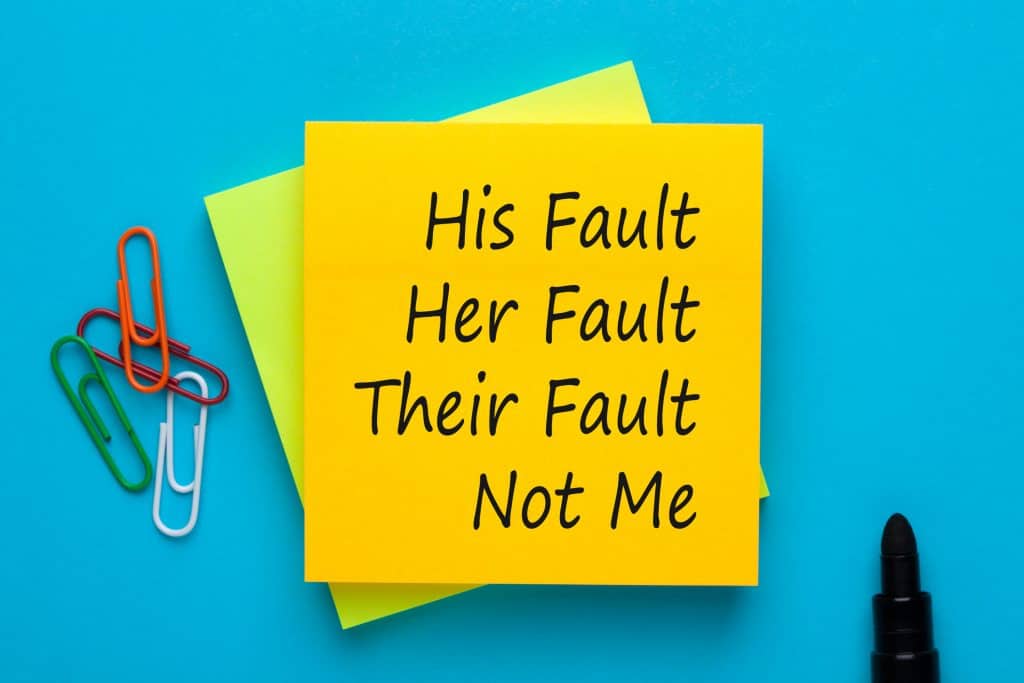
Making OHS an SEP (Someone Else’s Problem)

The death of Dillon Wu in 2018, is being investigated by WorkSafe Victoria and is still getting some media attention. The latest is an article in The Conversation by Associate Professor, Diana Kelly of the University of Wollongong called “Killed in the line of work duties: we need to fix dangerous loopholes in health and safety laws“.

This article focuses on the confusion over occupational health and safety (OHS) responsibility as Wu was a labour hire worker placed at Marshall Lethlean Industries by the Australian Industry Group. (AiGroup’s position on responsibility was given to SafetyAtWorkBlog in November 2018) It may seem that AiGroup has primary responsibility because it was Wu’s employer. But AiGroup told SafetyAtWorkBlog that

“All host employers sign agreements with AiGTS which specifically require the host employer to ensure apprentices are supervised and monitored during their engagement. “
Subscribe to SafetyAtWorkBlog to continue reading.
Subscribe Help
Already a member? Log in here

Submission to the National Inquiry into Sexual Harassment in Australian Workplaces

Australian research into occupational health and safety (OHS) is a lot less than research into other areas of business and management, especially in relation to the psychological wellbeing of workers at all levels of the corporate structure.  As such, it has become common for experts, advocates and researchers from the social, non-work, public health areas to overlay general and broad research findings on to workplaces – they are, in effect, filling a vacuum.  But just because the OHS research into psychological harm is thin or immature does not mean that work does not have its own characteristics.

Over many years OHS has produced research and guidelines that include the psychological effect of sexual harassment, but it has been ineffectual or ignored for may reasons.  This submission is an attempt to illustrate the potential already in existence in Australia that could be used to prevent sexual harassment-related psychological harm.

Subscribe to SafetyAtWorkBlog to continue reading.
Subscribe Help
Already a member? Log in here

OHS barriers and opportunities

One of the common questions I am asked, usually face-to-face rather than online curiously, is what changes I would suggest for improving occupational health and safety (OHS).  Following on from the broad perspective thesis by Dr Clare Tedestedt George, here are some of my thoughts.

Entrenched workplace cultures

Workplaces and industry sectors have established rigid norms, work practices, expectations, and a culture, that are no longer considered as safe and healthy as they were intended to be.  This has happened due to the economic demands of neoliberalism, the (fake) empowerment of the individual and after years of weakness and neglect by the OHS profession and regulators.

Subscribe to SafetyAtWorkBlog to continue reading.
Subscribe Help
Already a member? Log in here

Annual Leave is an institutionalised mental health break

Occupational health and safety (OHS) and Human Resources (HR) disciplines continue to, mostly, operate in isolation and, sometimes, in conflict.  Part of the reason is that workplace matters are often seen as either OHS or HR, even though they are both.


SafetyAtWorkBlog looks for why Australian workers have four weeks of Annual Leave. Continue reading “Annual Leave is an institutionalised mental health break”

AS/NZS ISO45001:2018 status update

Australia, as are many other countries, is in the transition phase for the latest Standard for Occupational Health and Safety Management Systems – ISO45001. The Standard has been accepted by Australia as relevant to its jurisdiction and discussion seem quiet. However, the work of the technical committee on this Standard (SF-001) continues. The Head of the Delegation for Standards Australia responsible for the 45001 series of Standards, David Solomon, provided the following status update.

ISO (International Organization for Standardization) has formed a new International Technical Committee (TC283) that has been charged with the responsibility of developing the following standards that are in the suite of international Standards that ISO45001 leads.

Subscribe to SafetyAtWorkBlog to continue reading.
Subscribe Help
Already a member? Log in here

More than warm lettuce needed on Industrial Manslaughter laws

Applying the most effective way to have companies comply with their occupational health and safety (OHS) obligations has been debated in Australia and elsewhere for years.  The issue will arise again in 2019 and in relation Industrial Manslaughter laws as Australian States have elections, or the political climate suits.

There are several elements to the argument put by those in favour of Industrial Manslaughter laws. Workers are still being killed so the deterrence of existing OHS laws has seen to have failed.  Deterrence has been based on financial penalties and workers are still being killed so financial penalties have failed. Jail time is the only option left.

This is a simplistic depiction of the argument, but it is not dissimilar to some of the public arguments. The reality is that deterrence is achieved in two ways – telling the person of the consequences of an action and enforcing those consequences.

Subscribe to SafetyAtWorkBlog to continue reading.
Subscribe Help
Already a member? Log in here

Heat

The occupational risks of exposure to excessive heat have usually been assessed in remote locations in Australia, and almost exclusively for outdoor workers. The changing environmental conditions, regardless of the global cause, are changing the risk assessment of heat for outdoor workers and, increasingly, indoor workers such as those in food production or kitchens.

Recently Safe Work Australia released a seminar online which discussed the issue of heat in the occupational health and safety (OHS) context.

The panel discussion operates from the perspective of what can be done rather than what could be done and remains within the occupational context. Professor Dino Pisaniello mentioned his recent research into the issue, which looks like it was meant to be the focus of this seminar and which found:

Subscribe to SafetyAtWorkBlog to continue reading.
Subscribe Help
Already a member? Log in here
Concatenate Web Development
© Designed and developed by Concatenate Aust Pty Ltd