
 The latest safety management standard ISO45001 will be active in a few months’ time. It is the first international Standard in occupational health and safety (OHS), a fact supported by the length of time and horse-trading that has occurred in its development. It will be an important OHS document for many countries as, for some, it is a first. For Western countries, like Australia, New Zealand and Britain, ISO45001 is the latest in a long line of safety management standards, so the hype is more muted.
The new features of this Standard have been outlined in
 There is an increased blurring between the workplace, work and mental health. In the past, work and life were often split implying that one had little to do with the other except for a salary in return for effort and wellness in preparation for productiveness. This split was always shaky but was convenient for lots of reasons, one of which was the management of occupational health and safety (OHS). However that perceptual split is over, now that mental health has come to the fore in many OHS considerations.
 Recently
 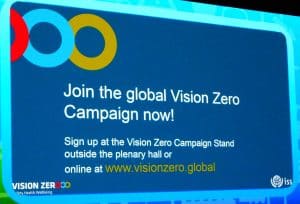 The launch of a “Vision Zero” campaign about occupational health and safety (OHS) was a major element of the recent
  If occupational health and safety (OHS) is to include the “whole-of-life” for workers, companies, products and projects, OHS professionals need to expand their pool of knowledge to meet the demands for an inclusive organisational culture. One recent research paper supports this approach by looking at the return to work of cancer survivors.
  In front of thousands of delegates and dignitaries, the 21st World Congress on Safety and Health was officially opened yesterday by the Singapore Prime Minister