
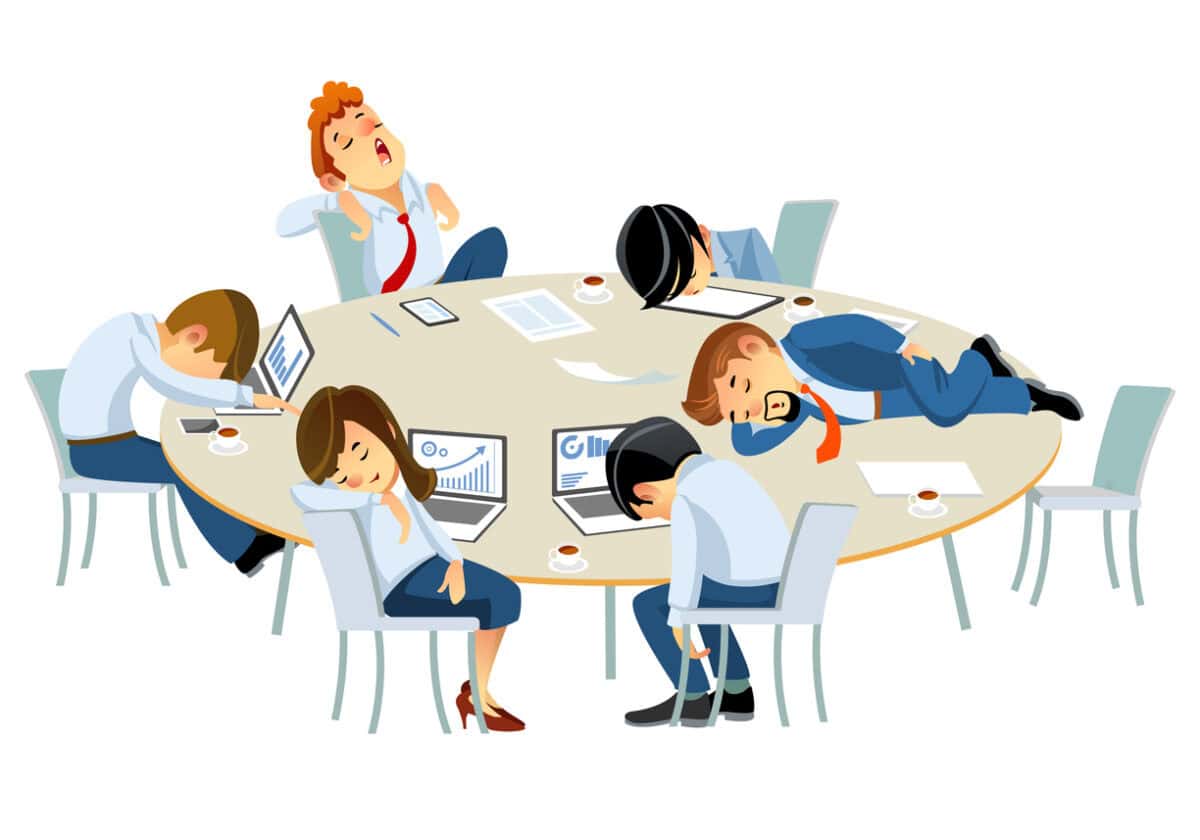
Burnout continues to have its moment in the sun. It is the cover story of the February 2024 edition of Psychology Today and is a major theme in a new book about exhaustion. The World Health Organisation’s (WHO) declaration of burnout as an “occupational phenomenon” is downplayed or ignored in both publications.
Category: workplace
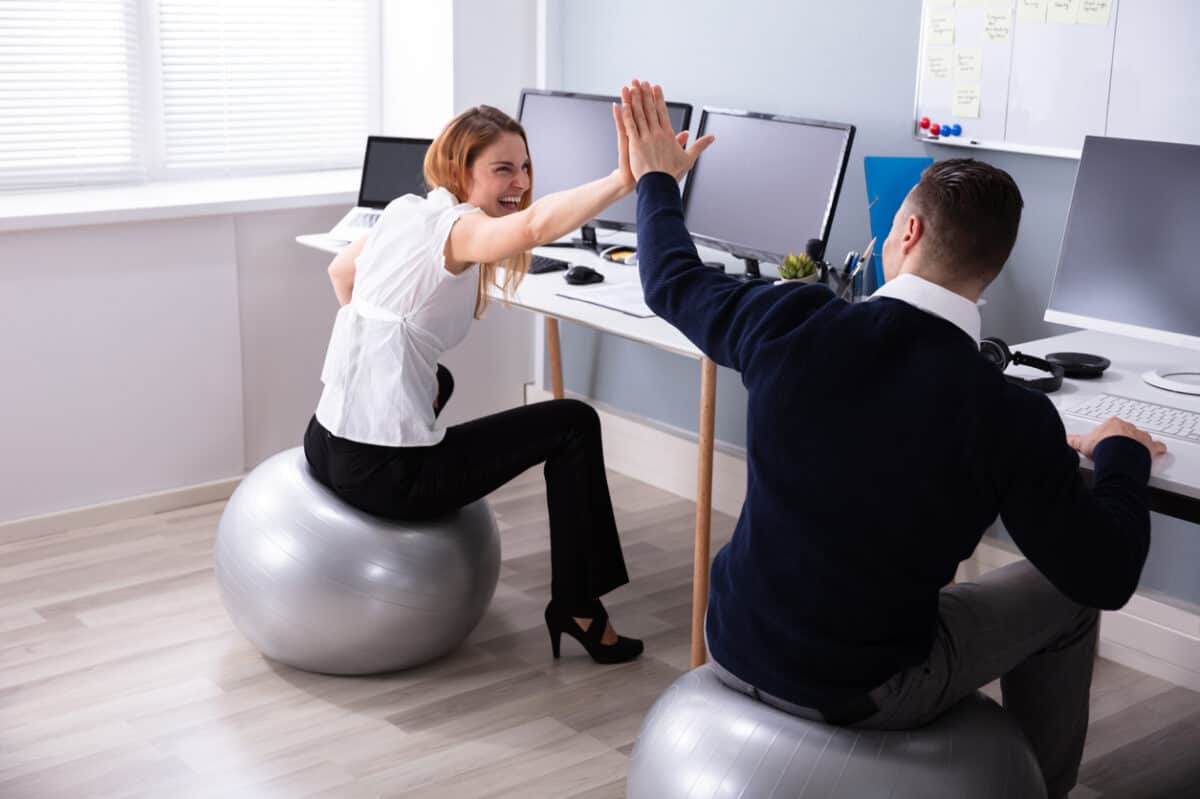
Don’t be a slouch on workstation ergonomics
Office ergonomics is one of the most misunderstood and misrepresented areas of occupational health and safety (OHS). The issue of posture was discussed in an article in the New Yorker on April 15, 2024, based on a new book – “Slouch: Posture Panic in Modern America” by Beth Linker. Rebecca Mead writes that Linker analyses a time when:
“… at the onset of the twentieth century the United States became gripped by what she characterizes as a poor-posture epidemic: a widespread social contagion of slumping that could, it was feared, have deleterious effects not just upon individual health but also upon the body politic. Sitting up straight would help remedy all kinds of failings, physical and moral, and Linker traces the history of this concern: from the exchanges of nineteenth-century scientists, who first identified the possible ancestral causes of contemporary back pain, to the late-twentieth-century popularity of the Alexander Technique, Pilates, and hatha yoga.”
links added

A good working-from-home book… finally
One of the most appealing little occupational health and safety (OHS) crossed my desk the other day. It is a small, cheap book called “Work Well From Home – Staying Effective in the Age of Remote and Hybrid Working“. Although this updated edition was published in 2023, its appeal is that it is a reissue from 2005 when the advice is largely pre-COVID, pre-broadband service, pre-Zoom, and pre- lots of issues that now seem to complicate working from home.
An economics perspective on overwork
As Ingrid Robeyns’ Limitarianism book hits the Australian bookshops, an earlier examination of the role of excessive profits of “affluenza” from 2005 is worth considering. How does this relate to occupational health and safety (OHS)? The prevention of harm and the reduction of risk are determined by employers deciding on what they are prepared to spend on their workers’ safety, health, and welfare. Employers are looking desperately for effective ways to meet their new psychosocial harm prevention duties. Economists identified strategies in 2005.

The future of OHS and Safe Work Australia
Marie Boland‘s work and reviews have been prominent features in Australia’s occupational health and safety (OHS) for over a decade. Last year, she took on the CEO role at Safe Work Australia, the country’s principal workplace health and safety policy body. Recently Boland spoke to the Australian Institute of Health and Safety (AIHS).
The interview/article starts with the unavoidable moral argument for the importance of workers’ lives in Australia and the social ripple effect of deaths and serious injuries. Inevitably, economic cost is mentioned:
“Our research shows that, in the absence of work-related injuries and illnesses, Australia’s economy would be $28.6 billion larger each year, and Australians would be able to access more jobs with better pay,”
page 27, OHS Professional, March 2024
Economics is always mentioned in articles about the importance of workplace health and safety but, really, who cares?
Applicability of Restorative Practices to all workplaces
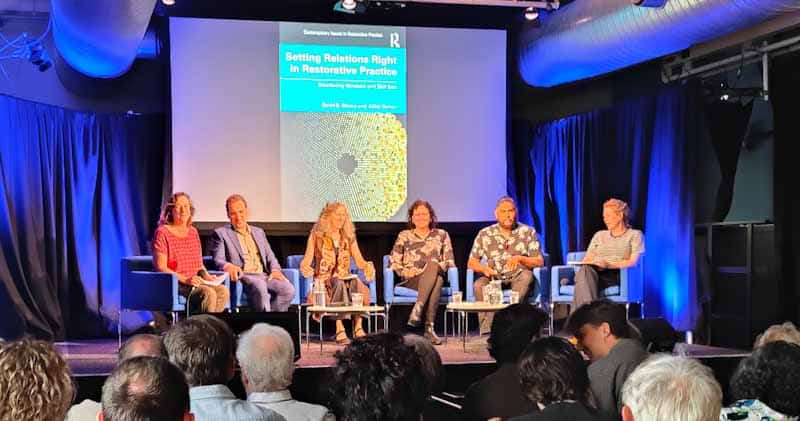
Last week, a book called Setting Relations Right in Restorative Practice by David B Moore and Alikki Vernon (pictured above, second and third from the left, respectively) was published. The launch seemed full of the authors’ friends and colleagues, as well as social workers. Although Restorative Justice has been applied a little bit to resolve workplace conflicts, the discussion was dominated by examples in youth detention, correctional facilities, health care and public sector organisations. These are important industries, but what about the private sector in which most people work?
I asked the authors for some perspectives on workplaces outside of the types already discussed?
Below is the response from Moore and Vernon.

“10 to 15% of suicides in the working population are attributable to work”
Job strain, job stress, and psychosocial hazards at work have become mainstream if a major public broadcaster produces radio programs and podcasts about them.
On March 15, 2024, the Australian Broadcasting Corporation’s This Working Life program interviewed Australian experts on job strain. The program offered the latest thinking on the prevalence of this hazard and what to do to prevent it.
Note: This article mentions work-related suicide.