

I recently refreshed my Lead Auditor in OHS training – the first time since Australia updated its Occupational Health and Safety Management Systems Standard to ISO45001. It was challenging on some issues but generic on others. Due to the recent heightened awareness of psychosocial hazards in the workplace, I was watching for how this hazard would be addressed. Still, I became stuck on the inclusion of “cognitive condition” in the definition of “injury and ill health”.
Category: workplace
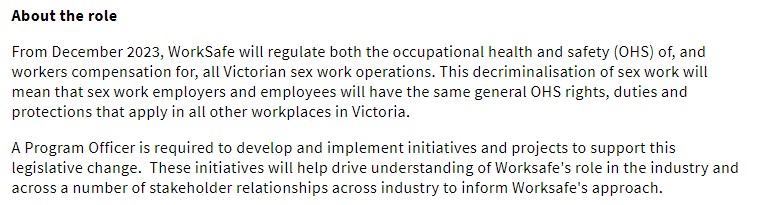
WorkSafe advertises for a sex work Project Officer
WorkSafe Victoria is advertising for a Program Officer for its new sex work industry obligations. It’s a tough ask as the candidates will need to combine a good level of occupational health and safety (OHS) knowledge with a close, effective association with the local sex work industry networks.
WorkSafe has outlined its expectations for sex work OHS with these suggested considerations:

Online training, offline training. What gives?
Occupational health and safety (OHS) training has been forced to revolutionise over the last couple of plague-ridden years from face-to-face in a room to face-to-face online through Teams, Zoom and many other variations. Traditional “in-Room” training is sneaking back, but the majority remains online. However, OHS training providers in Victoria feel they are being pulled from pillar to post by WorkSafe Victoria.
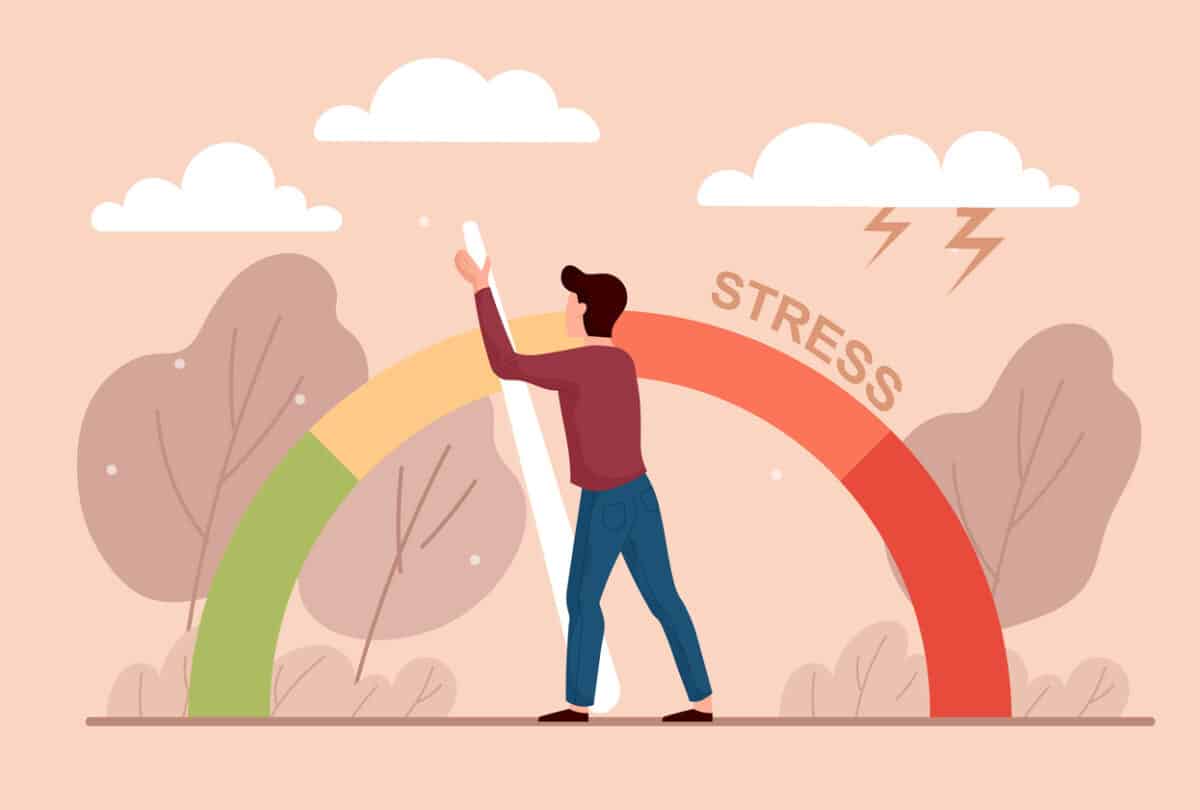
A Wellbeing Budget needs a strong cultural change strategy
Jim Chalmers has completed his first week of Australia’s Parliament as Treasurer. On Thursday, he presented a statement of the country’s finances without mentioning his well-being intentions (which some are claiming to be a gimmick). This does not mean that well-being is dead, as the “Wellbeing Budget” is not due until October; Chalmers needs to establish his authority, but it illustrates a common perspective on occupational health and safety (OHS) in the minds of many small business people.
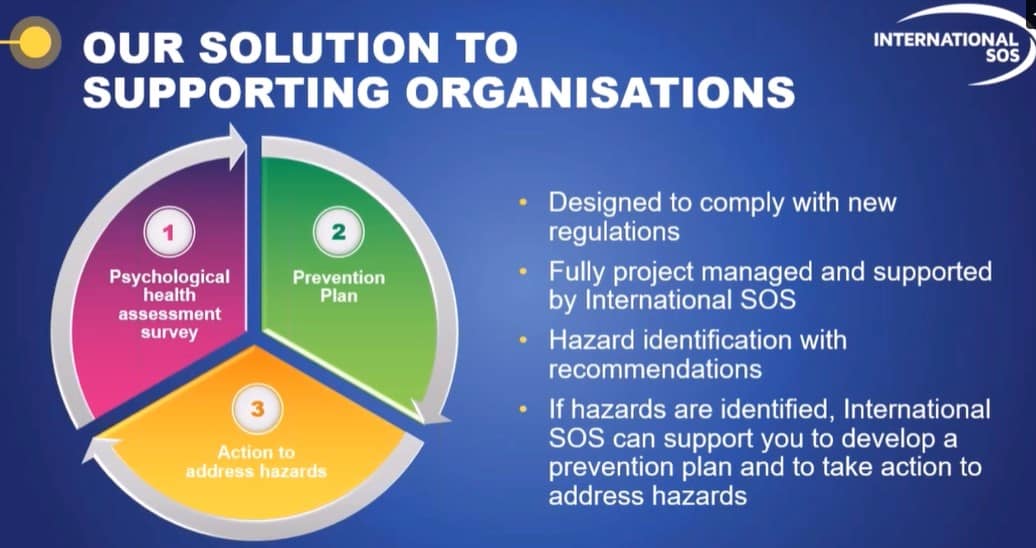
Psychological regulations and control
Recently International SOS conducted a webinar on workplace psychosocial hazards and controls. Parts of it were clearly marketing and promotional, but some of the speaker’s content was fascinating and useful.
The seminar’s structure was good because it included a global perspective and a local Australian. The speaker from a worldwide standpoint, Dr Rachel Lewis, used financial figures to illustrate the seriousness of workplace mental health risks. These involved annual costs to employers, costs of workplace stress and other figures in the billions. This approach encourages a misunderstanding of the audience for workplace mental health seminars and the occupational health and safety (OHS) approach to the hazard.
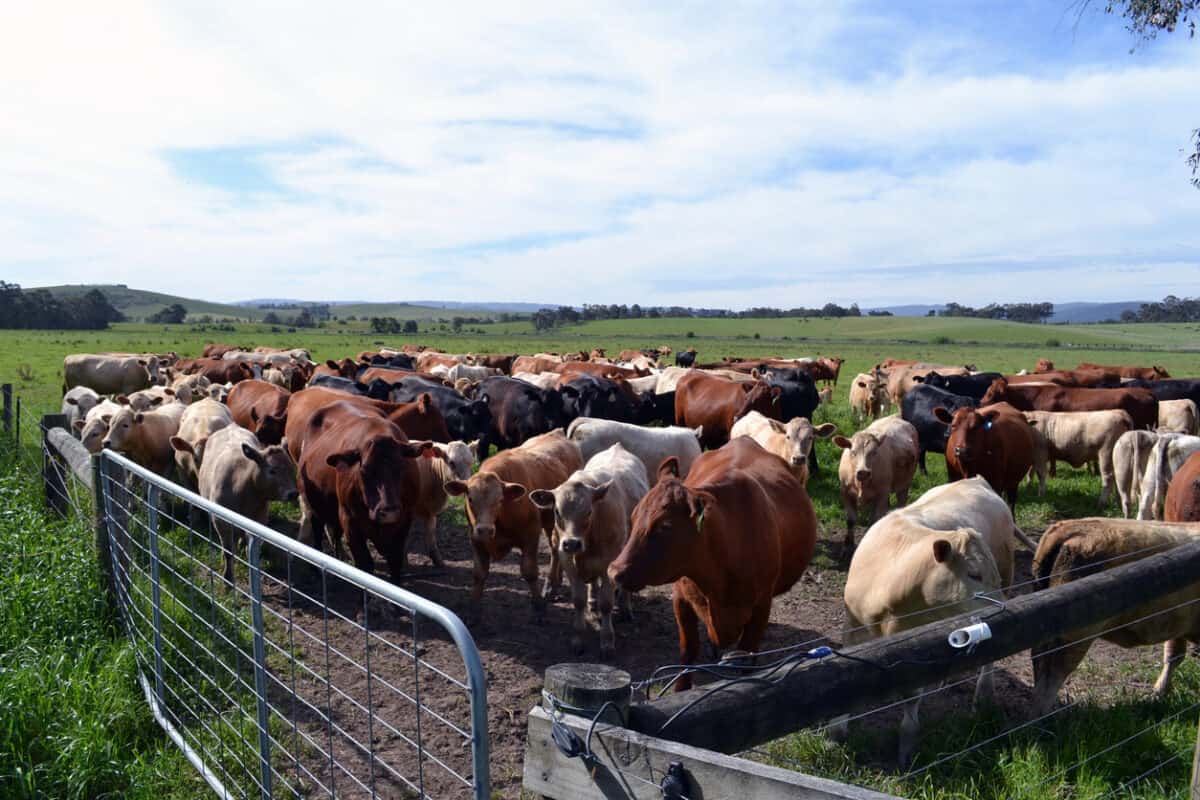
Why are farms becoming safer?
It is Farm Safety Week in Australia. These types of events are intended to raise awareness of specific issues. The biggest problem with these events is that solutions are rarely presented; it is assumed that raising awareness is sufficient. This is hard to justify in agriculture, where many of the smaller and high-risk farms have been run by families for many years and often generations. As a result, most people living in the country know of someone widowed after a workplace incident or of someone like the one-armed tennis player or lawn bowler who lost an arm in an unguarded Power Take-Off.
At some point, the strategy must move from raising awareness to providing solutions.

“There is too little time and the ask is too big to try to change the system”.
There are many similarities between the management of occupational health and safety (OHS) and environment protection. Both seek to prevent and/or mitigate harm, and both have similarly focussed legislation. However, this similarity extends to vulnerabilities in each approach. Neither discipline is solely responsible for the lack of progress in prevention and protection, but both have not realised their potential for change.