Fool me once; shame on you. Fool me twice; shame on me. Fool me thrice?!

The Australian Broadcasting Corporation recently published a curious article about workaholism and burnout – the latter being an occupational mental health condition recognised by the World Health Organisation.

It is curious because the catalyst for the article, Sally McGrath, claims to have experienced burnout three times. Once is understandable as job stress can creep up on anyone. Twice should result in external assistance to investigate the work environment, work practices and personal mental health to identify contributory factors.  But the third time…??? Burnout is not something that is usually a repeated experience and its prevention may present a significant challenge for the occupational health and safety (OHS) profession and employers.

Subscribe to SafetyAtWorkBlog to continue reading.
Subscribe Help
Already a member? Log in here

Stress reenters the research vocabulary and we are all better for it

Work is making people sicker, according to a recently published research report from the University of Melbourne. The “2023 State of the Future Work – A Work Futures Hallmark Research Initiative Report” said:

“Critically, we find almost three-quarters of people with a chronic illness (73 percent) say that their health condition was caused or worsened by the stress associated with their job.”

page 15

It is good to see the various incarnations of work-related mental health conditions being brought back to the collective and specific term of Stress.

Subscribe to SafetyAtWorkBlog to continue reading.
Subscribe Help
Already a member? Log in here

OHS tidbits from the latest Productivity Commission Report

On March 17 2023, the Australian government released the Productivity Commission’s latest 5-year Productivity Inquiry report. At well over a thousand pages, few people are going to read it to the level it deserves. Nor will I, but I have dipped into it and found a couple of important comments that relate directly to the management of occupational health and safety (OHS).

Subscribe to SafetyAtWorkBlog to continue reading.
Subscribe Help
Already a member? Log in here

The two extremes of managing burnout

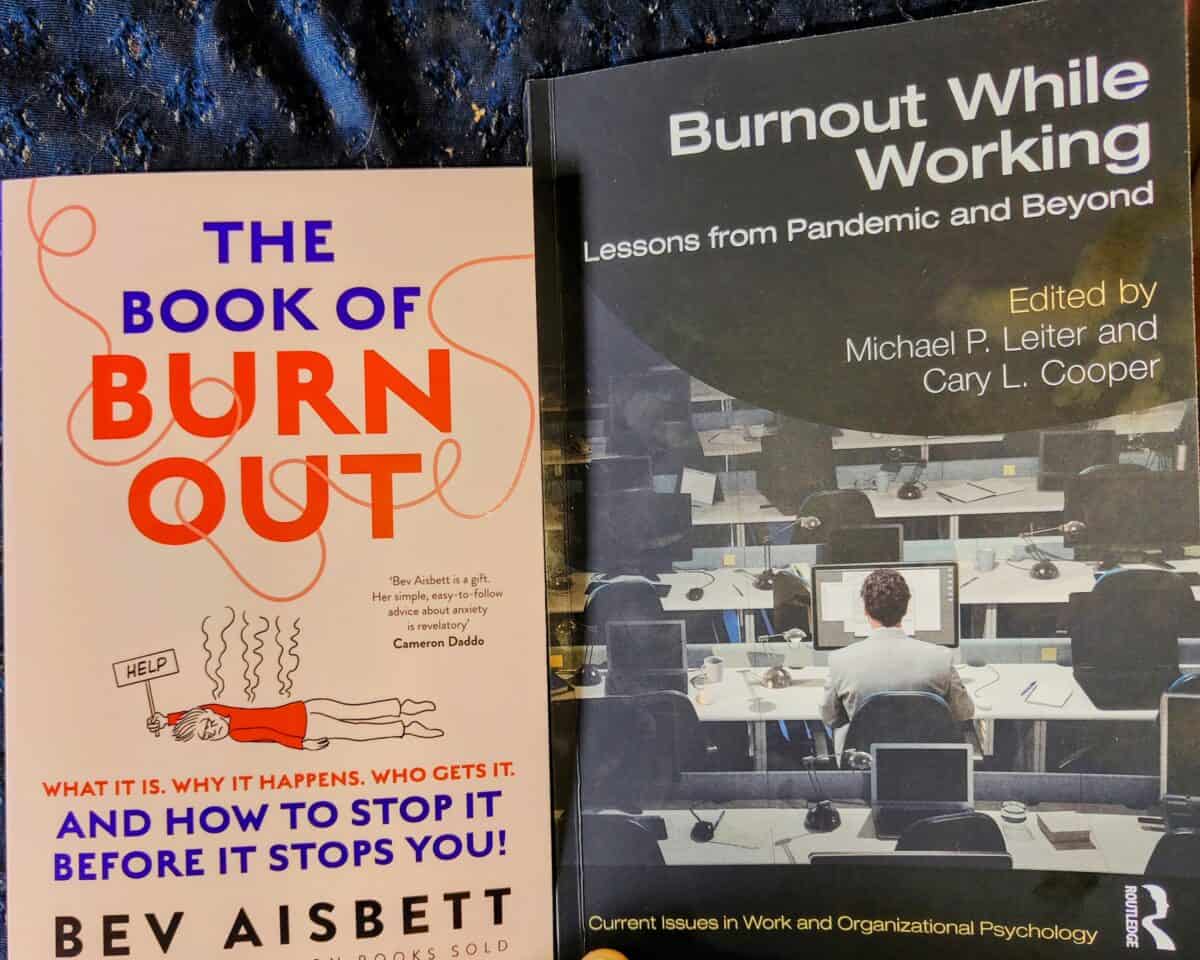
Two new books about burnout arrived on my doorstep this week. They could not be more different. They reflect the mess of approaches to this type of psychosocial injury. Only one provides valid, useful evidence and advice.

Bev Aisbett released a book that I found unreadable – partly because of the advice offered but mostly because of the atrocious formatting where she YELLS almost all the time in the most annoying social media way. Below is a random example.

Subscribe to SafetyAtWorkBlog to continue reading.
Subscribe Help
Already a member? Log in here

Give me a young worker, and I can make them safer for life*

Trade union membership in Australia has declined to its lowest level ever of 12.5%, according to an article in The Age newspaper (paywalled) on January 6 2023. The experts mention several demographic factors that have resulted in the persistent decline. Even though trade unionists publicly state that worker health and safety is often their top priority, they never seem to use occupational health safety (OHS) in their marketing of union membership.

This article does not suggest that OHS be bastardised for commercial purposes or that the primary responsibility for safe work does not reside with the employer. Still, union membership may be purchased for a young worker, in particular, perhaps by parents or concerned relatives to assist in keeping their loved ones safe at work.

Subscribe to SafetyAtWorkBlog to continue reading.
Subscribe Help
Already a member? Log in here

A fair dinkum fair go?

A New Work Relations Architecture is a radical book for Australia. Radical because its authors are proposing industrial relations reform, and Australia has had very little of this since Prime Minister John Howard‘s attempt with Workchoices in 2005. Radical also because it has taken inspiration from the Robens approach to occupational health and safety (OHS) laws.

The new “architecture” (thankfully, the cliche of “ecosystem” was not used) is described as:

Subscribe to SafetyAtWorkBlog to continue reading.
Subscribe Help
Already a member? Log in here

2022 review indicates the amount of OHS work needed in 2023

The end-of-year reviews are starting to emerge from Australia’s law firms. The most recent release is from Maddocks, who have released several short reports on occupational health and safety (OHS) hazards and suggested controls for employers to apply. So this is a year-in-review for 2022, but it is also a forecast of what needs to be changed in 2023.

Subscribe to SafetyAtWorkBlog to continue reading.
Subscribe Help
Already a member? Log in here
Concatenate Web Development
© Designed and developed by Concatenate Aust Pty Ltd