Useful look at Victoria’s Industrial Manslaughter laws

Eric Windholz has released a perceptive paper on Industrial Manslaughter (IM) that neatly summarises the risks and rationales behind these legislative changes to Victoria’s occupational health and safety (OHS) laws.

Windholz explains two functions of the amendments – a motivator for employers to improve OHS in their workplaces and to provide a pathway for bereaved families to actively consult with the government.

The mechanism for the families’ input is the Workplace Incidents Consultative Committee. Windholz writes:

Subscribe to SafetyAtWorkBlog to continue reading.
Subscribe Help
Already a member? Log in here

Industrial Manslaughter frenzy

Parliament of Victoria Melbourne

The pursuit of Premier Dan Andrews and the Victorian Government for Industrial Manslaughter reached a frenzy in Parliament on September 4 2020, when Liberal Parliamentarian Tim Smith expressed his opposition to the extension of Victoria’s state of emergency. His florid speech masked his principal, and admirable, aim, to hold the Government accountable.

Subscribe to SafetyAtWorkBlog to continue reading.
Subscribe Help
Already a member? Log in here

…. but quad bikes remain unsafe

Most of the frustration of the manufacturers of quad bikes is aimed at the Australian Competition and Consumer Commission (ACCC) for imposing new safety requirements. However, another independent assessment of the evidence and the Australian controversy recently released its findings.

Subscribe to SafetyAtWorkBlog to continue reading.
Subscribe Help
Already a member? Log in here

Farmers want quad bikes…….

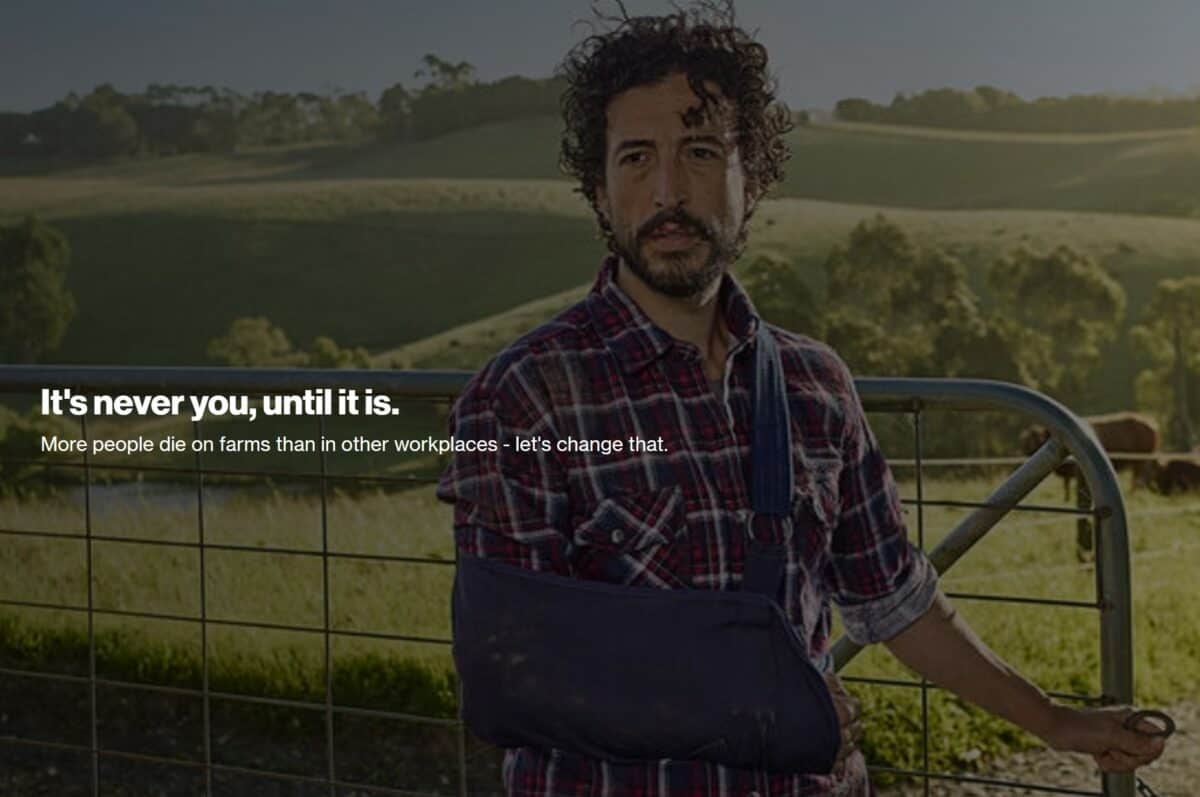
The debate over the safety of quad bikes on farms continues but it is increasingly one-sided. The Australian Competition and Consumer Commission (ACCC) and workplace safety advocates continue to hold the line on the need to install operator protection devices (OPDs) to all quad bikes being sold in Australia. Farmers, often supported by commercial interests, want to keep their quad bikes and as they are, because there are no alternative vehicles that are as versatile as the quad bike.

On July 4 2020, the Western Magazine quoted the CEO of the Federated Chamber of Automotive Industries‘ (FCAI) Tony Weber:

“Evidence suggests in some circumstances CPDs do prevent injuries, other times they create more injuries and that’s not a satisfactory outcome we should address the fundamental problem and that is the way in which humans behave around this machine…”

This quote neatly summarises the points of argument in the safety debate which have been reported on extensively in this blog previously – evidence, most benefit, design, use….

Subscribe to SafetyAtWorkBlog to continue reading.
Subscribe Help
Already a member? Log in here

Managing safety on a high risk TV program

Roger Graham (left) and Todd Sampson talking safety

This article was originally published on May 15 2017 and I was reminded of it this week when talking to a colleague about the management of safety on some of the current home renovation programs.

It’s a long and, I think, fascinating article that suits a leisurely weekend read.


Todd Sampson has created a niche in Australian television by challenging himself in mental and physical tasks.  His latest program is “Life on the Line“. What is intriguing about this type of TV program is how occupational health and safety (OHS) is managed in a way that does not impede the aim of the show.

SafetyAtWorkBlog spent some time with the safety adviser on the show, Roger Graham, to better understand the demands of advising film and TV productions on workplace safety.  The exclusive interview is below.

Continue reading “Managing safety on a high risk TV program”

Sexual misconduct research – Interview with Professor Marie Bismark

A lot of recent attention has been given to incidents of sexual harassment in Australian legal and finance corporations, in particular, and how these are being (mis)managed. COVID19 has thrown a big focus on the working conditions of health care workers. Last month, Australian research on sexual misconduct was released that is, essentially, a Venn diagram of the issues of sexual harassment and misconduct with health practitioners.

The lead author of the study, Associate Professor Marie Bismark, professor of Public Law at the Melbourne School of Population and Global Health, spoke exclusively with SafetyAtWorkBlog about the research findings.

Subscribe to SafetyAtWorkBlog to continue reading.
Subscribe Help
Already a member? Log in here

The failure of Leadership on sexual harassment

A picture not of Josh Bornstein. This is Male Champions of Change CEO Annika Freyer in the AFR’s online article

If prominent Australian lawyer, Josh Bornstein does not like something, it’s worth looking more closely at it. Last week on Twitter, Bornstein scoffed at the suggestion that occupational health and safety (OHS) could be a new approach to preventing sexual harassment in the workplace. He tweeted:

“To all those clamouring to support the idea that sexual harassment should be treated as an OHS issue, I have a simple message: Wrong Way, Go Back”

The OHS and sexual harassment nexus appeared primarily in response to a couple of articles (paywalled) in the Australian Financial Review (AFR) based on a leaked report from the Male Champions for Change (MCOC) organisation. Although the report is not publicly released for another couple of weeks, MCOC (hopefully not pronounced My Cock), proposes consideration of applying OHS laws and principles to sexual harassment.

The full report is likely to discuss the mechanics of this further but the advocacy of OHS is less interesting that the admission that MCOC and other leadership-based approaches to reduction and prevention of workplace sexual harassment have failed.

Subscribe to SafetyAtWorkBlog to continue reading.
Subscribe Help
Already a member? Log in here