WorkSafe and Industrial Manslaughter webinar

On May 19, 2020, WorkSafe Victoria conducted an interactive webinar on Workplace Manslaughter laws due to be in place from July 1, 2020. The webinar was very good for those who are coming to the issue anew as the level of interaction was excellent. But the webinar also broadened beyond its topic, which was disappointing. At 90 minutes the event was too long, but revised versions of this consultation with the community should be scheduled regularly, even when physical distancing rules end.

Subscribe to SafetyAtWorkBlog to continue reading.
Subscribe Help
Already a member? Log in here

OHS and Mystery Professional

One responder to the “humanising OHS” series of articles did not want their identity online and I will respect their wishes. What I will say is that they have been an OHS professional in Australia for some time and is very active trainer in workplace health and safety. Our writer also suggested three additional questions which I will consider for the future

  • When are you happiest at work?
  • When are you most sad?
  • What would you tell a OHS graduate on their first day?

How did you get into Health & Safety?

A friend in Sydney caught me at a weak moment in 2004 and we started a safety company together (without qualifications or experience), with another friend which is still running today

Continue reading “OHS and Mystery Professional”

Tooma on Mental Health – Review

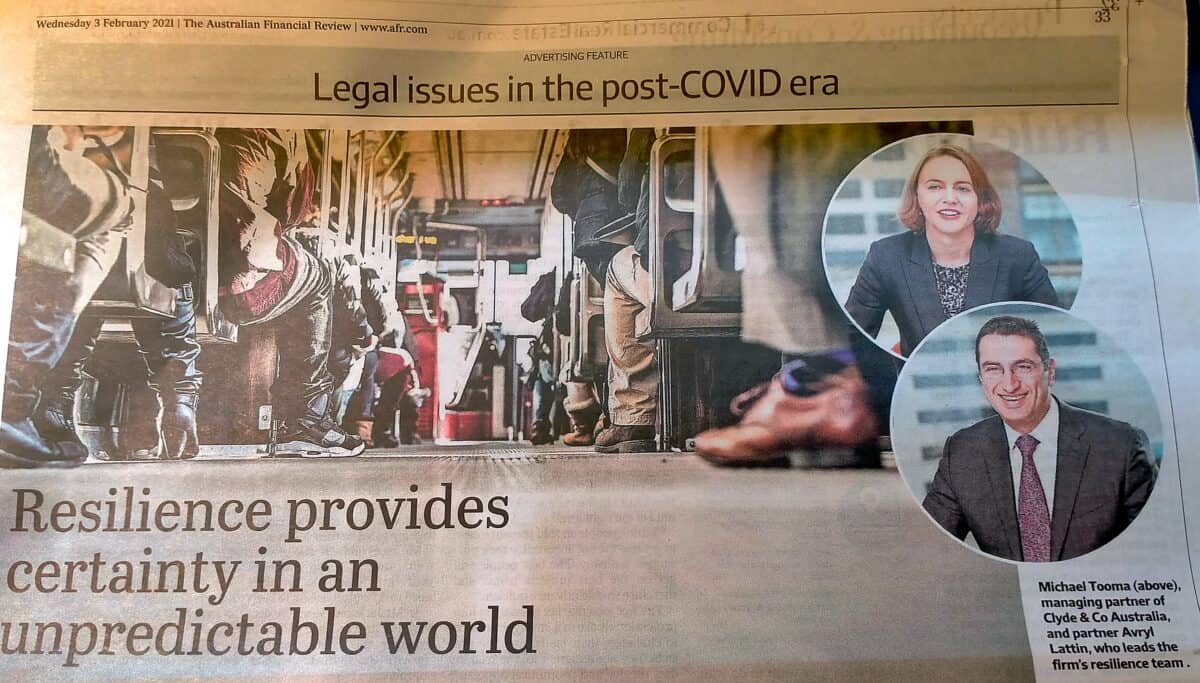
Michael Tooma is probably the most prominent occupational health and safety (OHS) lawyer in Australia. His latest book is, a little pretentiously, called “Michael Tooma on Mental Health“, but it fits with the series of OHS-related publications he has written for Wolters Kluwer. Unusually for a lawyer, there are only two chapters that specifically discuss legislative obligations, and, in many ways, these are the least interesting.


Positive Mental Health

In the Introduction, Tooma goes out of his way to stress the positive benefits of work. He is critical of the current OHS approach to workplace stress writing that we seek a “Goldilocks” application of perfection when this is really subjectively determined by each worker. Tooma challenges this in a major way through the 2012 study by Keller and others:

Subscribe to SafetyAtWorkBlog to continue reading.
Subscribe Help
Already a member? Log in here

Running before you can walk on COVID19 and Mental Health

On May 15 2020, the Australian Government released a National Mental Health and Wellbeing Pandemic Response Plan. Mental Health has been on Prime Minister Morrison’s agenda since his election a year ago and the mental health sector is not going to be starved of government funds during his tenure.

Mental ill-health has been talked about throughout the current COVID19 Pandemic and has been forecast to increase due to the economic disruption and the requirements for social isolation. To some extent, the low numbers of COVID19 deaths in Australia has allowed it a “luxury” of addressing mental health, but some of the justifications seem not as strong as claimed and the National Mental Health Plan omits any consideration of occupational health and safety (OHS) other than for those in the health industry; the so-called “frontline workers”.

Subscribe to SafetyAtWorkBlog to continue reading.
Subscribe Help
Already a member? Log in here

Work that is meaningful, secure and safe

Occupational health and safety (OHS) is integral to how work and job should be designed in the post-COVID19 world, but you wouldn’t know it from the current discussions in the media. On May 13, 2020, the day after a major economic statement from Treasurer Josh Frydenberg, Jennifer Westacott, Chief Executive of the Business Council of Australia, told ABC Radio that:

“…. there’s some pretty sobering numbers that the Treasurer gave yesterday and fundamentally I think we’ve all got to come back to basics here. This is about people’s lives and so what we have to do, as the kind of leadership dynamic, is to focus on getting people back to work and getting them into secure and meaningful work.

emphasis added

It is not unreasonable to add safety to that “secure and meaningful work”.

OHS fits into this phrase in many ways, but one of particular note is job security and its links to mental health, especially as mental health has been a policy priority repeatedly identified by Prime Minister, Scott Morrison, and others.

Subscribe to SafetyAtWorkBlog to continue reading.
Subscribe Help
Already a member? Log in here

If staff are “going to hit the wall”, redesign the wall

On May 11 2020, the Australian Financial Review’s back page ran an article (paywalled)about how “corporates” are becoming aware of mental health risks due to the COVID19 disruption. It is a good article but also one that reveals the dominant misunderstanding about mental health at work and how to prevent it.

Subscribe to SafetyAtWorkBlog to continue reading.
Subscribe Help
Already a member? Log in here

RSI is a pain in the…..

One example of the “correct” sitting posture ergonomics at a desk while working on a computer. (Not really correct)

Earlier this year Dr Peter Sharman published a blog article based on a literature review related to Upper Limb Pain and Computer Employment. The ergonomics of desk-based work seems to be dominated by guidance that requires right-angled postures, and other practices that are designed for prolonged use. For most of us, there is the flexibility to move around and break up the tasks but workplace, like call centres, continue; and the recent move to work from home has resurrected many of these workstation advisories. SafetyAtWorkBlog had the opportunity to ask Dr Sharman about his research and his experience supplemented by some clarifying answers by retired consultant in rheumatology and pain medicine, John Quintner.

Subscribe to SafetyAtWorkBlog to continue reading.
Subscribe Help
Already a member? Log in here