Important safety, environmental, political and personal stories in book on the Morwell Mine fire

Dr Tom Doig has continued to build on his earlier work about the Morwell mine fire, expanding his “The Coal Face” from 2015 into his new book “Hazelwood” (after court-related injunctions, now available on 18 June 2020).

SPECIAL OFFER: The first four (4) new Annual subscribers in the month of June 2020 will receive a copy of Hazelwood.
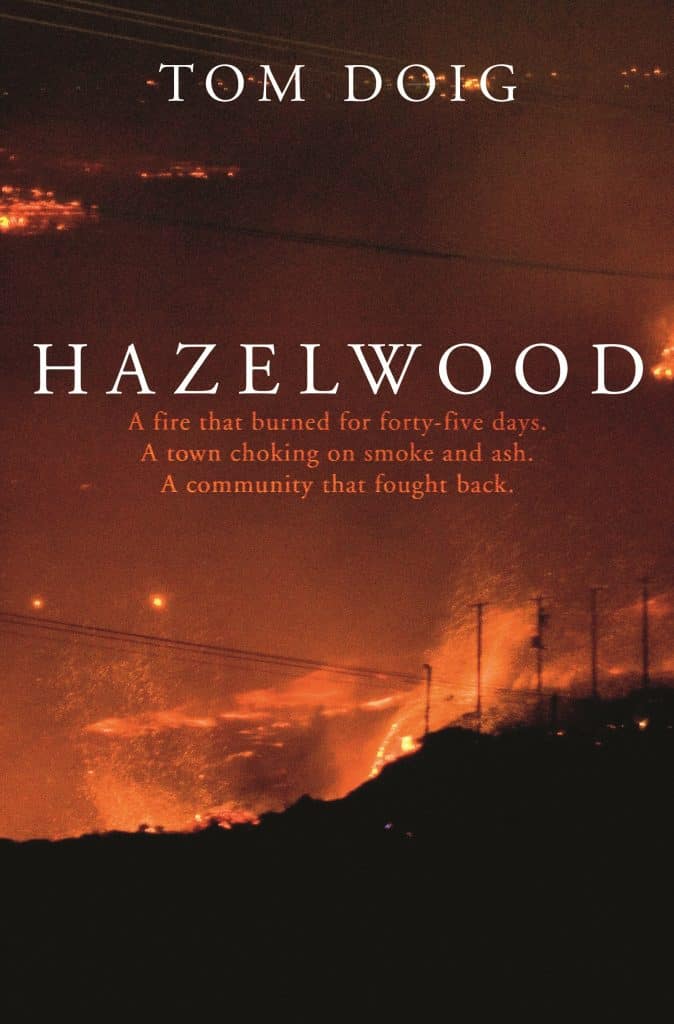
The Morwell mine fire created great distress to residents in Victoria’s Latrobe Valley, ongoing health problems, and a parliamentary inquiry, but can also be seen as a major case study of occupational health and safety (OHS) laws, enforcement, role and the obligation on employers to provide a safe and healthy working environment that does not provide risks to workers and “protect other people from risks arising from employer’s business”.  The management of worker and public safety is present in almost every decision made in relation to the Morwell Mine fire. The overlay of an OHS perspective to Doig’s book is enlightening.
Subscribe to SafetyAtWorkBlog to continue reading.
Subscribe Help
Already a member? Log in here

The good news and the bad news on Industrial Manslaughter

The end of the Court action* over the death of Barry Willis while he was working for Brisbane Auto Recycling (BAR) allows for various occupational health and safety (OHS) issues to be discussed, but a lot of the online discussion immediately after the sentencing on June 11 2020 was half-cocked and sometimes included a racist undertone. Both these elements deserve expansion.


Subscribe to SafetyAtWorkBlog to continue reading.
Subscribe Help
Already a member? Log in here

No OHS voice in this paper

Occupational health and safety (OHS) has always been part of the politics of industrial relations (IR) but it has rarely understood which part it plays as it has never really stood on its own two feet. In Australia, OHS advocates have been, primarily, from within the trade union movement. And for OHS professionals that was okay, as it allowed us to stay within our box, having others fight our battles. When those others weren’t as successful as we wanted, we remained content with the small achievements because they were achieved with minimal effort from us.

Australia, as it emerges from the COVID19 pandemic, is hoping to bring the camaraderie shared by the business groups, government and trade union to a new consensual IR strategy. OHS is an historical element of this discussion, but it needs to be more, and an OHS analysis of the Australian Industry Group’s IR reform paper released on June 6 2020 (but not yet publicly) may provide some clues on what to do about OHS influence.

Subscribe to SafetyAtWorkBlog to continue reading.
Subscribe Help
Already a member? Log in here

How logical is safety? Here’s a fresh perspective

This week I found a research paper in my inbox called “How logical is safety? An institutional logics perspective on safety at work”. The Background and Objective were, respectively:

“Occupational incidents and accidents are still commonplace in the contemporary workplace, despite increased understandings of safety.”

“This article aims to yield new insights into safety-related thinking, decisions and behaviours through the application of an institutional logics perspective.”

As most readers do, I read something and try to link it with ideas, concepts and conversations we have been involved with in the past. My brain tried to fit the use of “institutional logics” with safety culture and then with organisational culture but it did not seem to fit, and I wondered whether I should bother with institutional logics.

Subscribe to SafetyAtWorkBlog to continue reading.
Subscribe Help
Already a member? Log in here

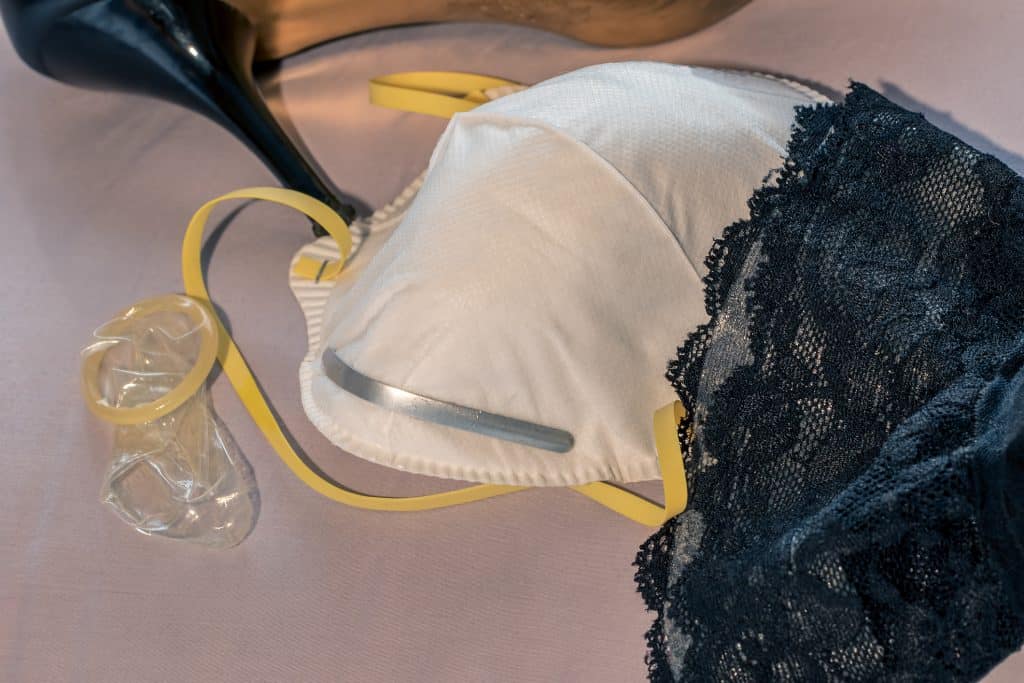
COVID19 controls for sex work safety

Source: Ian Dyball, istockphoto

Thinking about the occupational health and safety (OHS) issues of sex work is fascinating and, to some, titillating. But work is work and the OHS issues are just as real in a room in a brothel as in any other workplace. The workplace hazards presented by COVID19 to the Australian sex industry have been identified and addressed in some excellent OHS advice from Scarlet Alliance.

Sex workers need to screen clients already for visible signs of sexually transmitted diseases so personal questions about health and infections is already part of the customer relations. (There are also requirements for customers to shower or wash prior to services) The questions asked in relation to COVID19 are the same as asked elsewhere:

Subscribe to SafetyAtWorkBlog to continue reading.
Subscribe Help
Already a member? Log in here

Safety wins

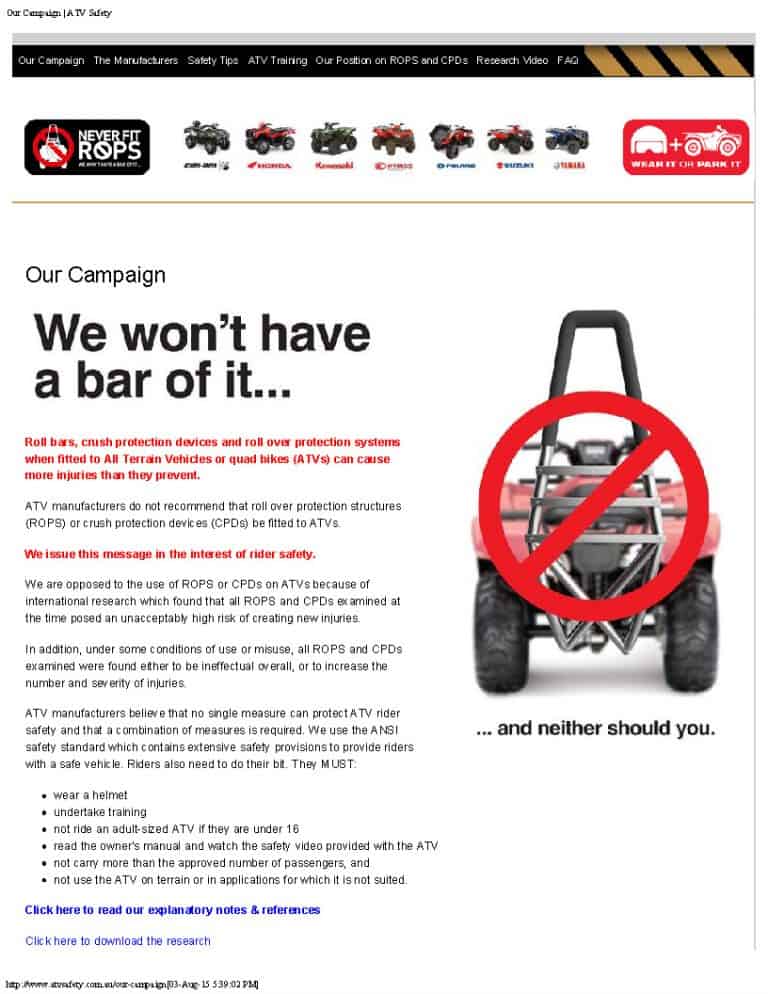
The saga of the safety of all-terrain vehicles (ATV) in Australia is coming to a close with Honda announcing that it will not be selling its ATVs in Australia after 10th October 2021. However Honda, one of the most strident opponents of increased safety standards, is belligerent to the end.

In the media announcement of its decision, Honda says that the new safety Standard is impossible to meet on any ATV. This may be true but the quad bike manufacturers refused to accept that rider safety could be improved by redesigning the quad bike, or adding additional safety devices, to reduce the risk of rolling over. Most occupational health and safety (OHS) advocates did not argue about the validity of the safety items and actions recommended by the manufacturers – helmets, dynamic riding training etc – but saw these as supplements to after-sales crush protection devices (CPDs). The manufacturers did not.

Subscribe to SafetyAtWorkBlog to continue reading.
Subscribe Help
Already a member? Log in here

Victoria’s Workplace Manslaughter laws are a misdirection

On July 1, 2020, Victoria receives the Workplace Manslaughter laws that it missed out on by a bee’s whatsit in 2002.  Premier Daniel Andrews will complete another election pledge and will be seen as a champion for Victoria’s workers.  The Workplace Manslaughter laws will provide some bereaved relatives with comfort and a belief that bad employers will be punished for neglecting their occupational health and safety (OHS) duties to provide safe and healthy work environments. Punishment is possible, but unlikely.

The first thing that Victorians need to understand is that Workplace Manslaughter laws are not about OHS, they are about politics.  It is no coincidence that both Queensland and Victoria’s Workplace Manslaughter laws emerged during election campaigns.  Both branches of the Australian Labor Party (ALP) needed to say something about workplace relations that did not involve the hotbed of industrial relations, especially when so much IR change would bring in National politics.

OHS allows people to talk about IR without the trade union politics.  OHS is not about money, it is about quality of life and who, in politics or elsewhere, will say that deaths at work are an acceptable consequence?  The ALP leaders were on a winner and were able to take some moral high ground and criticise business groups on an issue against which business leaders could not argue.

Continue reading “Victoria’s Workplace Manslaughter laws are a misdirection”
Concatenate Web Development
© Designed and developed by Concatenate Aust Pty Ltd