Real men and work-related suicide

Recently Huffington Post Australia posted a video about male suicides called “Men are killing themselves to be real men”.  Many of the speakers talked about their experiences at work or with work.  The video is highly recommended.

SafetyAtWorkBlog had the opportunity to talk with the Associate Video Editor, Emily Verdouw. Below is an edited transcript.

Subscribe to SafetyAtWorkBlog to continue reading.
Subscribe Help
Already a member? Log in here

Ferguson shows one way to harness social media for change

Credit: LittleBee80 (istockphoto)

Kirstin Ferguson has been an amazing advocate for occupational health and safety (OHS), good governance, Board responsibility, and gender diversity.  She is receiving a great deal of media attention lately for her Celebrating Women campaign on social media. Ferguson has inspired, and been inspired by, many people in the OHS profession in Australia and is an example of how OHS blends with issues of leadership and governance in a way that is very different from the Trojan Horse analogy recently discussed by John Green.

On March 8 2017 Australia’s

Subscribe to SafetyAtWorkBlog to continue reading.
Subscribe Help
Already a member? Log in here

SafetyAtWorkBlog’s Christmas reading list

wss-book-pix004The media is full of lists of Christmas reading, usually in order to sell books.  Below is a selection of the safety-related books that are in my Summer reading pile. (No, I am not going to list the Batman comics or Star Trek books.  That would be embarrassing.)

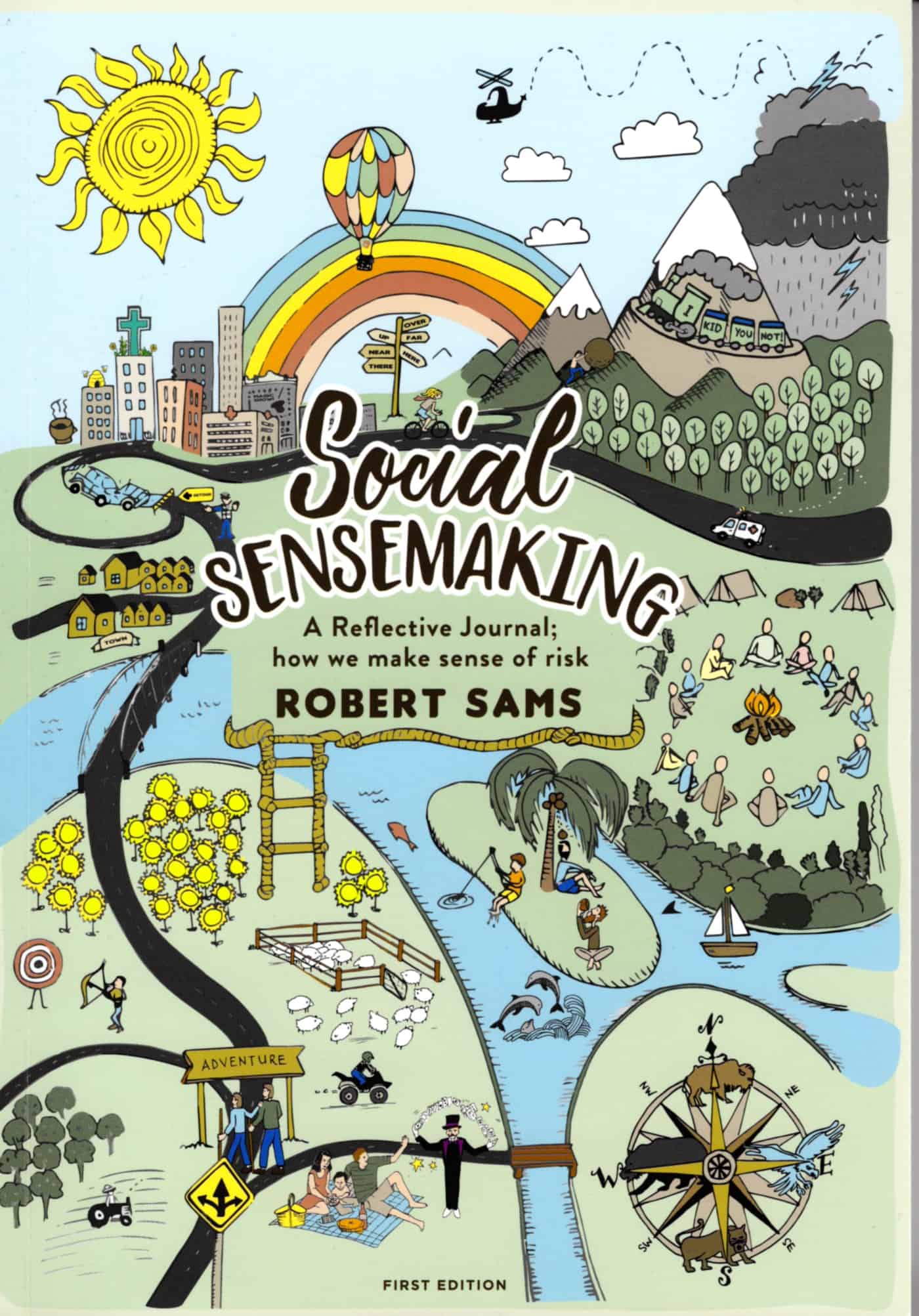
Social Sensemaking

I first met Robert Sams at a book launch of one of the Rob Long’s books.  Sams’ approach to risk has some similarity to Long’s, which is acknowledged in the Forewards, but those who develop or apply a theory are often more interesting than those who created the theory. The the format of the book is a “reflective journal” also makes this nook more intriguing.  It is part diary, part blog, part journal but above all it is a journey of learning with the occasional epiphany. Continue reading “SafetyAtWorkBlog’s Christmas reading list”

Gender, violence, Batty, Hulls and business preparedness

Recently the Victorian Women Lawyers conducted a seminar into the outcomes of Victoria’s Royal Commission into Family Violence.  SafetyAtWorkBlog attended even though the topic seems, initially, to have a tenuous link to occupational health and safety (OHS).  Family violence is relevant to OHS through its influence on workplace mental ill-health, productivity and the need for cultural…

Subscribe to SafetyAtWorkBlog to continue reading.
Subscribe Help
Already a member? Log in here

No one is hurt, so there is nothing to see

When talking about workplace health and safety there is almost always questions about why one type of workplace hazard is given more priority than others.  This is most common in discussing the neglect of mental health and psychosocial issues in comparison to incidents that result in physical Night photo of Houses Westminster Bridge and Big Ben, Londoninjury or death.  The reasons given are almost always social ones, external to the workplace. A commentary in The Guardian newspaper for 1 November 2016 by David Conn adds another reason.

Parts of the English community have been calling for an inquiry into the “battle of Orgreave” which occurred in 1984 during the miners’ strike.  This call was strengthened following the findings into the Hillsborough disaster and the cover-up by police. Orgreave campaigners were given hope by statements from the UK parliamentarian Therese May, upon becoming Prime Minister.

On 31 October 2016, the Home Secretary Amber Rudd told Parliament that no inquiry at all will be held into the event at Orgreave over which protesters were taken to Court in a prosecution that fell to bits after police evidence was found to be “unreliable”..

What is most pertinent to OHS is this comment from Conn:

“Rudd declared there was not a sufficient basis for an inquiry, partly because nobody died at Orgreave, as if this is the bar now being set for whether wrongdoing should be held to account.” (Emphasis added)

Rudd’s original statement said this:

“Despite the forceful accounts and arguments provided by the campaigners and former miners who were present that day, about the effect that these events have had on them, ultimately there were no deaths or wrongful convictions”

The Orgreave campaigners accepted that no one died on the day of the incident but that did not seem to be the point of the campaign.  The allegation is that the conduct of the police generated unnecessary harm.  Lives were ruined, families broken.  The campaign was for justice.

Rudd establishes a moral benchmark that only fatalities generate official inquiries.  Mental health and the impact of traumatic events get a lower billing.  This reflects a similar approach to workplace incidents and harm.  Broken legs get more attention than broken heads yet it is fair to say legs heal faster.

Fatalities, in some ways, are easier to manage because there is no disputing that death has occurred, only how and why.  Trauma, mental illness, psychosocial problems are more complex as the illness themselves are often disputed or, at least, the extent of harm is disputed.  Such psychosocial conditions also have a greater potential to reveal uncomfortable organisational truths such as poor management, poor leadership, exploitation, incivility, disrespect and abuse.

The U.K. Government venerates its political leaders but continues to show poor leadership in areas that could extend political careers (let’s acknowledge that motivation) as well as restoring faith in the political process, which is suffering badly around the world, and providing comfort to its citizens.

Governments are shy of inquiries, particularly independent ones, for many reasons, including cost, but they miss the fact that even though inquiries provide findings, it is often the exposure that provides greater benefit than the list of recommendations in the final report.  This is evident from many of the continuing inquiries into child sex abuse by church leaders and others.

Governments, safety regulators and businesses need to accept that psychosocial hazards and incidents have as much merit for investigation as do physical injuries.  Ignoring this perpetuates the harm and compounds the inequity and injustice which impedes resolution and the continuous improvement that society expects and OHS legislation requires.

Kevin Jones

Young worker research misses the mark

On October 7 2016, Victoria’s trade union movement held a Young Worker Conference.  The major public statement from that conference was the launch of a survey report called Young Workers Health and Safety Snapshot.  The report has received some mainstream press which is not unusual for this type of trade union member survey.  Almost twenty…

Subscribe to SafetyAtWorkBlog to continue reading.
Subscribe Help
Already a member? Log in here
Concatenate Web Development
© Designed and developed by Concatenate Aust Pty Ltd