
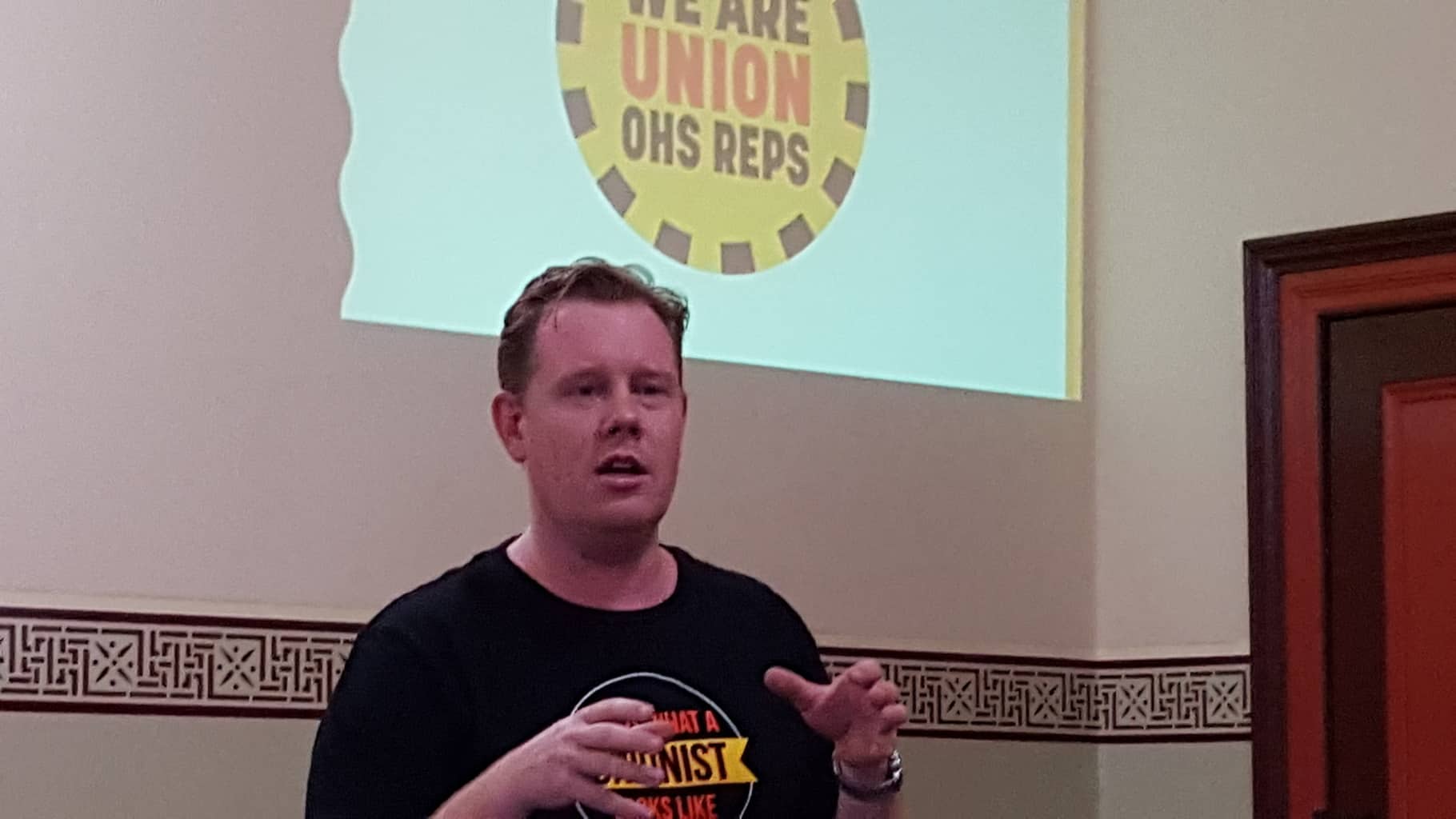
 Luke Hilakari became the Secretary of the Victorian Trades Hall Council (VTHC) in late 2014. He has spoken at the 2015 Workers’ Memorial ceremony and in February 2016 he launched a new campaign focussing on occupational health and safety (OHS). Continue reading ““We want to build this OHS safety army””
Category: community
Zero Harm is dead, long live ……whatever comes next
Zero Harm was an enormously popular motivational aim for OHS. It originated as a response in some large organisations where safety performance was plateauing and who felt that they had achieved as much as they could in redesigning work and improving physical safety. The plateauing led to frustration and a reassessment of safety practices. The remaining variable was seen to be the worker and so slogans were instigated to increase the care (or mindfulness) of workers.
However, this assessment seems to have taken the traditional, and shallow, approach. One variable is, of course the worker but the assessors failed to see that the organisational structure and operations were, or should be, variable too. In the words of the current Australian Prime Minister, Malcolm Turnbull, this variability, this adaptability, could lead to innovation, economic growth and increased sustainability.
The promotion of the zero harm approach to safety could be seen as a safety dead-end and an indication that organisations were fixed on only seeing the dead-end. Safety thinkers, and there are a few, offered ways out of the dead-end by thinking differently about what we know.
Inquiry links Hazelwood Mine Fire to local deaths
The
OHS and the politics of fear
Occupational health and safety (OHS) cannot exist outside social, economic and political contexts. Some OHS professionals try to convince themselves that OHS is a special case but to do so ignores the components of change that need to be addressed in order to improve workplace safety. There are parallels between OHS and contemporary political thought.
Conversation about work-related grief
Recently SafetyAtWorkBlog was able to spend some time with Bette Phillips-Campbell, the Manager of GriefWork, a unit of the Creative Ministries Network in Melbourne. GriefWork provides a range of support services to families of those who have died at work or due to work factors.
The conversation touches on issues including
- how GriefWork operates and is funded,
- work-related suicide,
- worker memorials,
- the application of restorative justice in the workplace context,
- how a workplace death affects company executives,
The interview can be accessed at Bette Phillips Interview 2015
If you want more information about GriefWork or how you may be able to help this service, please contact Bette on (61) 03 9692 9427 or by email.
Trust, culture and productivity
In September 2015 Dr Matthew Hallowell will be speaking at the National Convention of the Safety Institute of Australia. Hallowell is a bit of an unknown to the Australian occupational health profession so SafetyAtWorkBlog posed a couple of questions to him as an introduction.
SAWB: Is it possible to establish trust and open communication in a company or industry sector, that has a fractious industrial relations relationship with trade unions?
MH: “This is a truly fundamental question to the industry that applies broadly to all project management functions, not just safety.
I think trust can be developed more easily in the context of safety (rather than productivity, for example) because safety involves altruism. I think trust is most dependent on the extent to which the various organizations on a project are willing, able, and encouraged to work together to solve a problem regardless of the contract structure.
In my opinion, integrated project delivery and design-build project delivery methods offer us a new opportunity to work together and build trust because there are more shared objectives and shared incentives.
The traditional lump-sum, design-bid-build contracting strategies with typical regulations around the world (e.g., OSHA that places safety responsibility solely on the contractors and subs), severely limits the opportunity to work together on any one goal.”
Inexactitudes could lead to OHS myths
Consulting firm Deloittes recently announced the merging of its occupational health and safety (OHS) and sustainability sectors in order to provide better customer services. In the article Deloittes says about the importance of workplace mental health:
“Given that one in six working age Australians live with mental illness including depression, that is costing Australian businesses at least $11 billion dollars each year, this is a growing area“.
But the source of this statement is unclear and this lack of clarity may be contributing to some of the inexactitudes in the mental health/wellbeing debate. Continue reading “Inexactitudes could lead to OHS myths”