“They did not know what to say, so they stop saying anything at all”

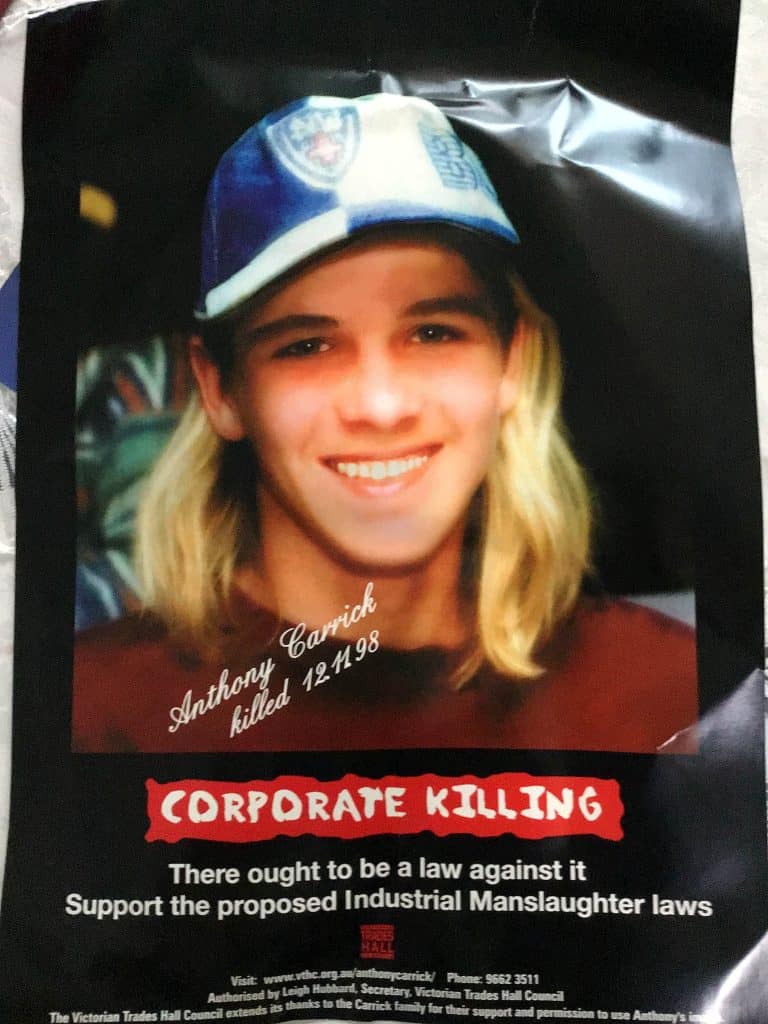
Behind every call for Industrial Manslaughter laws in Australia over the last twenty years has been is a deeply grieving family. We often see relatives on the TV News, standing outside of Courts, or at memorial sites. SafetyAtWorkBlog fears for the mental health of these people who have usually been traumatised by the death and whose experiences in the immediate aftermath and the months afterwards often exacerbates that trauma.

But people have been killed at work for centuries and often the current pain and anger is so raw that we fail to remember those who have already gone through this process because their voices have often been used and discarded.

SafetyAtWorkBlog spoke with several bereaved relatives who have experienced the loss of a relative at work. The focus was on those whose relatives died over a decade ago, to gain a more measured and reflective perspective and in order to understand what may be in the future for all of us who have workers in our families. I responded more emotionally to these stories than I expected and have found it difficult to write about the issues I intended to address, so I have decided to let these interviews and stories stand pretty much by themselves.

The first of these responses is from Jan Carrick. Her 18-year-old son Anthony died in 1998 on his first day at work. One article written in 2003 about Anthony’s death and that of other young workers said this:

Continue reading ““They did not know what to say, so they stop saying anything at all””

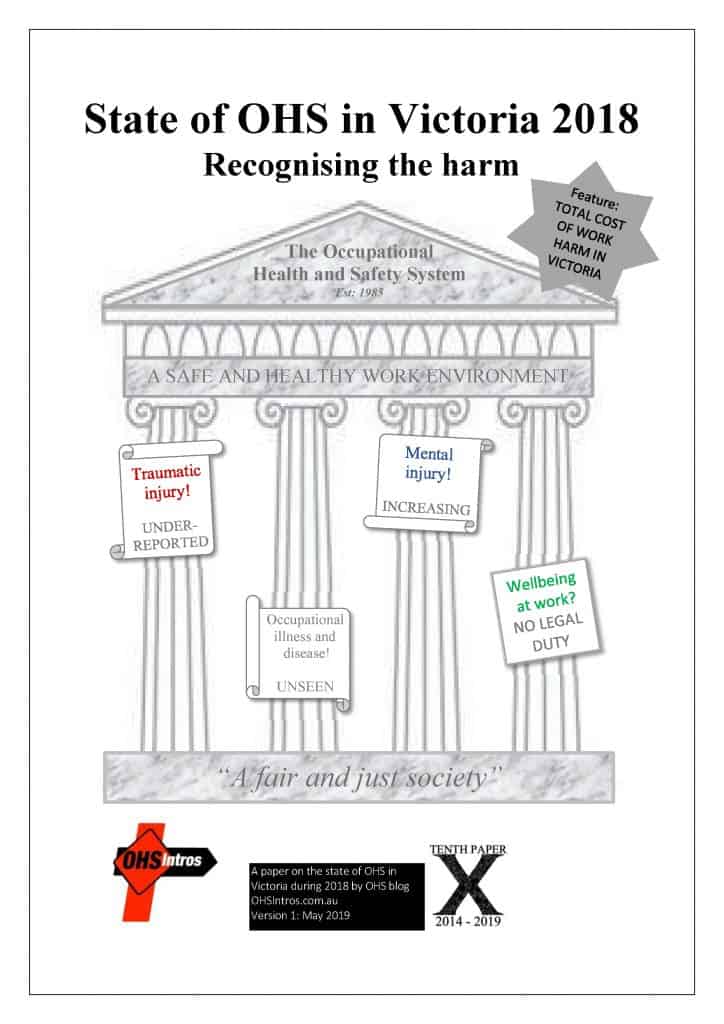
New estimates of the Total Harm from workplace illnesses and injury

Barry Naismith, through his OHSIntros organisation, has released his latest independent report into the performance of WorkSafe Victoria and occupational health and safety (OHS) more generally. Naismith’s contribution is a fresh context on Victoria’s safety and health regulator, and it is an excellent reminder of the prominent issues in the previous 12 months.

Subscribe to SafetyAtWorkBlog to continue reading.
Subscribe Help
Already a member? Log in here

Running with scissors in Parliament

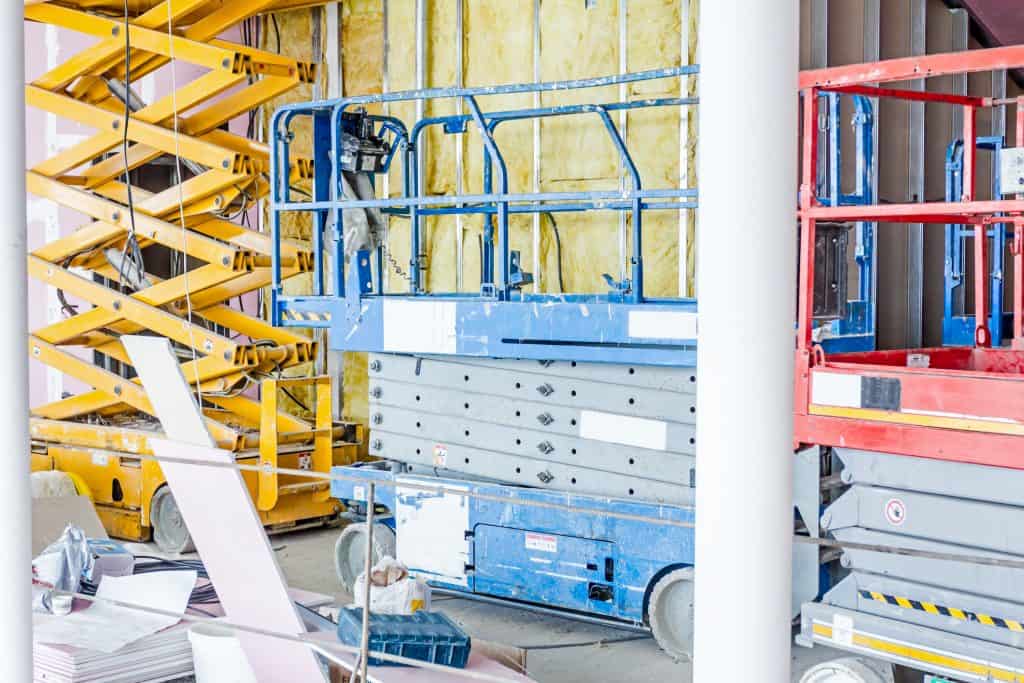
The workplace death of Jorge Castillo-Riffo continues to raise important discussions about occupational health and safety (OHS), responsibility and accountability. The South Australian parliament discussed scissor lifts and OHS on June 6 2019. The criticism of the Coroner was concerning and the debate was a sadly typical political discussion but the issue of improving OHS in construction sites has not been forgotten by some South Australia politicians.

Subscribe to SafetyAtWorkBlog to continue reading.
Subscribe Help
Already a member? Log in here

Farm safety gets more funding

Further to the recent article on the Victorian Government’s Budget Papers, farm safety programs received the funding to support the pledges made by the Australian Labor Party in last year’s Victorian election campaign. As with many occupational health and safety (OHS) announcements, details are hard to obtain but the Victorian Farmers Federation (VFF) has helped.

The Victorian Budget papers pledged funds to

  • employ two additional Farm Safety Officers.
  • increase health checks for farmers.
  • deliver a new campaign to raise greater workplace safety awareness.
Continue reading “Farm safety gets more funding”

OHS inaction is “a complete disgrace”

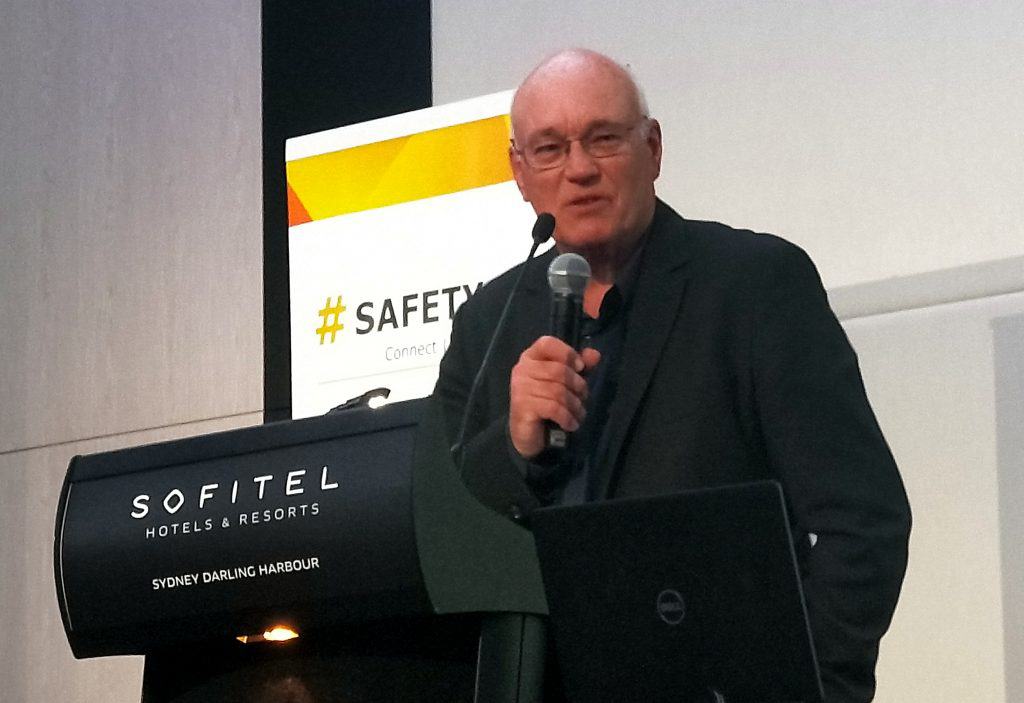
Matthew Peacock is an award-winning Australian journalist and one of the very few in Australia who can bring an informed and nuanced perspective to the topic of occupational health and safety (OHS). Last week he was invited to speak at the dinner of the Safety Institute of Australia‘s Conference. According to some delegates, he roasted the OHS profession; to others, he set the profession a deserved challenge.

Subscribe to SafetyAtWorkBlog to continue reading.
Subscribe Help
Already a member? Log in here

Victims of industrial crime

On May 13 2019 the Australian media published articles based on research (released after embargo) conducted by the RMIT’s Centre for Innovative Justice and about victims of crime which those advocating for Industrial Manslaughter laws should seriously consider.

The Age newspaper reports

“Victims of crime felt let down by the system when offenders pleaded guilty to a less serious charge and did not proceed to trial ‘‘ because they wanted the opportunity to tell their story’’ , …..”

and that

“One victim interviewed during the research said they felt left out of discussions with the OPP when charges in their case were downgraded from murder to manslaughter for a plea of guilt …”

Occupational health and safety (OHS) seems a little ahead of the game here as relatives of deceased workers have been integrated into OHS consultation in both Queensland and Victoria. Relatives had a very strong voice through the Senate Inquiry into Industrial Deaths. Victim Impact Statements have been possible in the Courts for many years but Industrial Manslaughter laws add an additional depth to the participation of victims of industrial crime, and an additional risk of false promises.

Subscribe to SafetyAtWorkBlog to continue reading.
Subscribe Help
Already a member? Log in here

Industrial manslaughter laws are (still) unlikely to save lives in the workplace

In June 2018, Rick Sarre, now the Dean of Law at the University of South Australia’s School of Law, wrote an article in The Conversation titled
Why industrial manslaughter laws are unlikely to save lives in the workplace“. On the eve of the #safetyscape conference and an upcoming conference on enforcement in which presentations on Industrial Manslaughter laws will feature, SafetyAtWorkBlog asked the very busy Professor for an update on some of the themes and thoughts in his article. Below are his responses.

Subscribe to SafetyAtWorkBlog to continue reading.
Subscribe Help
Already a member? Log in here
Concatenate Web Development
© Designed and developed by Concatenate Aust Pty Ltd