COVID19 disruption may be unprecedented but was it foreseeable? You bet

Almost twenty years ago, there was a surge in discussion and analysis about disaster preparedness, mainly, due to the terrorist attacks of September 11 2001 and the aftermath, especially the use of biological weapons. The risks of viruses was considered around that time but there was so much fear and multiple threats, real and perceived, that the preparedness for social harm and disruption due to naturally-occurring viruses was largely overlooked or neglected. However, in this time of COVID19 it is useful to remember that viral pandemics and preparedness were being discussed. Whether the discussions became actions, or should have, is a different discussion.

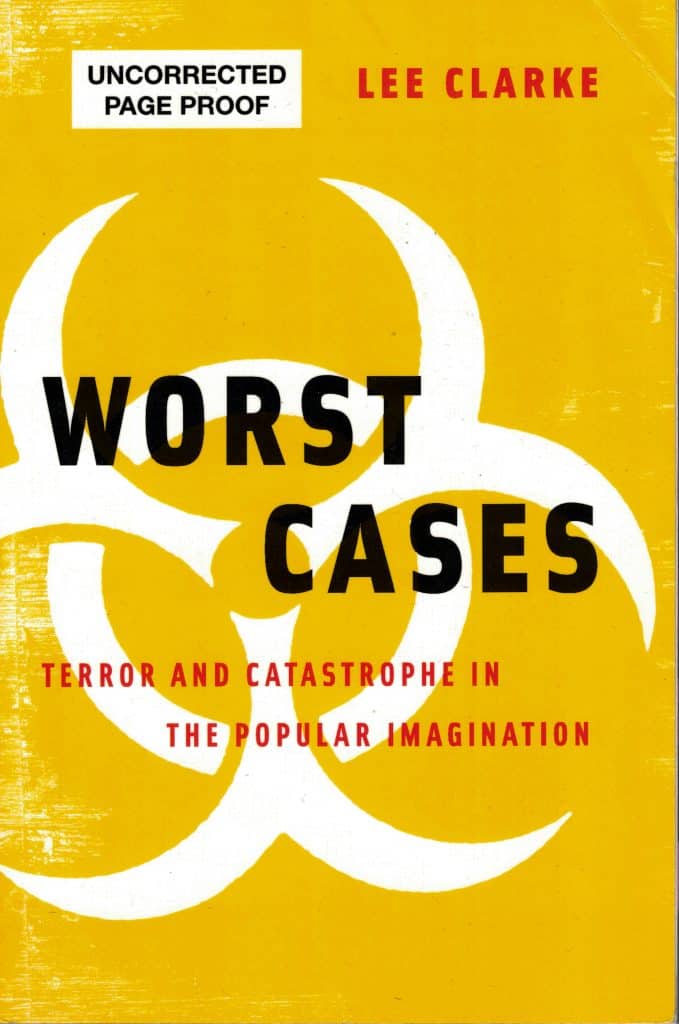
Professor Lee Clarke’s book “Worst Cases – Terror and Catastrophe in the Popular Imagination” provides a useful and pre-COVID19 lesson.

Subscribe to SafetyAtWorkBlog to continue reading.
Subscribe Help
Already a member? Log in here

We are now our grandparents – fearful but adaptive

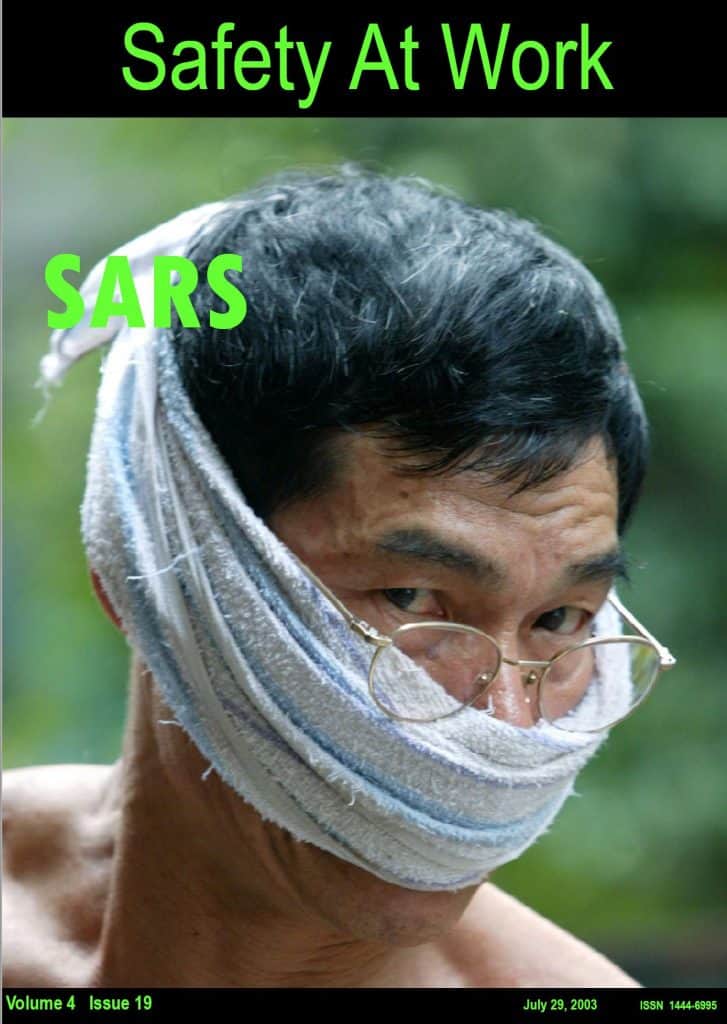
This blog transitioned from a self-published magazine almost 12 years ago. In 2003, the magazine published an edition focussing on the SARS (Severe Acute Respiratory Syndrome ) outbreak which includes a long article by Peter Sandman and Jody Lanard on epidemics and fear, an emotion that many of us are feeling in these uncertain times. The full magazine is available for subscribers below.

Subscribe to SafetyAtWorkBlog to continue reading.
Subscribe Help
Already a member? Log in here

COVID19 and the management of change

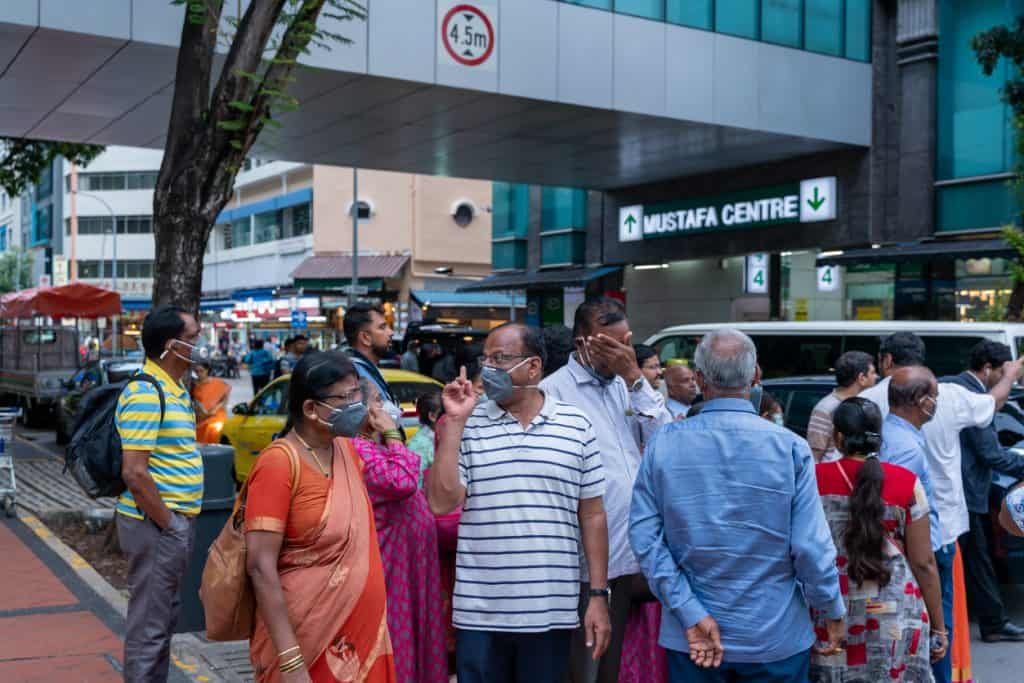
People wearing masks in Little India Mustafa Center Singapore Covid-19 Coronavirus

It is very hard to write about any occupational health and safety (OHS) issue in this time of a global pandemic. Many of the workplace hazards continue to exist but in a different context and, of course, the duty of care on both employers and workers continues wherever work is being done. Australians, understandably, have an insular focus at the moment, but there is some benefit from looking at how national disruption has been handled elsewhere in the recent past. COVID19 is not SARS, but Singapore’s action in 2003 is useful in showing how change can be managed. This change management is likely to be a more integral part of effective OHS management for all Australian businesses once the pandemic declines.

Subscribe to SafetyAtWorkBlog to continue reading.
Subscribe Help
Already a member? Log in here

Industrial Manslaughter exemption for mining looks over

Many advocates see the introduction of Industrial Manslaughter laws as a glorious moment that will change the world for the better, in other words, a silver bullet. But if it is a silver bullet, it is being shot into the political murk. Queensland’s expansion of its Industrial Manslaughter laws to the mining and resources industries was presented to Parliament on February 4, 2020, and is likely to pass with the support of those industries.

Occupational health and safety (OHS) laws should apply to businesses and workers without exception. Queensland’s exemption of the mining and resources sector from Industrial Manslaughter laws was always a nonsense but that nonsense made good political sense in an election year.

Subscribe to SafetyAtWorkBlog to continue reading.
Subscribe Help
Already a member? Log in here

New air quality standards for outdoor work

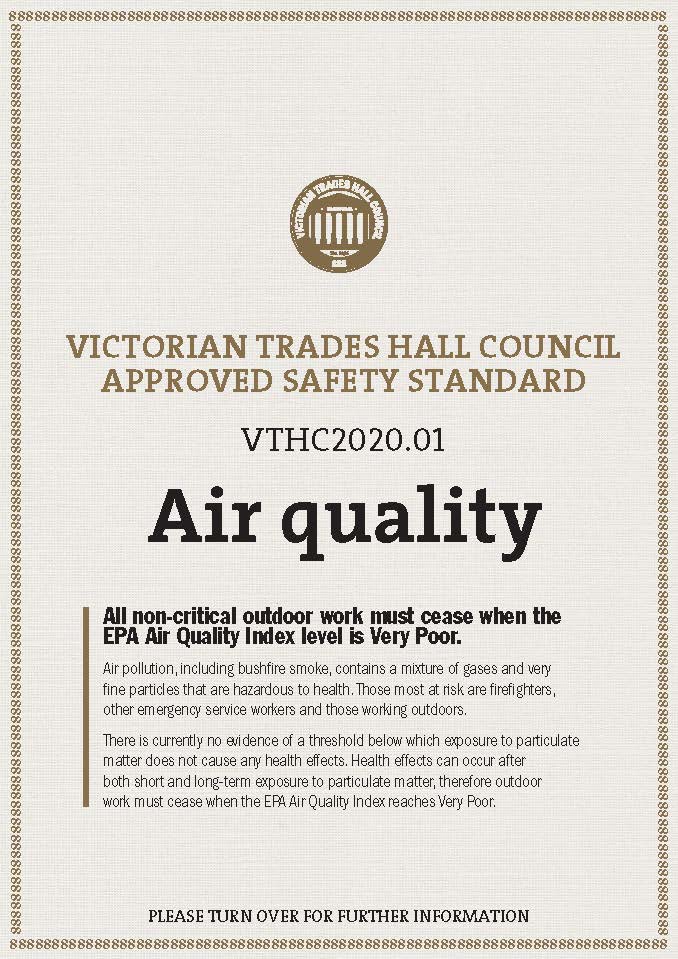
On January 30 2020, the Victorian Trades Hall released a new “approved safety standard” on air quality risks for outdoor workers. It is the latest of a series of alerts and guidelines generated by the persistence of bushfire smoke in urban areas of, especially, New South Wales and Victoria. Bushfire smoke is only going to become more frequent in Australia, and its persistence over weeks, requires a coordinated discussion on how Australian workplaces and practices need to change to adapt to the new climate.

Subscribe to SafetyAtWorkBlog to continue reading.
Subscribe Help
Already a member? Log in here

What employers need to know: the legal risk of asking staff to work in smokey air

The following article is reproduced from the excellent academic communication website The Conversation, and is written by Elizabeth Shi, a Senior Lecturer, in RMIT University‘s Graduate School of Business and Law. The article is a very useful contribution to managing the risks of working in smokey environments but is only one contribution to a discussion on occupational health and safety in smokey workplaces that has many, many months to go.

Amid thick bushfire smoke in cities including Canberra and Melbourne, employers need to consider their legal obligations.

Some have directed their workers not to turn up in order to avoid to occupational health and safety risks. Among them is the Commonwealth department of home affairs which last week asked most of its staff to stay away from its Canberra headquarters for 48 hours. Other employers want to know where they stand.

Continue reading “What employers need to know: the legal risk of asking staff to work in smokey air”

This year’s bushfires should change the management of outdoor work

Sydney, NSW, Australia – November 20th 2019: Smoke over Sydney due to bush fires on edge of city. Fires have been burning for days and have been described as unprecedented.

Safe Work Australia (SWA) has reminded Australian businesses that they have a formal occupational health and safety (OHS) responsibility for workers exposed to poor air quality. Its guidance provides sound risk considerations for outdoor workers and their managers, but needs further explanation to help businesses reduce the risk in a practical sense.

Subscribe to SafetyAtWorkBlog to continue reading.
Subscribe Help
Already a member? Log in here
Concatenate Web Development
© Designed and developed by Concatenate Aust Pty Ltd