
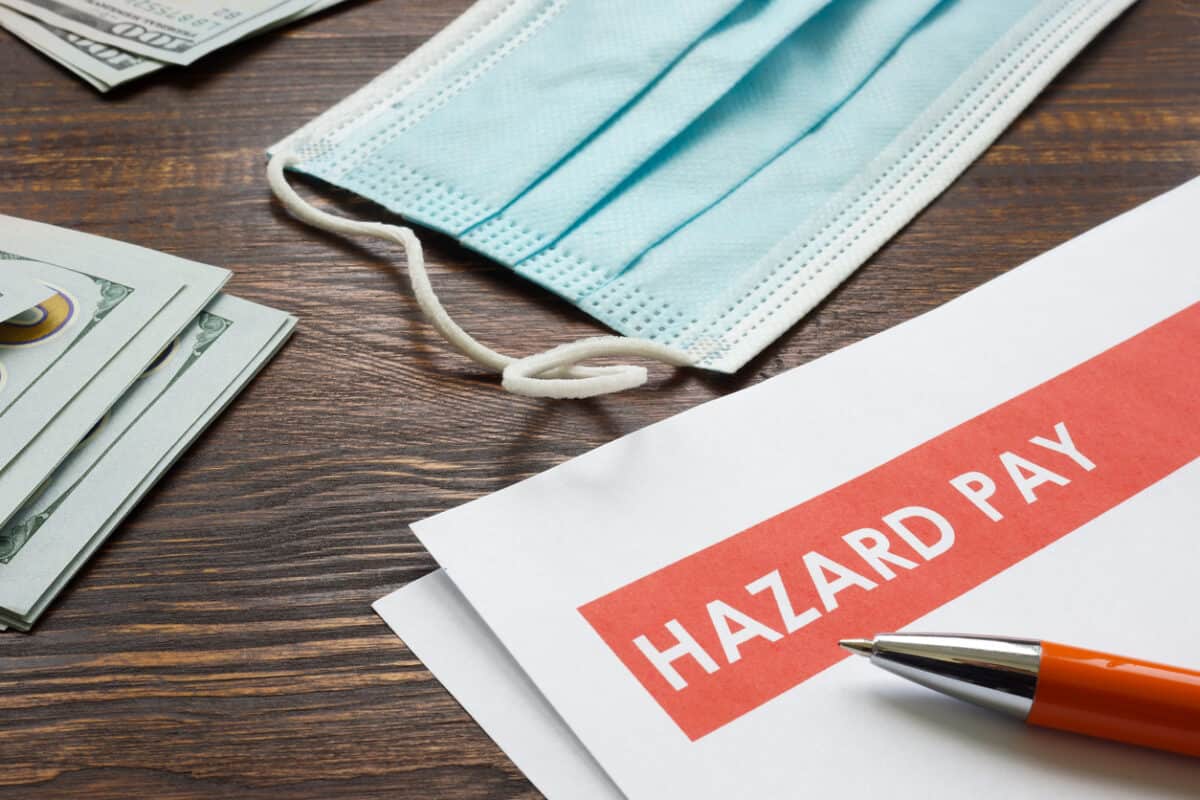
The traditional manner for employers to get unsavoury or hazardous work tasks done is to offer more money. This is referred to as Danger Money in some countries and Hazard Pay in others. There has been a resurgence in Danger Money during the COVID-19 pandemic, offered by some employers and requested by some workers and unions. This negotiation is a collaborative avoidance of both groups’ occupational health and safety (OHS) obligations and should be opposed vigorously by OHS associations and advocates.
Category: Duty of Care
Bad work “habits” are part of the problem
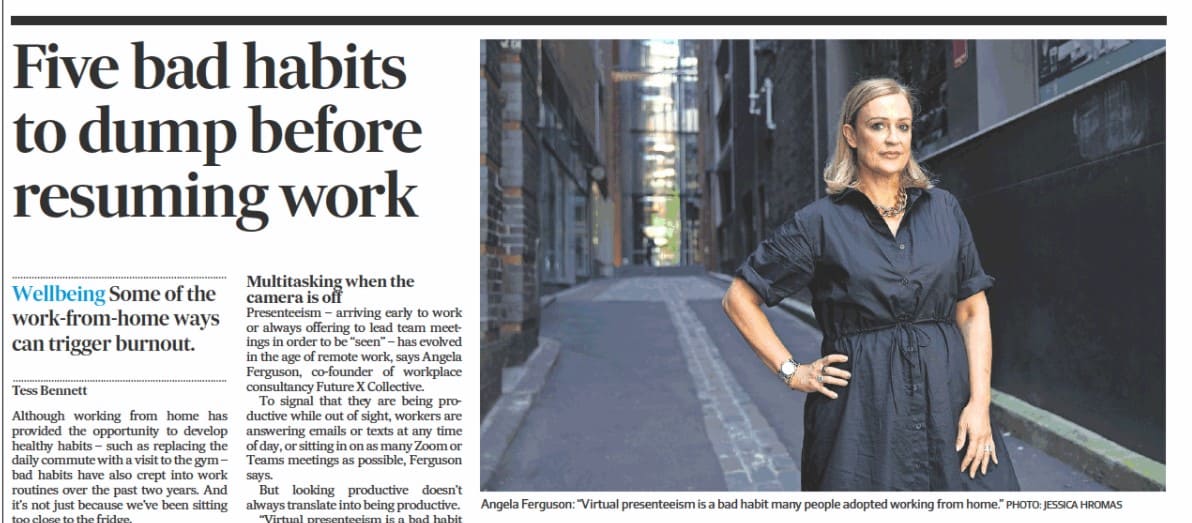
The headline immediately caught my attention:
“Five bad habits to dump before resuming work”
Australian Financial Review, January 4, 2022
Such is the power of the click-bait headline.
This article is aimed at middle managers and those working from home. It is in the Australian financial/business newspaper so articles about individual empowerment and entrepreneurship rather than structural change are expected. The article above is a classic example of the Australian Financial Review’s approach to workplace health and safety matters: a newspaper with significant influence on business leaders and executives but one that rarely quotes or approaches occupational health and safety (OHS) experts.
We can control workplace mental health if we want to
Some years ago, Time Management was all the rage. It was the precursor to the resurgence of the Work Smarter – Not Harder movement, but it seems to have faded from conversation recently. Part of the reason is that everyone is expected to be contactable, every day, every week, every month. And then we wonder why there seems to be a workplace mental health crisis?!
The answer is simple – turn off your phone, turn off your work computer. This will cause some readers to shake and say that they cannot do that as their bosses expect them to be available. The unfairness of this was discussed a little in the article on “work-to-rule“, but the employers’ expectations are more than unfair. They indicate a poor manager who cannot manage their time and of a workplace culture that endorses this sloppiness/laziness. A recent New Zealand article looked at some of the recent trends.

Increased OHS accountability sought
The political strategy of Ken Phillips of Self Employed Australia (formerly of the Independent Contractors of Australia) received a boost in The Age newspaper on December 12 2021, in an article headlined “Group to mount legal challenge to force prosecution of Premier over hotel quarantine disaster” online (paywalled) or “Business owners seek prosecution of Andrews over hotel quarantine” in the print version.
Phillips uses a section of Victoria’s Occupational Health and Safety (OHS) Act to make a political point about accountability. Previously, Phillips, his usual mainstream media contact Robert Gottliebsen, and others have called for Premier Daniel Andrews to be charged with Industrial Manslaughter (IM) over the deaths of over 800 people linked to a COVID-19 outbreak from the failure of Victoria’s hotel quarantine program. (The recent non-hotel outbreak is around 597 deaths)

The OHS benefits of “work to rule”
In May 2020, “work to rule” was touched on in a long article about the future of work. “Work To Rule” is a phrase that is rarely heard now, as the industrial relations (IR) conversation has changed, but it is more relevant than ever.
The industrial relations context for working to the rules is illustrated in this short article. Still, work to rule can have occupational health and safety (OHS) benefits, especially psychosocial health and the current mot du jour, The Great Resignation/Rebalance.

A contemporary First Aid code of practice
WorkSafe Victoria has updated its Compliance Code for First Aid in the Workplace. No huge change to determining first aid compliance, but it, curiously, is labelled as Edition 1 even though a previous Edition 1 has existed since 2008 (earlier versions go back to 1995). So what’s changed?
Suicides and historic data
Recently Safe Work Australia (SWA) released an excellent batch of occupational health and safety (OHSA) information in its annual “Key WHS Statistics – Australia 2021″. The decline in fatalities is significant, but there remains an odd omission that is worrying the longer it is not addressed – work-related suicides.
Limiting the statistical period also has implications for how OHS is understood and for the rate of change.