“Every death is manslaughter”

The South Australian Branch of the Construction Forestry Mining and Energy Union (CFMEU) held a protest rally in Adelaide on 15 February 2017 in response to the political negotiations in Australia’s Parliament about the reintroduction of, what the union sees as, anti-union legislation.  Throughout the rally’s presentations (available online through the CFMEU Facebook page), the issue of occupational health and safety (OHS) was raised and it is worth looking closely at what was said and the broader political and safety context.

The issues to be addressed in the protest rally included Senator Nick Xenophon’s “deal” with Prime Minister Turnbull that the CFMEU claims will:

  • ” Make our workplaces less safe
  • Put more overseas visa workers on our building sites
  •  Cut the number of apprentices in South Australia
  •  Threaten job security and increase casual jobs
  •  Fail to mandate Australian made products on construction sites”

After Joe McDonald opened the rally, the Secretary of the CFMEU SA, Aaron Cartledge (pictured above), spoke about how workers in South Australia had been dudded on safety because the health and safety representatives (HSRs) cannot call on external safety advisers to help them with an OHS matter.  This may be the case but Cartledge’s comments illustrate a common perspective of trade unionists – a reluctance to consider safety management strategies other than those dependent on HSRs.

Subscribe to SafetyAtWorkBlog to continue reading.
Subscribe Help
Already a member? Log in here

Trump, Puzder and workplace safety

Occupational health and safety (OHS) law in the United States has little impact on that of any countries outside of North America. But the response to those OHS laws by US and multinational companies indicates corporate approaches to workplace safety and this can spread round the world.  The anticipated strategy to worker safety under the Presidency of Donald Trump is expected to be harsh, if he attends to it at all.

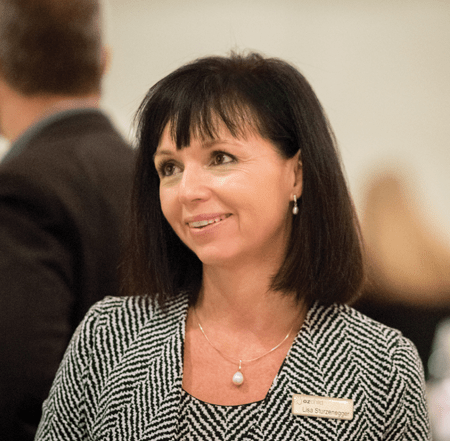
Brad Hammock, Attorney at US workplace law firm, Jackson Lewis P.C. (pictured right), told SafetyAtWorkBlog that

“There is a dominant view that there will be a weaker OSHA under the Trump presidency. This is driven largely by historical analyses of past Republican administrations and President Trump’s anti-regulatory rhetoric. I anticipate that OSHA will continue to be active, but will emphasis cooperative and voluntary programs over enforcement. In addition, I anticipate fewer large safety and health standards being issued under a Trump presidency. “

Subscribe to SafetyAtWorkBlog to continue reading.
Subscribe Help
Already a member? Log in here

Funding granted to UnionsACT for research

Pages 13-14 of the Australian Capital Territory’s Hansard for December 14 2016 contained a curious discussion on work health and safety (WHS) funding.

The discussion was primarily looking for details on government funding of trade union WHS services. Rachel Stephen-Smith of the ruling Labor Party and responsible for workplace safety stated that part of the financial grant given to UnionsACT is for “undertaking research into work health safety”.  Alistair Coe, Liberal leader of the opposition sniffed a political opportunity and asked:

“…has any of the research which has been undertaken by UnionsACT actually been published?”

Subscribe to SafetyAtWorkBlog to continue reading.
Subscribe Help
Already a member? Log in here

Latest quad bike safety advice is more measured

quad-bikes-children-pdf_extract_page_1SafeWorkSA has released a series of single page safety advices on a range of occupational health and safety (OHS) topics including the use of quad bikes in agricultural workplaces.  The information included and the tone used indicates that the debate over quad bike safety may be settling.

The advice is clear and concise with some new safety perspectives but there are a couple of odd elements. The advice does say that the suitability of a quad bike should be assessed prior to purchasing but doesn’t suggest alternatives.  These options should be expanded elsewhere on SafeWorkSA’s website or farming publications. Continue reading “Latest quad bike safety advice is more measured”

Dummies can equal clarity

ohs-dummies-coverIt took a long time but Wiley has published a Dummies guide on Health and Safety At Work. The lack of an occupational health and safety (OHS) book in this series has always been a mystery particularly when the Dummies” market seems to be, primarily, small- to medium-sized businesses.  This edition is written for the UK market but the vast majority of the book is applicable to any jurisdiction that is based on the original UK OHS laws. But is it any good?

SafetyAtWorkBlog dipped into several chapters of the book to see if it was on the right path.

Subscribe to SafetyAtWorkBlog to continue reading.
Subscribe Help
Already a member? Log in here

CEO-speak and safety culture – losing track of what matters most

The BP Deepwater Horizon disaster has faded to become another safety leadership failure to be discussed in the OHS and risk management courses but some new research ($ paywall) in Critical Perspectives on Accounting provides a fresh perspective on BP’s safety culture and leadership prior to the major disaster by deconstructing the speeches of the the then-CEO, Tony Hayward.

Subscribe to SafetyAtWorkBlog to continue reading.
Subscribe Help
Already a member? Log in here

Safety leadership through action rather than PowerPoint

The Spring 2016 edition of National Safety magazine includes a cover story on leadership written by me.  In it John Lacey insists that safety leadership begins at the top.  This position is supported by many business and occupational health and safety (OHS) advocates but this seems to me to be based on a misunderstanding of leadership.

nsca-mag-coverIn response to a question about leadership in small- to medium-sized businesses, Lacey said that leadership “applies to all”:

“[Leadership] is not different but how to apply it will be different. The start must be from the top down. The basic values, behaviours, knowledge and systems will be defined by the organisation no matter how large or small it is.”

This is remarkably like safety culture and my response is that leadership can be displayed by anyone at any level of a company or society and can manifest at any organisational level.  The fact is that it is easier to sell a commodified leadership to executives as they are expected to show leadership in times of crisis or stockmarket uncertainty and most of us translate that into leadership of safety.

Leadership, as with most elements of OHS, takes time and effort – sometimes over generations.  This is particularly so with anything concerning corporations that are wary of change unless that change supports profit and shareholder returns. (I would argue safety increases profits and company value but this is an argument than struggles for traction)

The most abused aphorism used to justify this focus on executive leadership is that “a fish rots from the head down”. Nonsense.  As this website states, it is the guts of a fish that rots first.

fish boneThe attention given to senior executive leadership is an organisational echo of the economic trickle-down theory which has been roundly dismissed as flawed and, in some instances, has contributed to increasing socio-economic inequality.

Lacey acknowledges that anybody within an organisation can lead although leadership starts from the top.  He supports my contention that leadership occurs at all levels of a business and that actions show leadership and safety, probably, more effectively and cheaper than any training session.  Lacey says

“…even the gesture of picking-up litter or wearing the correct [personal protective equipment] in front of others in the work team can be seen as a form of leadership. Leading by example is an old but such a true saying. 

These actions are the best way of improving workplace safety and showing leadership, and for the least cost.  Safety should be improved by actions rather than PowerPoint.

Kevin Jones

[Note: please support National Safety magazine if you can.  It is not available online and only through subscription but it is one of the few hard copy OHS magazines left in Australia and one of the few, if not the last, that actually pays its writers (not as much as we’d like but that’s the continuous battle of the freelance writer).  This stance is keeping advertorials at bay and gives National Safety an integrity that is often missing in other safety publications]

Concatenate Web Development
© Designed and developed by Concatenate Aust Pty Ltd