
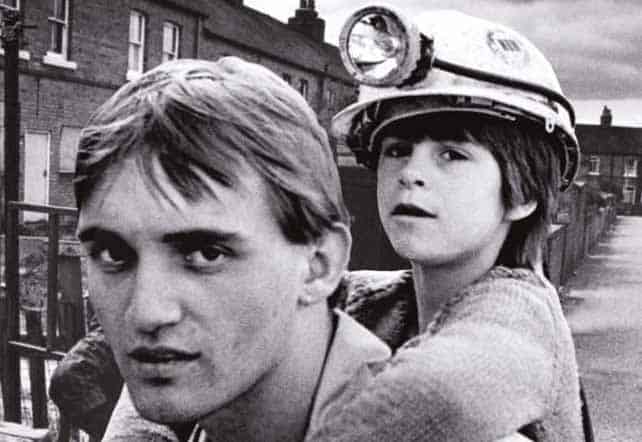
In 1984 I was in England during the miners’ strike, a period of profound social and political change in the United Kingdom. The politics of that period have always fascinated me, but my profession has also caused me to look at some of the attitudes to occupational health and safety (OHS). While holidaying recently in the UK, I purchased Backbone of the Nation, looking at both the politics and safety.
Category: evidence
OHS is politics
Jordan Barab is a major voice in occupational health and safety (OHS) in the United States. This year he chalks up 20 years of his Confined Spaces blog. His latest year-in-review article includes a political perspective that Australian OHS professionals and institutions should consider.

No one seems to know why farm deaths have declined
This week’s Weekly Times, a major Australian agriculture newspaper, is reporting the good news that work-related deaths on farms have declined (not available online). The numbers from Safe Work Australia are positive, but the analysis of the reasons for the decline is thin.

An industrial relations perspective on psychosocial hazards
The prevention of workplace psychosocial hazards will be an increasing issue of concern and debate in 2024 as more Australian jurisdictions re-emphasize the application of occupational health and safety (OHS) laws to this insidious hazard. That debate requires a broad range of voices to better understand prevention strategies and to assess existing strategies that have failed or impeded progress. Emeritus Professor Michael Quinlan is one such voice, especially in his recent article, “Psychosocial Hazards: An Overview and Industrial Relations Perspective”.
[Note this article discusses work-related suicide]

Caesarstone has a point in its identification of the root cause for silicosis deaths
Engineered stone manufacturers are, understandably, not happy with Australia’s proposed ban on their silicosis-generating products. Some home builders have also expressed dissatisfaction. They are often ignoring the reason for the ban – the unnecessary deaths of workers – although at least one argument has merit.
In an article by the Australian Broadcasting Corporation, Caesarstone, the major supplier of engineered stone to Australia, identified what it sees as the real causes of silicosis risks:

Australia is the first nation to ban engineered stone due to worker health concerns
The heads of Australian work health and safety authorities have decided to ban engineered stone from the middle of 2024. Some will seed this as a win for the trade union movement ( the unions certainly will), but many occupational health and safety and industrial hygiene professionals have been leading the way in obtaining the research evidence that made this decision such an easy one to make.
Interview with ILO’s Manal Azzi
Last week, I was able to interview several speakers, sponsors and delegates at the 23rd World Congress on Safety and Health at Work, sometimes on behalf of the Congress and at other times privately. Some of these interviews were edited from forty-five minutes of content to ten. The interview with the Team Lead on Occupational Safety and Health at the International Labour Organization, Manal Azzi, available online, was once such. This SafetyAtWorkBlog article is the full, slightly edited, transcript of that interview.