

Subscribers will know that I often make connections with ideas from beyond the traditional occupational health and safety (OHS) areas. The other day I was travelling back from a regional part of Victoria, listening to All Things Considered. There was an article about regaining and maintaining a sense of wonder. I found some wonderful OHS stuff.
Category: evidence

Commitment Interruptus on engineered stone
Trade unionists in the United Kingdom have a similar battle over the safe exposure limits to silica dust that Australia “resolved” a few years ago. It should not be long before the UK pushes for a ban on the import of engineered stone or starts arguing over the safety of the product when silica content is reduced to 40%.
Some recent parliamentary argy-bargy in Australia over the cutting of engineered stone was illustrative of some of the issues and lobbying.
OHS and exploitation
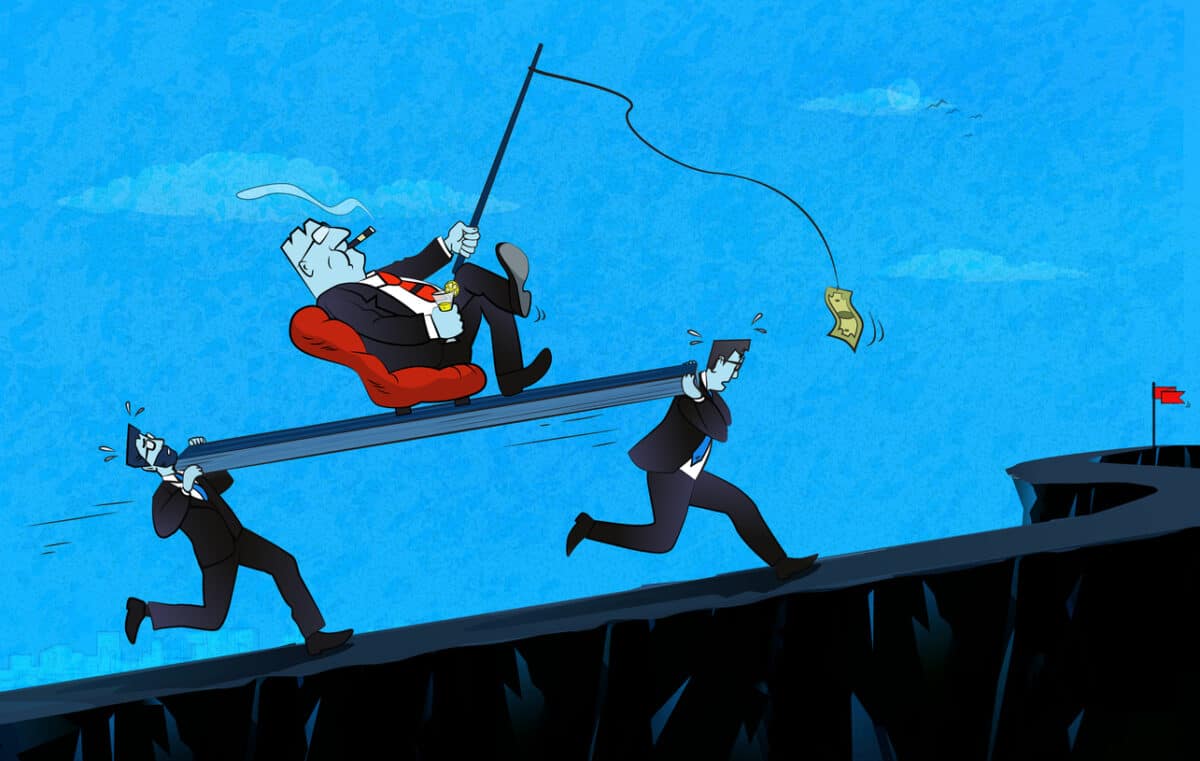
Work-related harm is often generated by exploitation, but exploitation is a term rarely used by the occupational health and safety (OHS) profession. If it was, the OHS approach to harm prevention may be very different, especially now that a safe and healthy working environment is a fundamental right.
Perhaps the omission of exploitation is not that surprising. It is often seen through the lens of industrial relations, and a flexible demarcation often exists between IR and OHS. It is important to note that the International Labour Organisation’s Glossary of OSH terms also fails to include exploitation though it is from 1993.
However, a recent report from the Grattan Institute, Short-changed: How to stop the exploitation of migrant workers in Australia, does discuss workplace health and safety as an element of worker exploitation.
Now “we need a systemic reform to the mental health system”. We always did
[This article discusses suicide.]
The tide seems to be turning in approaches to the prevention of suicides in Australia. Recently the CEO of Suicide Prevention Australia, Nieves Murray, concluded a radio interview with some advice that relates directly to workplace suicides.

A new unicorn – the creation of a work health and safety myth
Occupational health and safety (OHS) has many myths, as do many other business disciplines. This is particularly concerning in a discipline that advocates evidence-based decision-making and pushes for peer-reviewed independent research. Sometimes these myths relate to using gym balls as office chairs or back belts or “safe lifting techniques” to reduce manual handling risks or, and this is one of my own suspicions, ankle-high safety boots that reduce the risk of ankle injuries. There are also mixed messages about sit-stand desks. (Counterarguments welcome in the comments below)
The United States seems to be in the early stages of an urban myth about police overdosing after accidental exposure to fentanyl, although this has been cooking since at least 2021. The nature of social media and the internet suggests that sometime soon, this accusation or experience will appear in Australia. Various US–based media have looked at this occupational hazard, with the latest being National Public Radio (NPR) on May 16, 2023.
Continue reading “A new unicorn – the creation of a work health and safety myth”
OHS and management courses
Research findings that a sample of business and management courses have little to no OHS content are not surprising and match what has now become fashionable to call “lived experience”. Part of the reason for the findings is that the number of undergraduate courses in OHS has declined, and those that did exist were not often recognised as “management” courses, although OHS can be little else. They were certainly not “integrated” with other traditional management approaches.
Part of the reason, I like to think, is because OHS principles challenge the ethics underpinning business management courses and concepts. OHS would say that workers are people and not “units of labour”. If workers are people for whom we are supposed to apply dignity, respect and care, how can Business exploit the worker’s labour, loyalty and goodwill in order to maximise profits or shareholders’ returns, which are supposed to be the main purposes of modern business?
Employers’ continuing “intolerable laxity”
Recently a discussion of occupational health and safety (OHS) in Australia’s construction industry during COVID-19 lockdowns was published. “What’s it going to take? Lessons Learned from COVID-19 and worker mental health in the Australian construction industry” is thankfully “open access” and well worth reading for its strong and controversial OHS recommendations, but it could have paid more attention to the role of the employers or Persons Conducting a Business or Undertaking (PCBU) in applying legislative OHS obligations and how their resistance continues to harm workers.