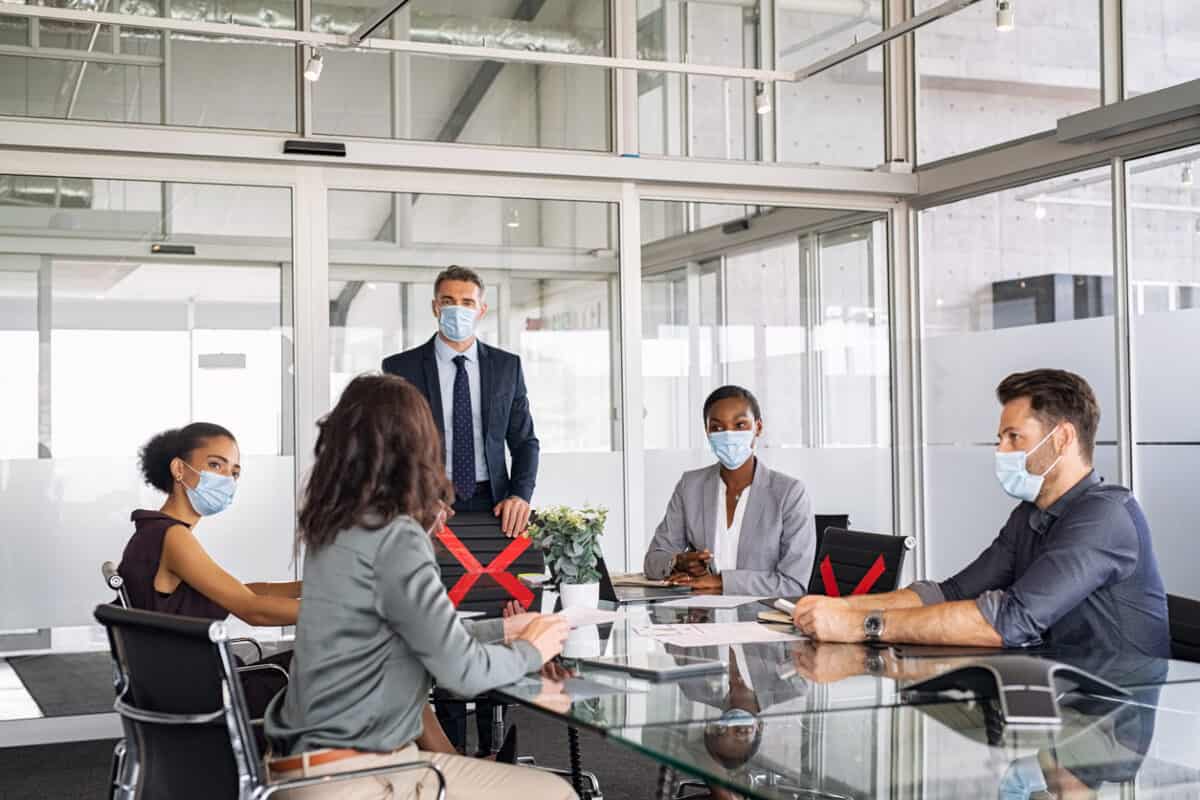
Ventilation is an obvious COVID-19 control but could be a bugger to use

Vaccines are currently the most effective tool available to minimise the spread of COVID-19 to large populations. Fortunately, effective vaccines have been able to be manufactured at such a rapid pace. But previous pandemics have not had vaccines and have had to rely, primarily, on hygiene and isolation. Part of the hygiene practice was to ensure that buildings were well-ventilated. Ventilation actions on COVID-19 were part of Europe’s response to the pandemic in 2020, but Australia has only just started to accept the need for improved ventilation as it was very late to the risks of aerosol transmission.

As vaccinated workers return to workplaces in many of Australia’s urban centres, employers will need to assess their occupational health and safety (OHS) duties in new ways, and ventilation will be a significant challenge.

Subscribe to SafetyAtWorkBlog to continue reading.
Subscribe Help
Already a member? Log in here

Anonymous reporting in Victoria’s legal sector

Industry groups and employers should accept the reality of their occupational health and safety (OHS) duties, especially concerning sexual harassment. Recently the Victorian Legal Services Board (VLSB) launched an online complaints service for lawyers. According to the September 16, 2021, media release, the service:

“…enables both targets and witnesses of sexual harassment to report what happened, where, when and to whom. Reporters can provide as much or as little detail as they feel comfortable”

The attraction of this service is that one would expect such a service from a legal services board to be spot on with its legal and privacy, and human rights obligations. But then, that comes from a non-lawyer.

Subscribe to SafetyAtWorkBlog to continue reading.
Subscribe Help
Already a member? Log in here

“it’s much harder to fix work than it is to fix workers”

Recently in the International Journal of Epidemiology*, Professor Tony Lamontagne and his colleagues wrote that their Australian research:

“….. showed that improving job security is strongly associated with decreasing depression and anxiety symptoms.”

This is an example of the precise research statements that LaMontagne has made over several decades, which have been enormously helpful to those occupational health and safety (OHS) advocates and professionals who choose to use them.

Recently this clarity was on display for over 90 minutes in a podcast interview with LaMontagne. It should be obligatory listening for OHS people.

Subscribe to SafetyAtWorkBlog to continue reading.
Subscribe Help
Already a member? Log in here

Avoiding COVID-19 distractions is essential

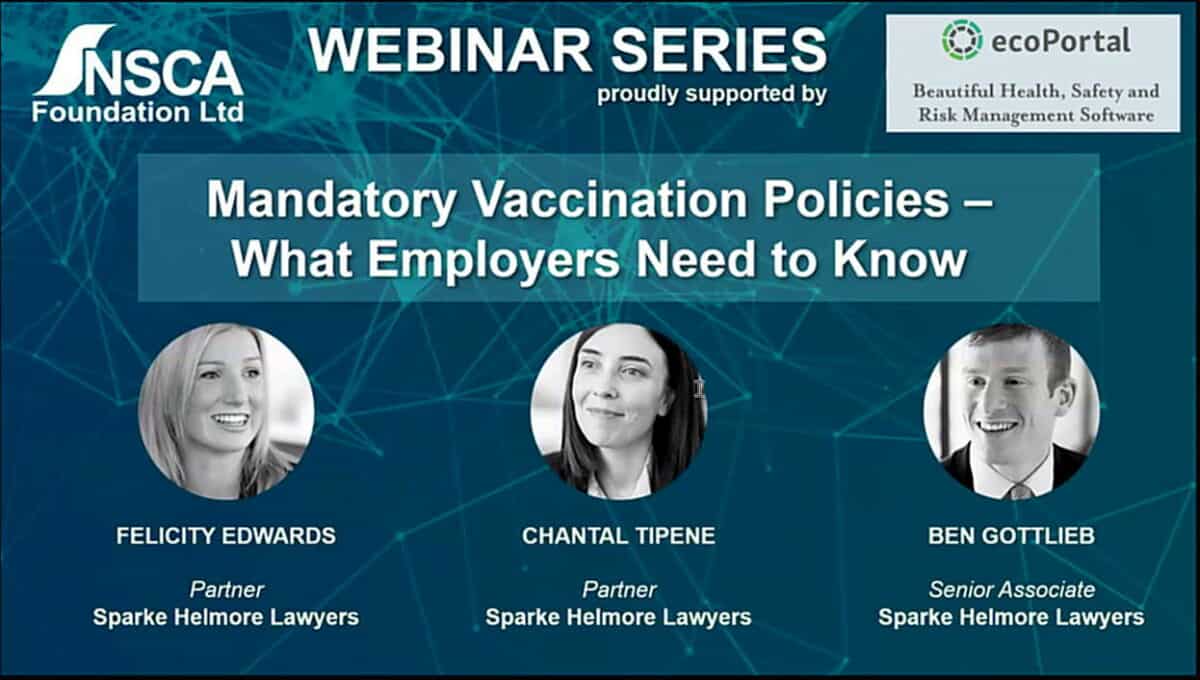
Recently Australian law firm Herbert Smith Freehills conducted a webinar on mandatory vaccinations. (2,000 attendees = hot topic) This workplace issue is moving quickly in each Australian jurisdiction and almost every day. There was some helpful advice in this seminar that was, thankfully, not reliant on case law and the avoidance of occupational health and safety (OHS) liability. Below is a discussion of some of the self-analysis and risk assessment that all employers should undertake to manage their workforce through COVID-19.

Subscribe to SafetyAtWorkBlog to continue reading.
Subscribe Help
Already a member? Log in here

“Too little, too late” but potential in primary prevention

On Australia’s Women’s Safety Summit, Wendy Tuohy contemplated, in The Age, after the first day;

“It may turn out to be too little, too late, but if there’s real commitment behind Morrison’s lines, we could conclude it’s a start.”

There are few signs of Prime Minister Scott Morrison’s commitment. Women will continue to work in companies and workplaces where they are at risk of psychological harm from sexual harassment and physical harm from sexual assault. Occupational health and safety (OHS) laws offer a harm prevention option that nobody seems keen to consider.

Subscribe to SafetyAtWorkBlog to continue reading.
Subscribe Help
Already a member? Log in here

Established safety practices should still be investigated

Every profession has safety practices that have existed for years and are integral to that profession’s character and operations. These have usually occurred because of correlation more than a cause, and occupational health and safety (OHS), in particular, advocates evidence-based decisions.

One longstanding example could be the mandatory wearing of lace-up ankle-high safety boots for working in the construction of railway infrastructure. Another could be the current debate over the effectiveness of face masks for protection from dust particles and airborne infections.

Subscribe to SafetyAtWorkBlog to continue reading.
Subscribe Help
Already a member? Log in here

Revelations for wellness providers and workers

The Australian Financial Review (AFR) is Australia’s national newspaper on business issues. Recently its Editor Michael Stutchbury stated that he purposely focussed the newspaper on being business-friendly. This is understandable as businesses and employers, and entrepreneurs are the paper’s subscriber base and market, but sometimes articles can be too business friendly, and a recent article on burnout and the four-day-week may be an example. Thankfully the AFR article also included a brief mention of a more useful global survey about work in a time of pandemic.

The article, called “Pandemic burnout ignites argument for shorter workweek” (paywalled) included these quotes from a regular AFR contributor Reanna Browne on the possible mental health benefits of a four-day week:

“COVID has intensified these [mental health] issues and also given rise to new forms of workplace exhaustion such as wide-scale increases in working hours, alongside novel health challenges like digital load management and Zoom fatigue…”

Subscribe to SafetyAtWorkBlog to continue reading.
Subscribe Help
Already a member? Log in here
Concatenate Web Development
© Designed and developed by Concatenate Aust Pty Ltd