Australian silicosis research mirrored in the US

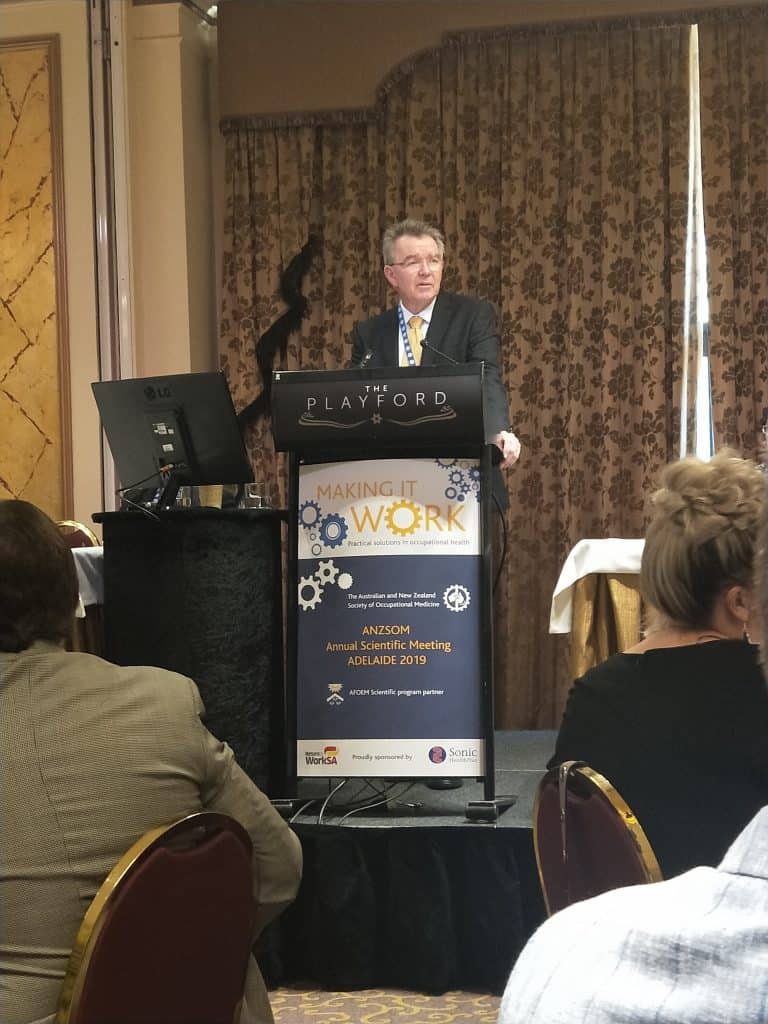
At the end of October 2019 the Australia New Zealand Society of Occupational Medicine (ANZSOM) will be conducting its annual scientific meeting in Adelaide. There are many issues on the agenda but silicosis is likely to figure prominently as it did last year, and as it should. The politics, knowledge and regulatory action has changed in the intervening twelve months.

Australia has new guidances from several occupational health and safety (OHS) regulators and agencies which restrict or ban dry-cutting of engineered stone and change other safety-related practices. There is also at least one political move to ban the use of engineered stone. But perhaps more important is that new research on silicosis risks is appearing and not just from Australia. The United States’ Centers for Disease Control and Prevention published new research on 27 September 2019 based on medical assessments and several silicosis-related deaths.

Subscribe to SafetyAtWorkBlog to continue reading.
Subscribe Help
Already a member? Log in here

Small packages, big info

Face-to-Face communication trumps electronic communication every time. This is true for telling stories to trauma counselling to telling someone you love them.

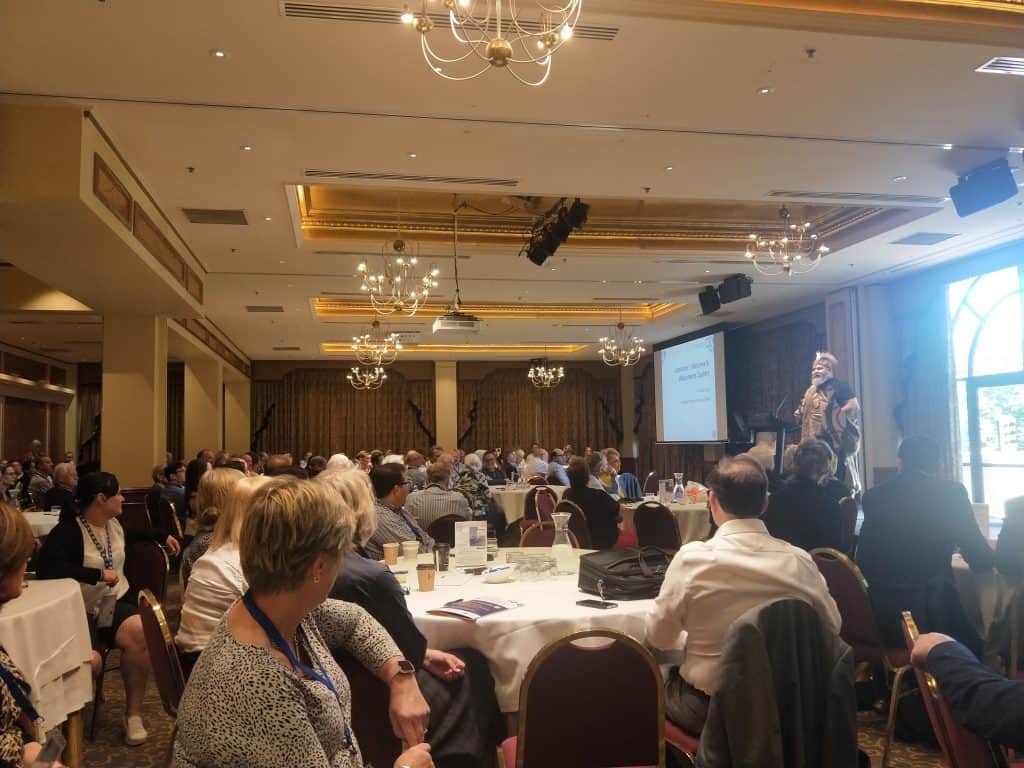
Prof. Michael Quinlan and Alena Titterton Akins at the 2019 Tasmania Health & Safety Symposium

Sixty delegates attended the one-day occupational health and safety (OHS) symposium in Tasmania yesterday. These symposia seem to be the modern equivalent of the traditional conference, especially in Australia, and offer the opportunity for better conversations about OHS. This format still has some need for refinement but it seems more informative than a lecture and less confusing than a multi-streamed big conference of thousands of people.

Subscribe to SafetyAtWorkBlog to continue reading.
Subscribe Help
Already a member? Log in here

CEDA provides business insights but more is needed

One of the missed opportunities for improving occupational health and safety (OHS) over the last 30 years has been the application of corporate social responsibilities (CSR) to the supply chain and not to one’s own health and safety performance. CSR and OHS and social justice and decent work are all elements of the Venn Diagram of keeping people safe.

But this diagram exists in a world where economics dominates political decision-making and conflict results. Recently in Australia corporate leaders have spoken about various controversial social issues. Last week the Assistant Minister to the Prime Minister and Cabinet, Ben Morton advised companies to stop this advocacy and focus on the economic fundamentals of business. This week the Committee for Economic Development of Australia (CEDA) released its Company Pulse survey results which shows that the community accepts that company executives can advocate for social issues.

Subscribe to SafetyAtWorkBlog to continue reading.
Subscribe Help
Already a member? Log in here

Aim for prevention, to affect real change

The Minerals Council of Australia (MCA) has released its submission (not yet online) to the Safe Work Australia’s (SWA) review of the Regulatory Impact Statement on the recommendations from the Boland review of the Model Work Health and Safety laws. It is comprehensive but contains little that is new. An interesting interpretation of the submission comes from considering how the MCA’s recommendations prevent harm, for prevention is the challenge.

Subscribe to SafetyAtWorkBlog to continue reading.
Subscribe Help
Already a member? Log in here

Industrial Manslaughter campaign messages need scrutiny

Recently the State Secretary of the CFMEU Construction & General WA, Mike Buchan, wrote in Construction Weekly about the need for Industrial Manslaughter laws in Western Australia. There are several points made that deserve some assessment and clarification.

He starts by stating that current occupational health and safety (OHS) laws are inadequate. This may be the case, but as Nicole Rosie from WorkSafe NZ has, supposedly, said “you can’t regulate your way to safety”. What may be inadequate is people’s compliance with OHS laws, and there may be many reasons for this non-compliance – ignorance, illiteracy, lack of enforcement by government, complexity of laws and guidance, and/or a total disregard. According to Buchan, and the wider trade union movement, Industrial Manslaughter (IM) laws are supposed to fix this inadequacy.

Buchan writes that

“The penalties that are handed down, even when a builder is found guilty of negligence, have been a disgrace in the face of the extraordinary loss of life and the suffering of families left behind.”

Subscribe to SafetyAtWorkBlog to continue reading.
Subscribe Help
Already a member? Log in here

Asia, maturity, grief, zero and data-collecting mouthguards – the SafetyConnect conference

Zero Harm is hardly ever mentioned in Australia’s academic occupational health and safety (OHS) conferences, except maybe with a little snigger. But it was prominent at the NSCAV Foundation’s SafetyConnect conference in late August 2019. This was partly because this conference has more of a commercial bent compared to other conferences but also because several international speakers from Asia were able to clarify what was meant by the term.

This conference had an enviable number of prominent Asian OHS professionals and engineers. One of them Ho Siong Hin (pictured above) explained the application of Vision Zero by the Singaporean government and business community.

Subscribe to SafetyAtWorkBlog to continue reading.
Subscribe Help
Already a member? Log in here

New evidence of mental health effects on the relatives of deceased workers

Australian seems to be leading in the investigation of the (secondary) familial and social impacts of work-related death. New research from Lynda Matthews, Michael Quinlan and Philip Bohle to be publicly released soon focused on the mental health of bereaved families after a relative’s death. They found

“At a mean of 6.40 years post-death, 61 percent of participants had probable PTSD (Post Traumatic Stress Disorder), 44 percent had probable MDD (major depressive disorder), and 43 percent had probable PGD (prolonged grief disorder).”

Continue reading “New evidence of mental health effects on the relatives of deceased workers”
Concatenate Web Development
© Designed and developed by Concatenate Aust Pty Ltd