
 The United States media continues to scrutinise the Department of Labor (DoL). On March 13 2017, The New York Times (NYT) expressed concerns about the lack of official media releases from the department, comparing the actions under a Trump administration against the Obama occupational health and safety (OHS) strategy. Some are claiming this to be a deliberate strategy but, until the Labor Secretary is confirmed, it may simply be caution. Such an apparently simple action can have broader effects on OHS management, as Australia learnt. Continue reading “US says “nothing to see here, move along””
Category: government
Evidence says don’t rely on manual handling training as it doesn’t work
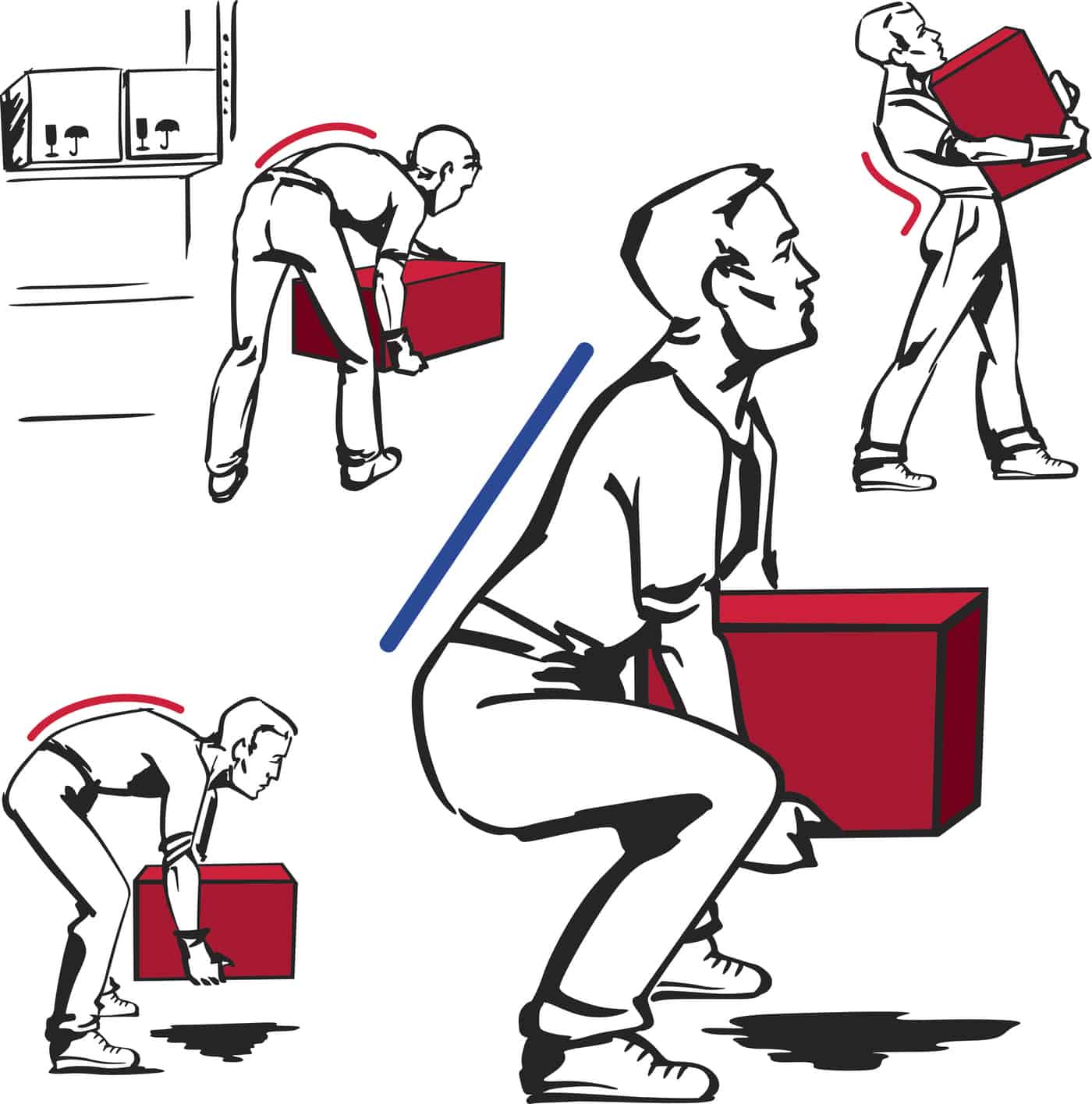 Everyone knows the safe lifting techniques – keep your back straight, keep the load close to your body and bend your knees – because they have done the proper training. Well scrap that training! According to new guidance from Workplace Health and Safety Queensland (WHSQ):
“The research evidence shows that providing lifting technique training is not effective in minimising the risk of injury from manual tasks.”
USA joins the red tape review rollercoaster

Melania Trump plagiarised a Michelle Obama speech. Following the signing of an Executive Order to reform regulations, perhaps President Trump could echo these words from a similarly-themed Executive Order of President Bill Clinton in 1993:
“The American people deserve a regulatory system that works for them, not against them: a regulatory system that protects and improves their health, safety, environment, and well-being and improves the performance of the economy without imposing unacceptable or unreasonable costs on society: – regulatory policies that recognize that the private sector and private markets are the best engine for economic growth: regulatory approaches that respect the role of State, local, and tribal governments; and regulations that are effective, consistent, sensible, and understandable. We do not have such a regulatory system today”
President Trump has set the United States bureaucracy a task that has already been undertaken by the
Poor worker safety through gov’t disinterest and high unemployment
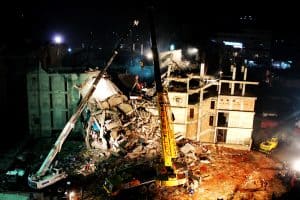
The current edition of SouthAsia magazine has a short report on occupational health and safety (OHS) in Bangladesh that illustrate the political and social challenges for workers and citizens in a country. The article, “Poor Workplace Safety” (not available online) states that government data for 2016 list more than 1,225 workers killed and over 500 injured. After these figures, and the fact that Bangladesh has a history of catastrophic workplace disasters, the author, Mohammad Waqar Bilal, states
“In fact, the issue of workers’ safety has never been considered by the government on a priority basis.”
Continue reading “Poor worker safety through gov’t disinterest and high unemployment”
The challenges for Trump’s (Plan B) Labor Secretary could be huge and disruptive
 Following the resignation of Andrew Puzder, President Trump has nominated Alexander Acosta to be the new Labor Secretary. The United States media, generally, has been supportive of the nomination particularly in comparison to Puzder. However, there was a particular line in the President’s media conference that may indicate his approach to safety legislation and regulations.
“We’ve directed the elimination of regulations that undermine manufacturing and call for expedited approval of the permits needed for America and American infrastructure and that means plant, equipment, roads, bridges, factories.” (emphasis added)
President Trump’s plans for cutting regulatory red tape was forecast during his election campaign when he stated that regulations:
“… just stopping businesses from growing.”
President Trump or his Labor Secretary nominees have not mentioned occupational health and safety (OHS) specifically but the
“Every death is manslaughter”
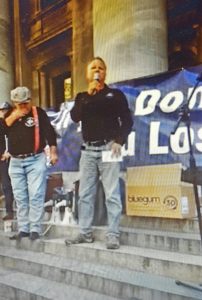 The South Australian Branch of the Construction Forestry Mining and Energy Union (CFMEU) held a protest rally in Adelaide on 15 February 2017 in response to the political negotiations in Australia’s Parliament about the reintroduction of, what the union sees as, anti-union legislation. Throughout the rally’s presentations (available online through the CFMEU Facebook page), the issue of occupational health and safety (OHS) was raised and it is worth looking closely at what was said and the broader political and safety context.
The issues to be addressed in the protest rally included Senator Nick Xenophon’s “deal” with Prime Minister Turnbull that the CFMEU claims will:
- ” Make our workplaces less safe
- Put more overseas visa workers on our building sites
- Cut the number of apprentices in South Australia
- Threaten job security and increase casual jobs
- Fail to mandate Australian made products on construction sites”
After Joe McDonald opened the rally, the Secretary of the CFMEU SA, Aaron Cartledge (pictured above), spoke about how workers in South Australia had been dudded on safety because the health and safety representatives (HSRs) cannot call on external safety advisers to help them with an OHS matter. This may be the case but Cartledge’s comments illustrate a common perspective of trade unionists – a reluctance to consider safety management strategies other than those dependent on HSRs.
Union may have overstepped and weakened its case
The Construction Forestry Mining and Energy Union (CFMEU) is one of the most militant trade unions in Australia. That it angers many Australians by its strong support for its members is unarguable. Yet recently it has seemed to overstep the mark on its protest against the Australian Government’s introduction of legislation that the CFMEU sees…