Calling something an accident hides the truth

Jessie Singer published her book called “There Are No Accidents” last year. It is a pivotal book about safety and our understanding of the social and legal impacts of calling tragic events “accidents”. On June 13 2023, Singer spoke on Carnegie Council’s From Another Angle podcast about her book and the consequences of its publication.

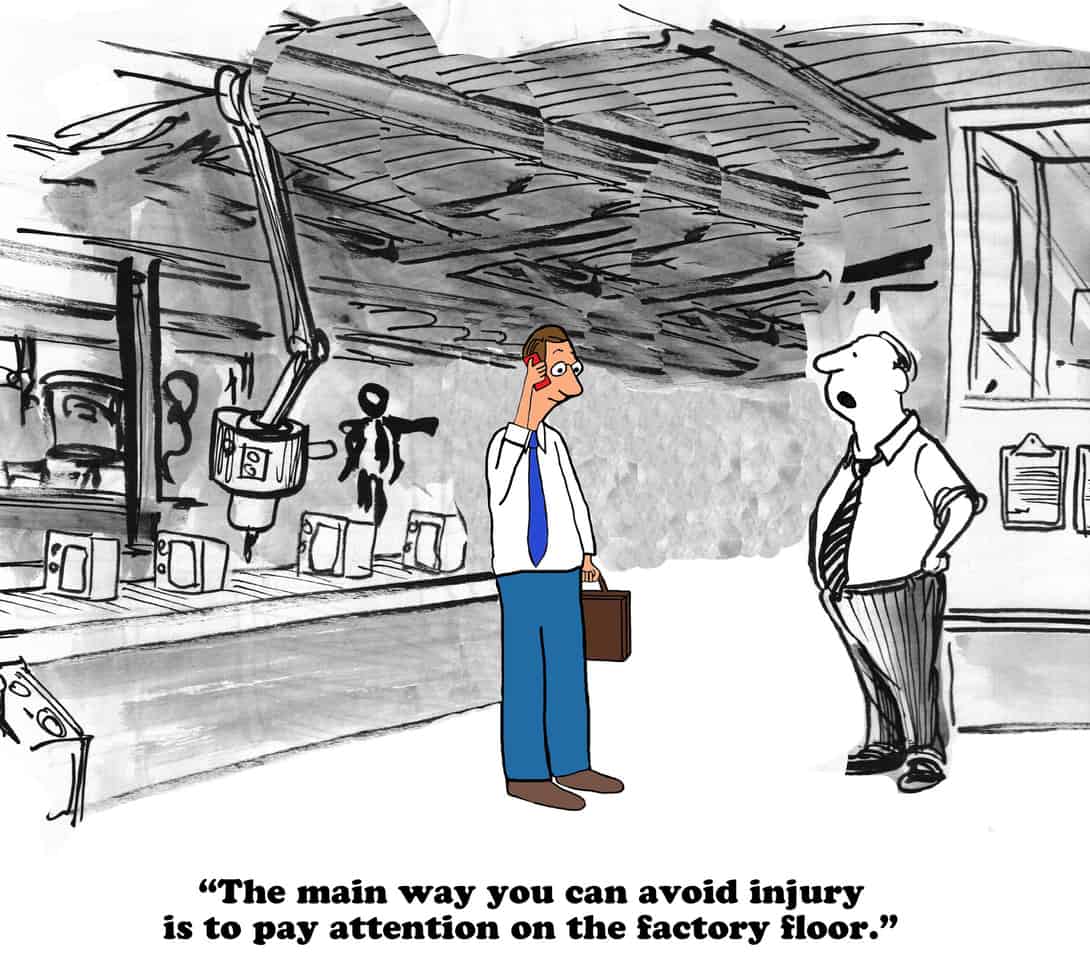
“Accident” is less used in modern media descriptions of incidents involving serious injuries and fatalities than in the past. The term implies an unavoidable consequence or undeterminable cause of a tragic event. The traditional use absolves anyone of responsibility or accountability and, consequently, stymies the deep analysis of causes required if such incidents are to be prevented in the future. The term is the antithesis of occupational health and safety (OHS) approaches which should always start from the aim of harm prevention.

Subscribe to SafetyAtWorkBlog to continue reading.
Subscribe Help
Already a member? Log in here

Comfortable comfort at Truck Drivers’ Memorial

Recently the annual Truck Drivers’ Memorial was held at Alexandra in Central Victoria. Worksafe Victoria’s Executive Director of Health and Safety, Dr Narelle Beer (pictured above at the memorial), spoke at the event. Her presence was welcome and important, for it reinforces the occupational health and safety (OHS) regulators’ commitment to the safety of truck drivers and not just to the risks associated with the loads there are carting.

Dr Beer said little that was new, but that is okay, as WorkSafe’s presence at workers’ memorials is about reassurance and remembrance. There were elements of her speech that should be noted by employers, and that also illustrate the difficult enforcement position of such organisations.

Subscribe to SafetyAtWorkBlog to continue reading.
Subscribe Help
Already a member? Log in here

Is the OHS role in ESG overstated?

The March 2023 edition of Professional Safety, the journal of the American Society of Safety Professionals, included a lead story about the safety professional’s role in ESG (Environment Safety and Corporate Governance) strategies.  Its perspective was a little unclear and was based on many assumptions.

One of the problems with the article is the assumption that the occupational health and safety (OHS) professional has a large influence over the decisions of the business.  That is rarely the case, and there are many instances of OHS being sidelined or compartmentalised by structural and reporting lines and the exclusion of OHS from key decision forums like Board Meetings. So does OHS have a role and to what extent?

Subscribe to SafetyAtWorkBlog to continue reading.
Subscribe Help
Already a member? Log in here

Commitment Interruptus on engineered stone

Trade unionists in the United Kingdom have a similar battle over the safe exposure limits to silica dust that Australia “resolved” a few years ago. It should not be long before the UK pushes for a ban on the import of engineered stone or starts arguing over the safety of the product when silica content is reduced to 40%.

Some recent parliamentary argy-bargy in Australia over the cutting of engineered stone was illustrative of some of the issues and lobbying.

Subscribe to SafetyAtWorkBlog to continue reading.
Subscribe Help
Already a member? Log in here

Now “we need a systemic reform to the mental health system”. We always did

[This article discusses suicide.]

The tide seems to be turning in approaches to the prevention of suicides in Australia. Recently the CEO of Suicide Prevention Australia, Nieves Murray, concluded a radio interview with some advice that relates directly to workplace suicides.

Subscribe to SafetyAtWorkBlog to continue reading.
Subscribe Help
Already a member? Log in here

A management book that offers clarity and confidence

One of the most common complaints of newly graduated workers has been that although the university has provided a lot of knowledge, the courses are short on practical management skills. Occupational health and safety (OHS) is no different. One may learn about the social determinants of health but may have poor skills in managing or interacting with workers and colleagues.

Many try to fill this knowledge gap by reading various management and leadership books. Many choose books from leading business schools like Harvard, but these books are often incompatible with the legislative and cultural requirements of Australia or other local jurisdictions. Sometimes it is time to read a book on the basic concepts, like the Essential Managers Management Handbook, published by Dorling Kindersley in 2022.

Subscribe to SafetyAtWorkBlog to continue reading.
Subscribe Help
Already a member? Log in here

The cultural impediments to OHS improvement in agriculture need to be confronted

Recently Western Australia concluded its WorkSafe inquiry into the Agricultural Industry. The recommendations for improvements in occupational health and safety (OHS) are remarkably dull as they largely fit with business as usual. It is much more useful to file this as a reference document which offers some safety insights.

The inquiry was established after a spate of farm deaths (Don’t all OHS inquiries come from disasters!?). Most of the terms of reference relate to the collation of data, which, in itself, is an implied criticism of the past OHS Commissioners and governments (and national leadership).

The inquiry report is an excellent analysis of the cultural relationships between farming and OHS regulation, with some brutally honest findings that other States and OHS professionals should heed.

Subscribe to SafetyAtWorkBlog to continue reading.
Subscribe Help
Already a member? Log in here
Concatenate Web Development
© Designed and developed by Concatenate Aust Pty Ltd