Smart drinks may be dumb safety

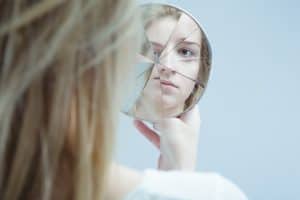
Puzzle head brain mental health symbol idea conceptFatigue and impairment are two of the most difficult workplace hazards to address.  These are further complicated when they are contextualised in workplace mental health.  So it is concerning when an entrepreneur produces a product that is meant to help address mental fatigue but that may also mask occupational health and safety (OHS) actions that are required to provide truly sustainable workplace improvement.

The Australian Financial Review (AFR, $), on 12 December 2016, reported on the establishment of a “smart drinks” company called Shine+.  AFR reporter Misa Han, wrote:

“Shine+ is one of many companies who are trying to take advantage of professionals and students who take drugs in order to enhance their performance and brain functions.”

Subscribe to SafetyAtWorkBlog to continue reading.
Subscribe Help
Already a member? Log in here

Health, safety and climate change

Sydney, Australia - October 19, 2016: Construction workers set up scaffolding in a construction site.
Sydney, Australia – October 19, 2016: Construction workers set up scaffolding in a construction site.

In a small article on the ABC news site, Professor Peng Bi of the University of Adelaide said occupational health and safety laws needed a review to accommodate the changing climate and

“I reckon some regulations should be set up to get employers to pay [fresh] attention to the occupational health and safety of their employees…”

Contrary to Professor Peng Bi’s request, Australian worksites have done much to accommodate the changing climate conditions and to maintain productivity, primarily, in relation to excessive heat exposure by working within the existing occupational health and safety (OHS) legislation.  This is not to say more should not be done.

The risks associated with working in heat are well established and recognised by Safe Work Australia and State safety regulators but the advice often focusses on personal changes such as ensuring there is adequate hydration or that jobs should be rotated or that long-sleeved shorts are worn.  The amplification of these conditions due to climate change is foreseeable so what should employers, companies and OHS regulators do?

Subscribe to SafetyAtWorkBlog to continue reading.
Subscribe Help
Already a member? Log in here

Tinnitus can be a safety hazard

I have tinnitus. There I have outed myself along with 18% of men and 14% of women, according to a research report* from Hearing Research journal published recently. For those unfamiliar with tinnitus it is a persistent buzzing or ringing in one’s ears usually caused by exposure to loud noise. It is relevant to occupational health and safety (OHS) in a number of ways:

  • It needs to be considered in issues of communication
  • Tinnitus can be distracting
  • Tinnitus may be a symptom of poor noise management practices at work.

Human Ear PainThe research study conducted by David Moore and others was focusing on “lifetime leisure music exposure” so workplace noise is mentioned in the report only in passing.

It is common that unless a worker is deaf or seen signing, the default assumption is that everyone’s hearing is undamaged. The research data above shows that the assumption is false.

Subscribe to SafetyAtWorkBlog to continue reading.
Subscribe Help
Already a member? Log in here

Labour Hire Inquiry recommends a licencing scheme

Following, ostensibly, the Four Corners exposé of labour hire exploitation in Australia last year, the Victorian Government established an inquiry.  That Inquiry’s final report has been released with lots of recommendations, several pertaining to occupational health and safety (OHS).  The Government’s media release response is HERE. The main recommendations related to OHS are: I recommend…

Subscribe to SafetyAtWorkBlog to continue reading.
Subscribe Help
Already a member? Log in here

Cabbage Salad and Safety – Episode 5

October is National Safety Month in Australia and episode 5 of the Cabbage Salad and Safety podcast discusses a range of topics to mirror the diversity of National Safety Month.

Siobhan Flores-Walsh and myself talk about:

  • Conferences
  • Culture
  • Gender in Safety
  • Mental Health
  • Simple Safety vs Complex Safety
  • Innovation
  • Marketing and social media

The Gender in Safety conversation is one that I intend to expand upon in the coming weeks and is useful to notion relation to the increasing number of “women in safety”- type events.

KJ SFH HeadshotThis podcast is a mixed bag but I am interested in hearing your thought on the podcast and the topics it contains so post a comment here or email me.

Kevin Jones

Wearable tech provides data, not decisions

People want information about their own health and fitness.  Many are turning to wearable technology and activity trackers for that information, but information requires decisions or actions to gain benefit. The limitations of activity tracking and decisions was reinforced recently with some US research in the area. The University of Pittsburgh School of Education’s Department…

Subscribe to SafetyAtWorkBlog to continue reading.
Subscribe Help
Already a member? Log in here
Concatenate Web Development
© Designed and developed by Concatenate Aust Pty Ltd