Part 2 of the Cabbage Salad and Safety podcast’s discussion on managing drugs and alcohol at work is now available.


Part 2 of the Cabbage Salad and Safety podcast’s discussion on managing drugs and alcohol at work is now available.
I have tinnitus. There I have outed myself along with 18% of men and 14% of women, according to a research report* from Hearing Research journal published recently. For those unfamiliar with tinnitus it is a persistent buzzing or ringing in one’s ears usually caused by exposure to loud noise. It is relevant to occupational health and safety (OHS) in a number of ways:
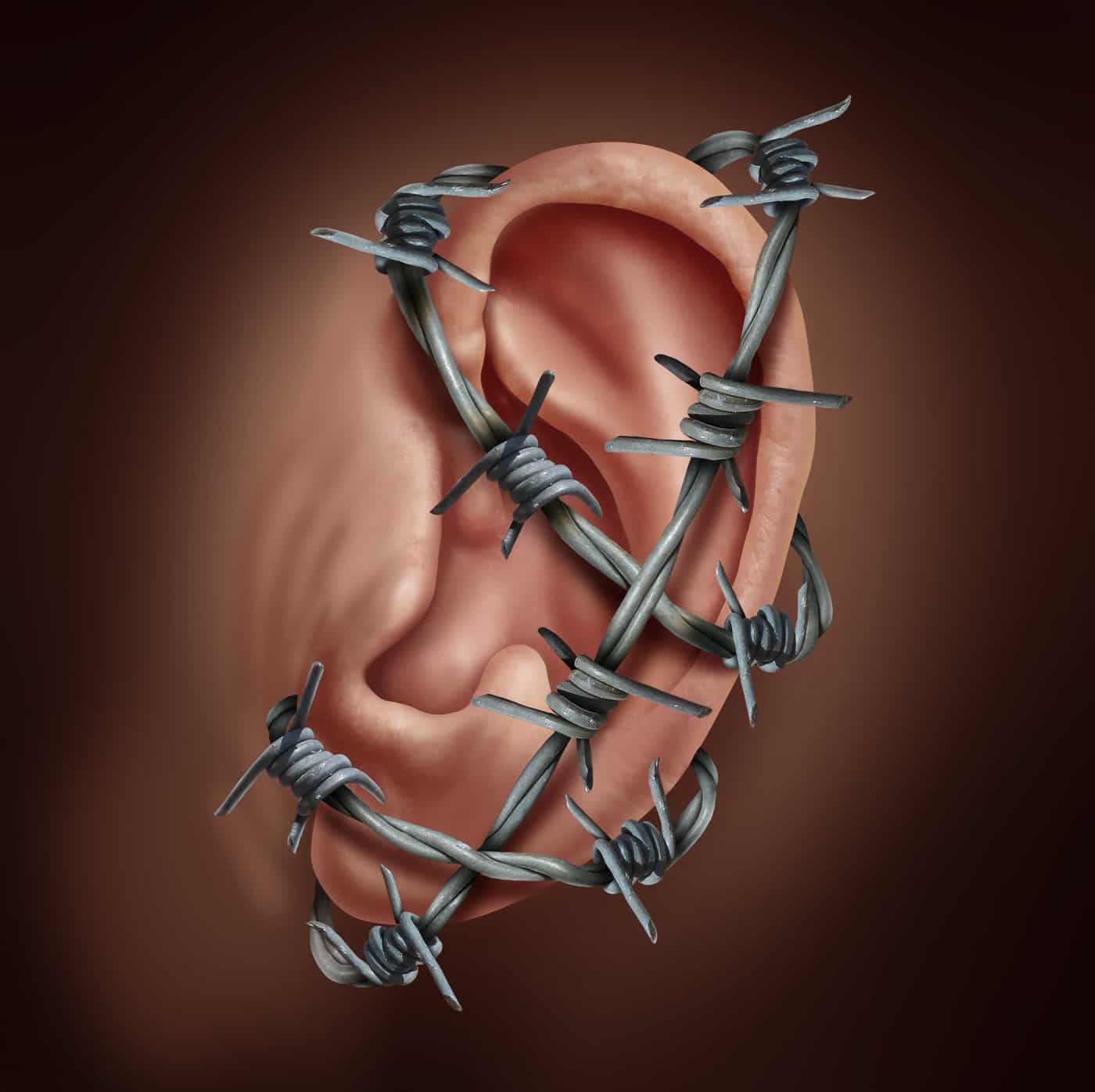 The research study conducted by David Moore and others was focusing on “lifetime leisure music exposure” so workplace noise is mentioned in the report only in passing.
It is common that unless a worker is deaf or seen signing, the default assumption is that everyone’s hearing is undamaged. The research data above shows that the assumption is false.
Following, ostensibly, the Four Corners exposé of labour hire exploitation in Australia last year, the Victorian Government established an inquiry. That Inquiry’s final report has been released with lots of recommendations, several pertaining to occupational health and safety (OHS). The Government’s media release response is HERE. The main recommendations related to OHS are: I recommend…
October is National Safety Month in Australia and episode 5 of the Cabbage Salad and Safety podcast discusses a range of topics to mirror the diversity of National Safety Month.
Siobhan Flores-Walsh and myself talk about:
The Gender in Safety conversation is one that I intend to expand upon in the coming weeks and is useful to notion relation to the increasing number of “women in safety”- type events.
 This podcast is a mixed bag but I am interested in hearing your thought on the podcast and the topics it contains so post a comment here or email me.
People want information about their own health and fitness. Many are turning to wearable technology and activity trackers for that information, but information requires decisions or actions to gain benefit. The limitations of activity tracking and decisions was reinforced recently with some US research in the area. The University of Pittsburgh School of Education’s Department…
On October 7 2016, Victoria’s trade union movement held a Young Worker Conference. The major public statement from that conference was the launch of a survey report called Young Workers Health and Safety Snapshot. The report has received some mainstream press which is not unusual for this type of trade union member survey. Almost twenty…
Asbestos is not something this blog writes about often, principally because the risk of asbestos-related diseases is well established and the control measures identified. Ideally asbestos should be left in the ground as, no matter in what state it is used, it presents a serious hazard to someone wherever it has been mined or used. But few countries are willing to make this commitment and even if they do asbestos-containing materials (ACM) continue to be imported regardless of any bans in place, as Australia is currently experiencing.
This fundamental occupational health and safety (OHS) and public health issue is not helped when prominent figures utter dangerous misrepresentations. MotherJones has pointed out that in his co-authored 1997 book, The Art of the Comeback, now United States Presidential-hopeful Donald Trump described asbestos as
“the greatest fire-proofing material ever used.”
That asbestos is
“100 percent safe, once applied,” and “got a bad rap.”
The quotes are 19 years old so Trump may have achieved a different perspective on asbestos and it would be good to have someone pose the question, perhaps in the next debate, although he may simply deny he ever said that. (He would be technically right, he never said it, he wrote it)
 Australia does not have a Trump but it does have an Asbestos Safety and Eradication Agency (ASEA) and only last week the Minister for Employment, Senator Michaelia Cash (great name for a politician giving out money), gave the agency an
“additional $3.4 million over two years in the 2016-17 Budget”.
This was a timely increase, at least politically, to counter the continued importation of a banned substance as mentioned above. However, the allocation of this money to the ASEA misses the target. ASEA does not control the importation of building products; that is the job of the Australian Border Force.
ASEA released its Annual Operations Plan 2016-17 at the end of September in which it addresses the asbestos importation issue:
“ASEA works with all levels of government to assist in responding to the strategic risks of asbestos in Australia. The agency coordinated the development of a Rapid Response Protocol through the Heads of Workplace Safety Authorities (HWSA) Imported Materials with Asbestos Working Group. The protocol is the first of its kind, enabling government agencies to work cooperatively and efficiently across jurisdiction and portfolio lines when products have been identified as containing asbestos. This allows agencies to work through the practicalities of concerns that such products may cross, or have crossed, state lines.”
This national and cross-agency cooperation is good and required but “the practicalities of concern” is the major barrier to change. Government never seems to have sufficient funds to make a ban as effective as possible or it needs to be. Allowing ACM into Australia, even though the building material contains a government-banned substance, creates costs on public and occupational health but as these costs are further down the supply chain and may not appear for decades, Government considers them to be acceptable. It is highly unlikely that the cost of preventing ACMs at the border would be more expensive than the long-term health costs that the Government will need to pay through public health and hospitals and that employers may need to pay through lost productivity, business disruption and workers’ compensation. (This is another example of why OHS need economists and financial estimators.)
 In February 2016, Minister for Border Protection, Peter Dutton, announced an inquiry into the importation of ACMs, to be conducted by KGH Border Services, a company with which the Minister’s Department has been in a partnership since early 2015. The final report seems to imply that the issue is too difficult to police and that the current process is the best the Government can do, particularly as a large part of the asbestos problem originates in China, Australia’s most lucrative trading partner.
“For most businesses involved in international trade, a rational cost/benefit analysis of investment in compliance is not justified by the incentives that government offer to promote voluntary compliance. Despite the critical effect of asbestos exposure to public health and safety, it remains a cheap and effective material for use in a wide range of goods. Asbestos continues to be widely used internationally, and is incorporated in goods manufactured by Australia’s largest trading partners, such as China.”
This paragraph from the KGH report illustrates the tone of the report. Asbestos is cheap and effective and used widely, however it is also deadly. As mentioned above, asbestos and ACM is only cheap to purchase but can have decades long costs that would/should render the cheap purchase a nonsense. That asbestos is effective echoes Trump’s position.
The report also states:
“Due to the differing standards applied to asbestos regulation internationally, it may be inefficient for suppliers that sell to a range of markets, to ensure compliance with the Australia’s strict import prohibition. The Australian prohibition relates to all forms of asbestos, but chrysotile is not internationally recognised as a dangerous form of asbestos. Countries that mine chrysotile maintain that it is safe, and continue to export it to a number of other countries, where it is still widely used in products that supply a range of industries.”
Regardless of what other countries do, Australia’s Department of Health identified the hazard of chrysotile asbestos as early as 1999 and has stated for some time that:
“There may be no safe exposure level for chrysotile, so all exposure should be avoided” and
“If a safer product or process can be substituted for one involving chrysotile, this should be done.”
According to KGH Border Services chrysotile is not internationally recognised as a dangerous form of asbestos. So what? The government that commissioned the KGH report has stated it is dangerous!!??
The KGH report also outlines what is already known and the reason for the existence of the ASEA:
“There is also confusion about policy and regulatory responsibilities across Government in Australia and some ambiguity in the overarching legal framework that establishes Australia’s strict prohibition. The Department of Employment (DoE) has policy responsibility for the legal framework that establishes the border control. The DIBP administers the import and export prohibitions at the border. The Asbestos Safety and Eradication Agency (ASEA) is responsible for administering the import and export permission regime on behalf of the Minister for Employment. The Australian Competition and Consumer Commission (ACCC) and state and territory work, health and safety (WHS) regulators have a role in enforcement of the asbestos prohibition domestically. This cross-over between various Commonwealth and state and territory authorities can confuse the public’s perception of the DIBP’s role in asbestos regulation, and its ability to affect changes to the legal and policy frameworks that establish the prohibition. Clarification of the responsibilities and coordination efforts across Government would reduce this confusion and increase the effectiveness of the Government’s response to asbestos issues.”
If asbestos was not killing Australian workers and their families, it would be funny that overlapping and conflicting responsibilities (a responsibility managed by the Government) “can confuse the public’s perception of the DIBP’s role in asbestos regulation”. The public may not understand the role of the DIBP but it certainly understands the fatal risks associated with asbestos. The calls from the public and the unions for stronger policing of banned substances is less a criticism of the Department of Immigration and Border Protection (DIBP) that it is a criticism of the Government for inaction.
The report also suggests that other levels of Government should be pulling their weight on asbestos management. They should, and they are, but how much easier, cheaper and more productivity their jobs would be if the Federal agencies prevented ACMs entering the country. It just may be possible to eliminate the established asbestos hazards if new asbestos was stopped being imported.
It may also be useful to note that Minister Dutton seems to see the call for controlling asbestos imports as a trade union conspiracy. One could just as well claim that safe asbestos is a Trump conspiracy.
The Australian Government is mismanaging the latest controversies around the importation of asbestos-containing material but to manage it appropriately requires hard questions that this government chooses not face. The deaths associated with asbestos exposures are increasing and are likely to for some decades yet. How many decades, is the choice of this Government. Act now and seriously and fewer people will die, businesses will be more sustainable, health and compensation costs will be less. In fact there may even be more jobs and growth.
Politicians are regularly called on to provide vision. Asbestos seems to be one of those issues where the vision can be readily understood and easily explained. Addressing the issue in a serious way could also be seen as an example of leadership and the basis for a political legacy. And it is not as if asbestos is irreplaceable. Trump may see it as a miracle building material but the combination of new products with safety in design principles should be able to achieve a comparable fire protection level.
Vision and leadership. Where have we heard those words before? Oh yes, EVERYWHERE.