If staff are “going to hit the wall”, redesign the wall

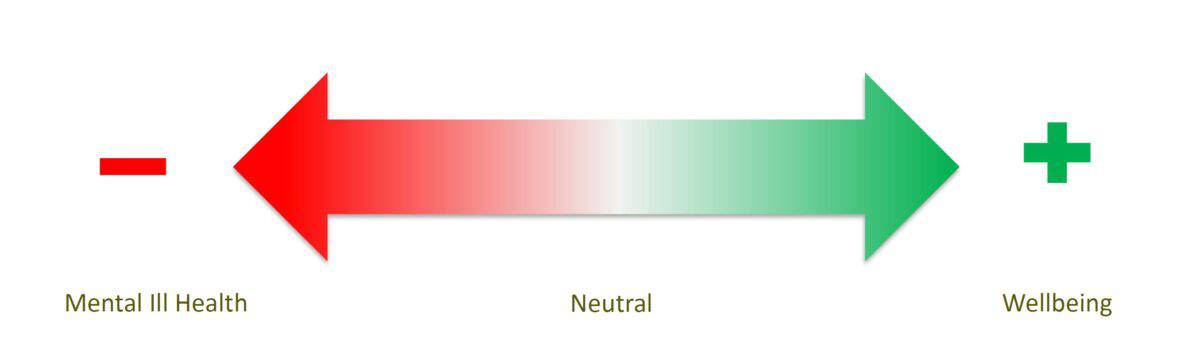
On May 11 2020, the Australian Financial Review’s back page ran an article (paywalled)about how “corporates” are becoming aware of mental health risks due to the COVID19 disruption. It is a good article but also one that reveals the dominant misunderstanding about mental health at work and how to prevent it.

Subscribe to SafetyAtWorkBlog to continue reading.
Subscribe Help
Already a member? Log in here

RSI is a pain in the…..

One example of the “correct” sitting posture ergonomics at a desk while working on a computer. (Not really correct)

Earlier this year Dr Peter Sharman published a blog article based on a literature review related to Upper Limb Pain and Computer Employment. The ergonomics of desk-based work seems to be dominated by guidance that requires right-angled postures, and other practices that are designed for prolonged use. For most of us, there is the flexibility to move around and break up the tasks but workplace, like call centres, continue; and the recent move to work from home has resurrected many of these workstation advisories. SafetyAtWorkBlog had the opportunity to ask Dr Sharman about his research and his experience supplemented by some clarifying answers by retired consultant in rheumatology and pain medicine, John Quintner.

Subscribe to SafetyAtWorkBlog to continue reading.
Subscribe Help
Already a member? Log in here

Australia government releases its COVID19 Safe Plan template

Australia’s National COVID-19 Coordination Commission (NCCC) has released what it calls a toolkit for assessing COVID19 risks for businesses that are reopening soon. It is a useful checklist/template that the NCCC anticipates will take around 30 minutes to complete. What legal standing it may have is unclear as OHS in most Australian workplaces is regulated at State and Territory levels, but the Prime Minister says we need COVID Safe Plans and here’s a checklist to support it.

Business owners should understand that any checklist is only ever a tool to aid them to make an informed decision. It is not a compliance tick. Sadly, the COVIDSafe Plan template fails to answer its first question:

“Why is it important to have a COVIDSafe Plan?”

The answer should have been something like

“….all Australian business owners are obliged by law to provide workplace that are free of health and safety risks, including viral infections, like COVID19. This plan will help you fulfill your obligation which will also reduce the transmission of COVID19 and could save lives.”

The legal and moral reason for this checklist should have been upfront to emphasise the primacy of occupational health and safety (OHS) in helping control a public health risk.

Subscribe to SafetyAtWorkBlog to continue reading.
Subscribe Help
Already a member? Log in here

Australian government reopening strategy

On the afternoon of May 8 2020 the Prime Minister, Scott Morrison, and Chief Medical Officer, Brendan Murphy, revealed the decisions of the National Cabinet. This is a national plan developed with the agreement of State Premiers and Chief Ministers who will be largely responsible for how this plan is implemented in their local jurisdictions. Many of the occupational health and safety (OHS) challenges have been anticipated by business owners as discussed in this morning’s blog article but it is worth looking at the infographics of the plan revealed by Morrison and Murphy but also the transcript of the press conference as that provides an important context to what the government expects to happen.

The government released two infographics, one was four pages of the broad plan, the other is that plan split into industry sectors.

Subscribe to SafetyAtWorkBlog to continue reading.
Subscribe Help
Already a member? Log in here

Reopening challenges are more like manageable inconveniences

Many Australian workplaces will be reopening in the next few weeks.  Their productivity capacity will change, their workplaces, will change and their approach to, and understanding of, occupational health and safety (OHS) will need to change.  But there are signs that some business owners and employers are embracing risk and safety in this new operating climate but there are others who are either denying the changes needed, are struggling to think creatively, are ill-informed or are stupid.  Most of these realities were on display in a single edition of the Australian Financial Review (AFR) on May 8, 2020 (paywalled) – the primary source for this article.

The timing of the newspaper edition is important as it was published on the morning before the Prime Minister, Scott Morrison, and Chief Medical Officer, Brendan Murphy, revealed the decisions of the National Cabinet. A further blog article will be produced on those decisions shortly.

Lifts and Whinging

The AFR front page carried a short story called “Elevated risks in office lifts” that shows the deficiencies of several thought processes mentioned above.

Subscribe to SafetyAtWorkBlog to continue reading.
Subscribe Help
Already a member? Log in here

Trying to make the horse drink

The discussions about occupational health and safety (OHS) and its relevance to COVID19 has finally touched the mainstream media with an article in The Age newspaper on May 7, 2020. The article is largely a reiteration of statements made by the Australian Council of Trade Unions (ACTU) and the Minister for Industrial Relations over the last few days but it is the first time that Safe Work Australia (SWA) has joined in.

The Chair of Safe Work Australia, Diane Smith-Gander has stated that additional regulations may have unintended consequences. She is quoted saying:

“We’ve got to let that system operate,… If we try to over-regulate and over-legislate, we will have unintended consequences for sure.”

Subscribe to SafetyAtWorkBlog to continue reading.
Subscribe Help
Already a member? Log in here

Political update on OHS and COVID19

Although most of the Australian media has focussed primarily on the economic statements of the Prime Minister and Treasurer on May 5 2020, there are several statements related to occupational health and safety (OHS) and COVID19 made today that are of note in developing an OHS voice for the future.

The Secretary of the Australian Council of Trade Unions (ACTU) Sally McManus spoke on breakfast TV saying:

“First of all that workplace laws were never invented for a pandemic so we’ve got to update them so that we can make sure there’s social distancing everywhere.”

Subscribe to SafetyAtWorkBlog to continue reading.
Subscribe Help
Already a member? Log in here
Concatenate Web Development
© Designed and developed by Concatenate Aust Pty Ltd