What do we want from a workers’ memorial?

When anyone dies, it is important to remember them and their relatives as well as those we did not know personally but who also grieve.  Public recognition of deceased workers is a recent phenomenon, even though we have commemorated and noted industrial disasters for over a century.  Memorials have always provided a symbolic focus for our attention and grief with the hope that these memorials motivate people to reduce the chances of a workplace death occurring to others.

But worker memorials need to be carefully considered and designed to be inclusive as Death visits all workplaces regardless of the religion of the workers, their ethnicity, the location of the fatality or the workplace conditions.  On the eve of International Workers’ Memorial Day for 2017, it may be time to rethink the memorial to deceased workers in Melbourne, Victoria.

Subscribe to SafetyAtWorkBlog to continue reading.
Subscribe Help
Already a member? Log in here

OHS changes to come in wake of the Western Australia election result

It is rare to find an occupational health and safety (OHS) seminar that is captivating but there is almost always some useful bits of safety information, hopefully enough to make attendance worthwhile.

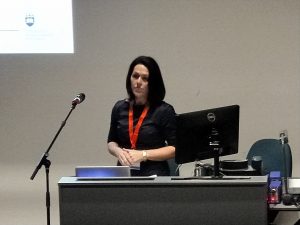
On March 24, 2017 the Safety Institute of Australia and Herbert Smith Freehills (HSF) held the annual breakfast seminar in Melbourne.  Speakers included representatives from the HSF law firm, the SIA, WorkSafe Victoria and SafeSearch.  Perhaps of most interest was HSF’s senior associate from Perth, Sam Witton (pictured), who outlined the OHS changes likely in Western Australia now the Australian Labor Party (ALP) is in power.

Subscribe to SafetyAtWorkBlog to continue reading.
Subscribe Help
Already a member? Log in here

When Work Kills – new research on workplace suicides

There are many advocates of the importance of a mental health and wellbeing in workplaces.  But few of them address the worst-case scenario for workplace mental health of work-related suicides.  In some cases, the mental health advocates are overly cautious about even speaking the reality, which does not help reduce mental health stigma.

In 2016 Professor Stewart Clegg, of UTS Business School said that

“That work can kill the will to live is a fundamental ethical problem that we must attend to…”

New research from the UK provides a useful summary of the work-related and workplace suicides in Europe with important lessons of where precarious employment and the “gig economy” could lead.

Subscribe to SafetyAtWorkBlog to continue reading.
Subscribe Help
Already a member? Log in here

How much attention should we give to gender in OHS?

I once had to stop a potential fight on a construction site between a works supervisor and a safety professional.  The verbal abuse and niggling occurred for several minutes before the men’s chests were inflated like roosters and it was at this point I stepped in to diffuse the situation by asking some questions as…

Subscribe to SafetyAtWorkBlog to continue reading.
Subscribe Help
Already a member? Log in here

More books on the Christmas list

There were three books that I left off my Christmas/Summer reading list.  Each of them important for my occupational health and safety (OHS) professional development and personal curiosity.

cover-of-rethink001The first is Rethink – The Surprising History of New Ideas by Steven Poole. This books looks at what we think are new ideas and sees the precursors or the ideas’ previous appearances.  I was attracted to this perspective because I am seeing a lot of new ideas in OHS that are familiar and similar to what has come before.   Continue reading “More books on the Christmas list”

Firefighting mental health report leaked

cover-of-mfb-mental-health-reportThe Herald-Sun newspaper has released the final report into the mental health and suicide rate of Victorian metropolitan firefighters.

The report, authored by Dr Peter Cotton, found that the issues uncovered in the review of firefighters in the Metropolitan Fire Brigade (MFB) are not dissimilar from the findings of other inquiries into emergency service organisations like the police or the ambulance service.  

Subscribe to SafetyAtWorkBlog to continue reading.
Subscribe Help
Already a member? Log in here

Firefighters’ mental health

More details are appearing of the findings of an independent inquiry into mental health and suicides in the Melbourne Metropolitan Fire Brigade (MFB), a report whose release has been stalled by the United Firefighters’ Union (UFU).

cover-bullying-health-sectorAccording to the inquiry’s chair, in an article in the ABC news website, Dr Peter Cotton,

“…the MFB has a mono-culture with few women or members from diverse backgrounds, making it difficult to assess the level of bullying and harassment.”

“… the MFB does not screen for alcohol or drug use, and has a lack of policies and procedures to address drug and alcohol issues.”

“Management’s handling of complaints were found to be ad hoc and inconsistent with a “lack of will to follow up” and “give them a wide berth” thought pattern.”

“the mental health of firefighters was comparable with Victoria Police and Ambulance Victoria,…”

The latter point is useful to remember as a similar report into the Victoria Police was released earlier this year. The most recent inquiry into Ambulance Victoria was undertaken by the Victorian Auditor-General in 2016. Continue reading “Firefighters’ mental health”

Concatenate Web Development
© Designed and developed by Concatenate Aust Pty Ltd