Government could help progress OHS so much more

Innovation in occupational health and safety (OHS) is often encouraged by government but government processes and policy can also discourage and limit this.  An obvious example is where government insists on compliance with OHS laws in its tendering criteria but acknowledges that the tender safety criteria remains outdated and, privately, that OHS compliance is not enough to ensure a safe and healthy workplace.

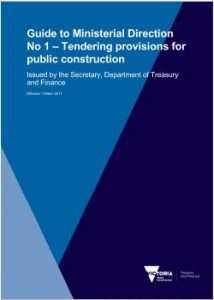
An important OHS document in the Victorian bureaucracy and construction sector is a

Subscribe to SafetyAtWorkBlog to continue reading.
Subscribe Help
Already a member? Log in here

OHS consultant guilty of impersonating a SafeWork SA inspector

There are several important lessons from a recent conviction of an occupational health and safety consultant (OHS) in South Australia for impersonating a SafeWork SA inspector on multiple occasions.

According to SafeWorkSA’s media release, Sam Narroway has been found guilty of impersonating a SafeWork South Australia Inspector and fined $A15,000.  Presiding Industrial Magistrate Lieschke stated that

“In my view these are serious offences – they involved risk to the community, damage to the credibility of SafeWork SA and to professional work health safety consultants”.

According to LinkedIn and as acknowledged in the Court judgement, Sam Narroway is now the Chief Executive Officer of Australian Workplace Safety Group.  Narroway has described this new company as a successful venture and indications are that he intends to restart his career.

Subscribe to SafetyAtWorkBlog to continue reading.
Subscribe Help
Already a member? Log in here

Cry of frustration in Industrial Manslaughter Bill

Over the last few months some in Australia’s trade union movement have renewed calls for the introduction of industrial manslaughter laws in various jurisdictions. The issue has appeared both on television and online.

Curiously the Australian Council of Trade Unions (ACTU) seems to have dropped the “industrial manslaughter” terminology it has used in the past. In a 28 April 2015 media release, the ACTU stated:

““Strengthening OHS laws to make negligent companies and individual directors liable sends a clear message to employers that they must ensure people are safe at work.”

and

“Current laws need to be strengthened so that companies and company directors are liable for our safety at work.”

It seems that the charge has been left to the South Australian Greens Parliamentarian,

Subscribe to SafetyAtWorkBlog to continue reading.
Subscribe Help
Already a member? Log in here

The evolution of Broken Windows

One year ago, this blog included an article about possibly applying “broken windows” theory to occupational health and safety (OHS) as both involve the enforcement of rules. The article said:

“The principal OHS lessons from Broken Windows Theory are that one needs to scratch the surface of any new OHS approach, that these theories need time to mature and to be verified or questioned and that it remains an important exercise to look beyond our own experiences, but to look with an analytical eye.”

The theory is evolving according to the architect of the theory, William J Bratton in an audio report in  NPR’s All Things Considered for 4 May 2015.  According to that article:

“Bratton says he’s open to some revisions of the city’s broken windows philosophy, including more warnings for first-time offenders. But his larger message seems to be: If it ain’t broke, don’t fix it.”

All theories require adjustment to make sure they remain practical and relevant.

OHS professionals who correct the workplace hazards, particularly worker behaviours, that are the “low hanging fruit” seem to be following Broken Windows, theory to some extent. But to continue to do this, without addressing hazards higher up the hierarchy of controls,  the organisational structure and the managerial prerogatives will devalue the original intention of enforcing worker behaviours and improving the work environment.

Mark Griffith illustrates the risk of devaluing the enforcement effort when he says, in the NPR article:

“We all want a better quality of life…. What we’re saying is the approach to it — the tactics that are used to arrive at that — are overly aggressive, and are ultimately on some level counterproductive to the very goals you’re trying to achieve.”

This seems equally valid to workplace safety management.

Kevin Jones

Uninspiring discussion on OHS in Tasmania’s Parliament

On 28 April 2015, the World Day for Safety and Health at Work, the Legislative Assembly of the Tasmanian Parliament discussed the significance of that day as a Matter of Public Importance. The discussion cannot be described as a debate but it does provide some insight to the ideologies of the political parties in that Parliament, which is almost a microcosm of Australian politics, and the general quality of understanding of occupational health and safety (OHS) management.

One of the fundamental pieces of information for such a day would be an accurate number of workplace fatalities. The Leader of the Opposition, Bryan Green (Australian Labor Party), made a basic faux pas by stating that the total number of workplace fatalities for 2014 was 44 when the figure was for deaths occurring in 2015 (the official figure for 2015 is now 51).  Later that evening, he corrected himself saying that this did not change his argument about the importance of inspectors but it does, and it was embarrassing.

Green listed the number of inspectors lost from Workplace Standards (

Subscribe to SafetyAtWorkBlog to continue reading.
Subscribe Help
Already a member? Log in here

Podcast of interview on OHS reviews

The recent article into the review of SafeWorkSA caught the attention of the Your Rights at Night radio program and led to an interview on 9 April 2015.  The podcast of that interview is now available online.

Interviews are odd experiences, particularly when they are over the phone.  Although there is a reason someone wants to talk with you, you usually do not know the questions beforehand.

For the interview above, I was in the bedroom, away from noises, with printed blog articles, media releases and OHS statistics across the pillows.  I thought the spread of information was important to have at hand to make sure the information I provided was accurate but one can still get caught out when the pace of the interview has settled. The last question asked in the interview could have been answered better.  Neither of the reviews announced have a fixed end date, regardless of what I said, in fact you can hear the shuffling of papers while I looked for the SA government’s media release. Oh well.

Kevin Jones

One hour of OHS discussion on New Zealand radio

On 17 August 2014, RadioLiveNZ‘s Mark Sainsbury devoted an hour to discussing workplace health and safety.  Given New Zealand has undergone a remarkable change on its occupational health and safety (OHS) strategy since the Pike River disaster, with the restructuring of its regulations and regulator into WorkSafeNZ, the various interviews are worth listening to.

This series of interviews are structured assuming that the audience has no prior knowledge of OHS.  The first interview was with a representative of the Accident Compensation Commission, Dr Geraint Emrys.

Dr Emrys lists fishing, forestry, and farming and agriculture as the industries of most concern.  This list is not surprising considering the industrial profile of New Zealand but it is curious that mining was not mentioned, even in passing, given the prominence of Pike River.

Emrys is asked about the opportunity to build an overall safety culture for New Zealand.  Emrys says that overall campaigns are possible Continue reading “One hour of OHS discussion on New Zealand radio”

Concatenate Web Development
© Designed and developed by Concatenate Aust Pty Ltd