COVID, Blame and Employers

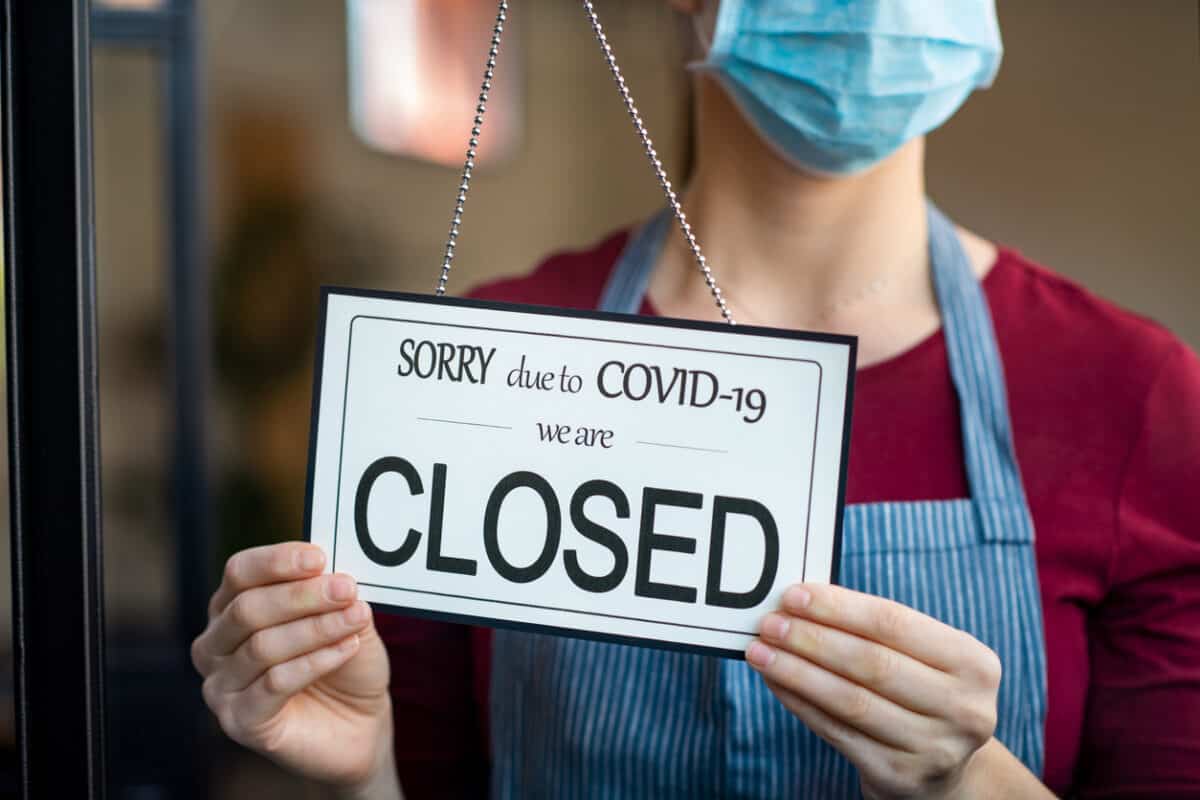
Australia has not had a crisis in public health to the magnitude of COVID-19 for a very long time. It is understandable for people to look at a public health crisis through the reference point of their own experience and profession. There is an overlap between the management of the pandemic and occupational health and safety (OHS), but that overlap should not be inflated.

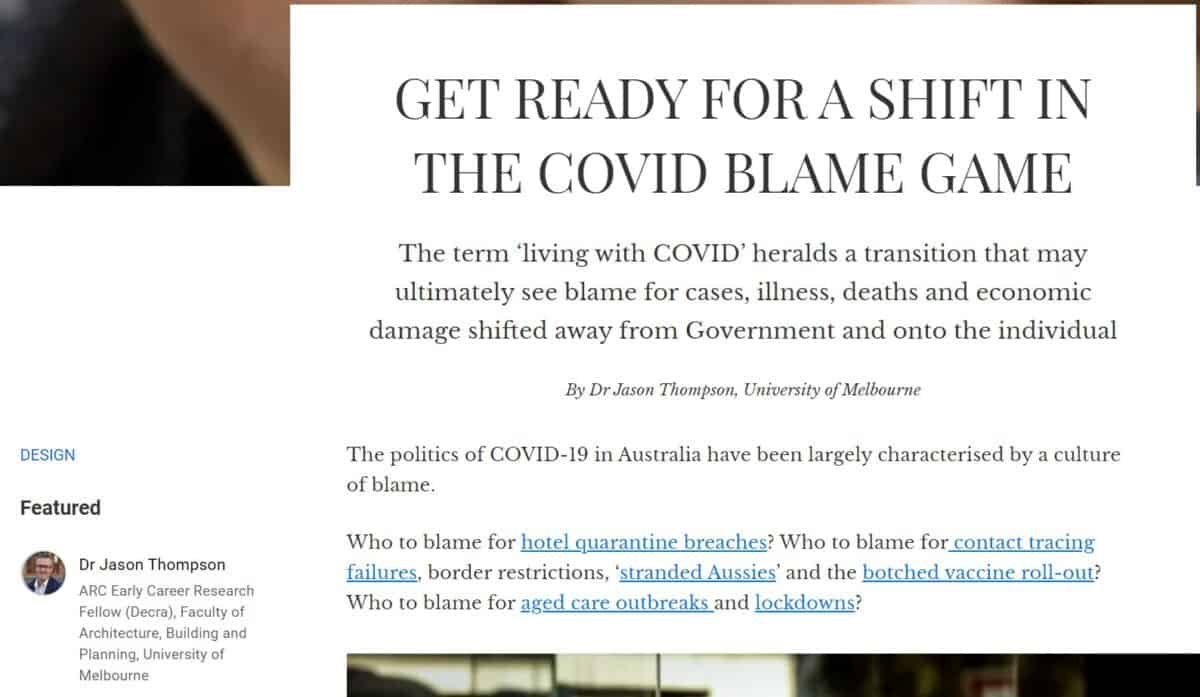
Jason Thompson wrote an excellent (and recommended) article on COVID-19 and blame for the University of Melbourne titled “Get Ready for a Shift in the COVID Blame Game”. I had the chance to put a few questions to him about the article.

Subscribe to SafetyAtWorkBlog to continue reading.
Subscribe Help
Already a member? Log in here

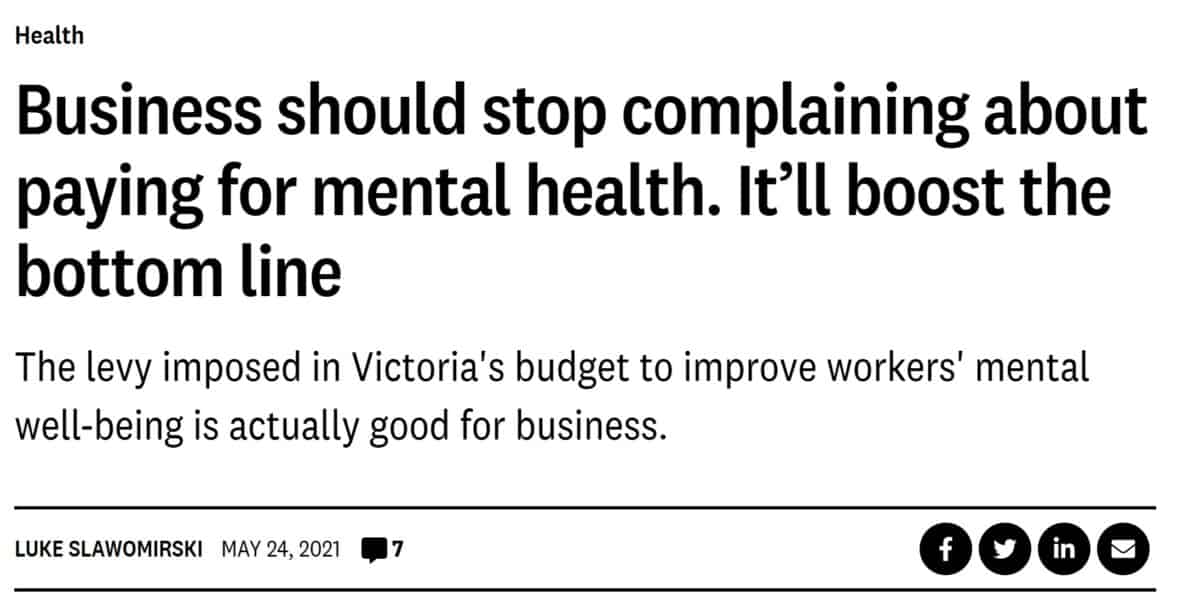
Business should stop complaining about paying for mental health. It’ll boost the bottom line.

[Article reprinted, with permission, from the May 24 edition of Crikey newsletter]

Luke Slawomirski

During the 2020 lockdowns, the business lobby showed a surprising concern for Victorians’ mental health: lockdowns were bad because they’d cause a spike in mental illness and suicides far worse than the COVID-19 cases and deaths they’d prevent.

The suicide spike never happened. What did happen was much-needed additional funding for mental health — $3.8 billion over four years — announced in the 2021-22 state budget on Thursday.

But the way business reacted suggests its interest in mental health has waned.

You see, the measures aimed at better prevention, diagnosis and treatment of mental ill health will be funded by a levy: 0.5% for businesses with payrolls above $10 million and 1% for those above $100 million. Critics, including the federal treasurer, claim this will cruel “job creation and confidence“.

Continue reading “Business should stop complaining about paying for mental health. It’ll boost the bottom line.”

Presenteeism in the new world of work

Presenteeism has largely been analysed through the principles and managed through the actions of the Human Resources profession. The COVID19 pandemic has changed the presenteeism conversation. There seems to be more enforcement of occupational health and safety (OHS) obligations on employees to not present a hazard to their work colleagues and customers and, therefore, to remain home.

On May 5 2021, in Darwin, the Australian Labor Party’s Shadow Minister for Industrial Relations, Tony Burke, spoke about presenteeism at a Transport Workers Union meeting. He said that the COVID19 pandemic showed that “a third of the workforce in Australia didn’t have sick leave” and:

Subscribe to SafetyAtWorkBlog to continue reading.
Subscribe Help
Already a member? Log in here

Mental Health Crisis? What Crisis?

On April 16 2021, the Guardian newspaper included letters from two clinical psychologists (paywalled) that contradict each other on the reality of COVID-19-related mental health. Dr Lucy Johnstone wrote that it was essential that society builds itself to be better post-COVID-19 and that:

“The “mental health pandemic” trope simply does not fit the evidence. Yes, some people have suffered greatly, but the overall picture is of a population that is largely resilient, although understandably bored, lonely and frustrated at times.”

and

“It should surprise no one that people with more to be depressed and anxious about are feeling more depressed and anxious. Reframing understandable responses to difficult life circumstances as “mental illness” plays into professional interests and political denial.”

Continue reading “Mental Health Crisis? What Crisis?”

OHS is “… more what you’d call ‘guidelines’ than actual rules.”

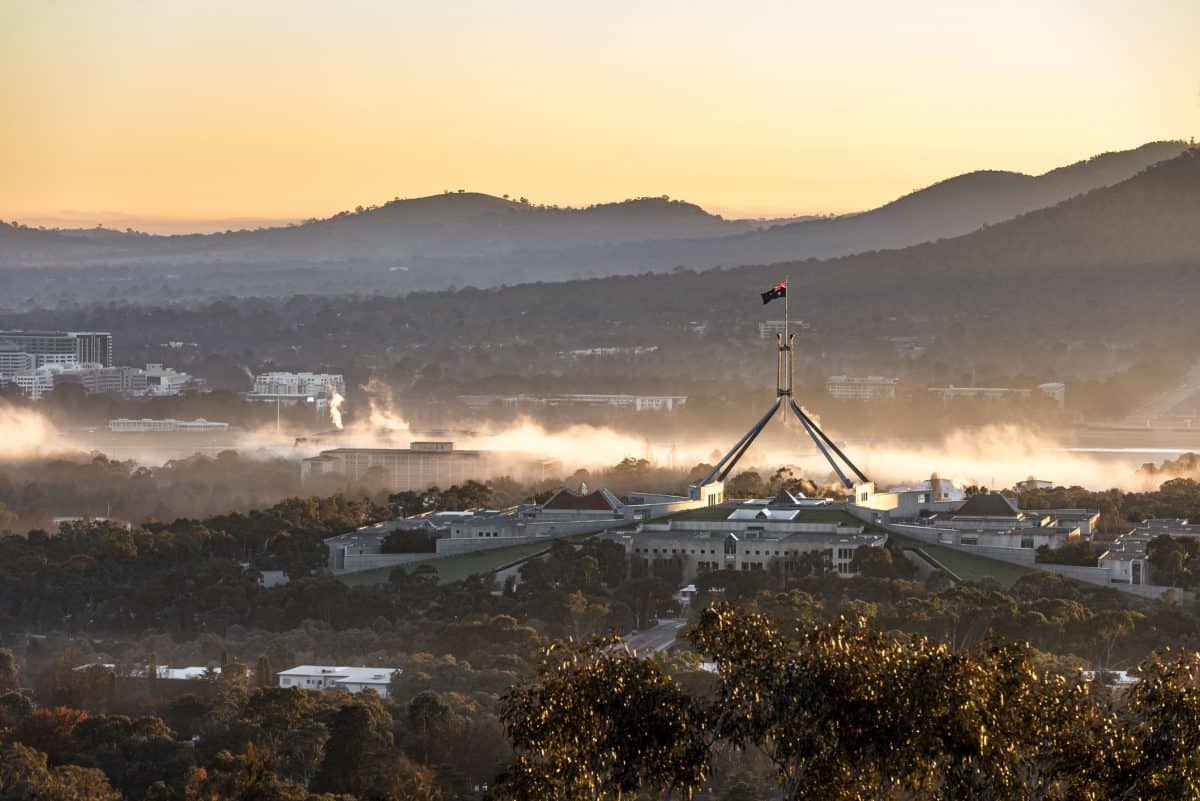
Occupational health and safety (OHS) may not be a common subject in the mainstream media but there is plenty of political discussion on the topic in Australia’s Parliament.

The current (conservative) federal government seems very slow to accept and respond to recommendations from official inquiries that it sees as a secondary political priority, such as sexual harassment and workplace health and safety. The hearings of the Senate’s Education and Employment Legislation Committee on March 24 2021, were, as usual, enlightening.

Subscribe to SafetyAtWorkBlog to continue reading.
Subscribe Help
Already a member? Log in here

Change in the air on ventilation

One of Edward O’Donoghue’s recent Motion supporters in Victoria’s Parliament was Georgie Crozier, the Liberal Opposition’s Shadow Health Minister. In her speech in support of the Motion, she mentioned ventilation:

“I have been asking for the audits of what has occurred in hotel quarantine under the new structure that the government put in after that catastrophic failure of last year. They said, ‘The system’s fixed; everything is fine. We’ve got processes in place and it’s safe’. Well, it is not safe. I have been wanting to see those ventilation audits, see those safety audits, look at the issues that are arising here, because the other states are not having the same degree of breaches and problems and terrible consequences that we are in Victoria. So something is going wrong; something is going terribly wrong. It is the Andrews government that has to take responsibility for this. It is an absolute outrage that they continue to not take responsibility for this.”

Hansard, Page 24

Until recently, Australia was reluctant to accept the spread of COVID19 by air. The focus was on droplets and the cleanliness of surfaces. An aerosolised coronavirus’s risk was, until very late last year, a fringe risk – one not substantiated by evidence.

Subscribe to SafetyAtWorkBlog to continue reading.
Subscribe Help
Already a member? Log in here

Everyone wants to see consequences

In discussing the current changing power structures in Australian politics, journalist Annabel Crabbe wrote:

“The driving element of the new power is this: Actions that previously did not carry consequences are now carrying consequences. Behaviour that was once tacitly acceptable in the elaborate and bespoke workplace that is Parliament House is now — with the benefit of sunlight — recognised as unacceptable.”

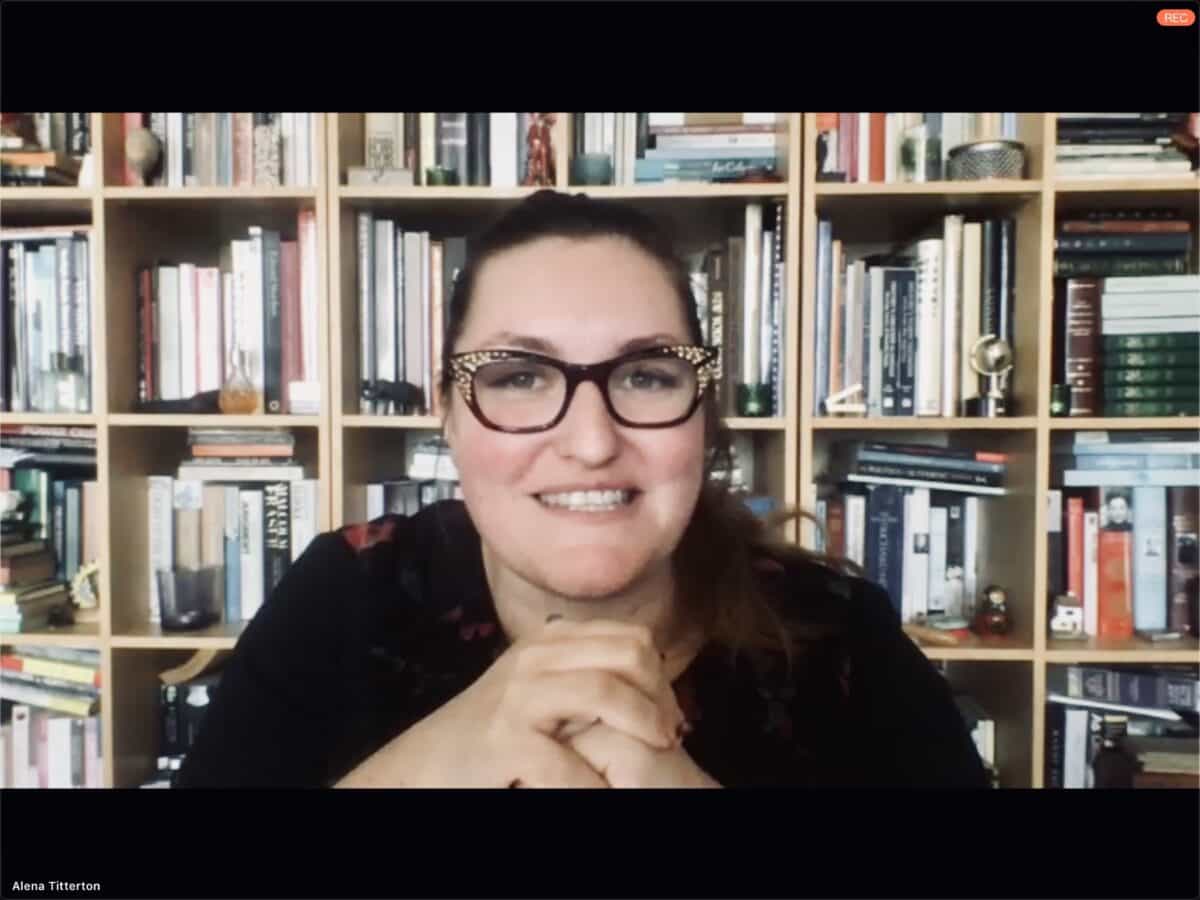
On March 24 2021, lawyer Alena Titterton explained what underpins the calls for Industrial Manslaughter laws as:

“Everyone wants to see consequences.”

In many social policy and political areas, Australia is seeing a change in “the social will” to fill the current void in political will. This is a useful perspective through which to view recent Industrial Manslaughter campaigns.

Subscribe to SafetyAtWorkBlog to continue reading.
Subscribe Help
Already a member? Log in here
Concatenate Web Development
© Designed and developed by Concatenate Aust Pty Ltd