Angry workers demanding access? OHS has got this – sort of

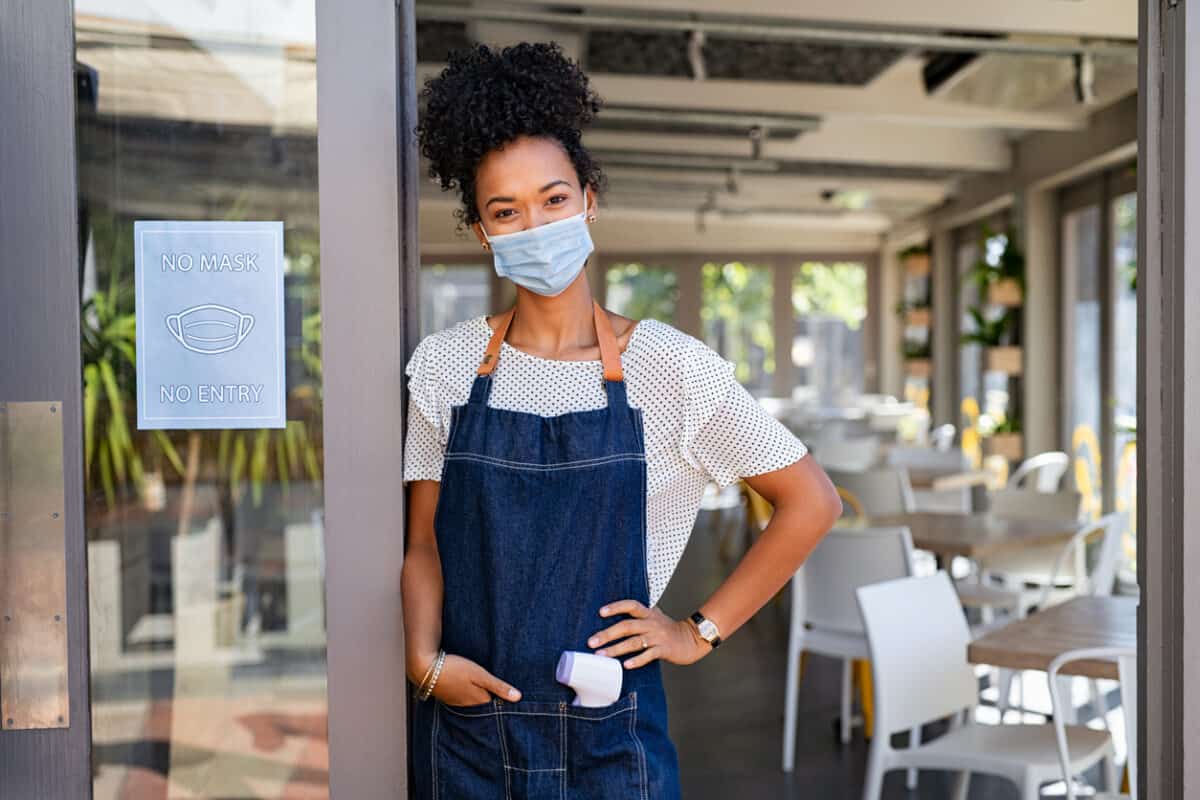
The reopening of workplaces in some Australian States is causing alarm over potential violence and abuse from those who do not meet or choose not to meet the new COVID-19 access requirements. This is perhaps most succinctly put in a recent article in The Guardian (paywalled) asking “… who will enforce rules for unvaccinated customers” – a question with which many employers are struggling.

The article discussed the expectations of employers about the rules or public health orders that they are expected to enforce but also about who can they call on if there is trouble, given there are mixed messages from the New South Wales government, in particular. (If “unprecedented” was the most used word in 2020, “mixed messages” may be the 2021 equivalent)

The enforcement question is being faced by all workplaces in all States that need to reopen under COVID-19 restrictions.

Subscribe to SafetyAtWorkBlog to continue reading.
Subscribe Help
Already a member? Log in here

Job insecurity and OHS solutions

As well as featuring in a workplace psychology podcast Professor Tony LaMontagne spoke at the current Senate Select Committee on Job Security in Australia and made a submission that provides evidence of the connection between job insecurity and poor mental health. This strengthens the argument that the prevention of mental health at work (and maybe elsewhere) could be more sustainably achieved by structural and economic policies and practices outside of the direct control of employers.

LaMontagne’s submission (written with Dr Tania King and Ms Yamna Taouk) says:

Subscribe to SafetyAtWorkBlog to continue reading.
Subscribe Help
Already a member? Log in here

Ventilation is an obvious COVID-19 control but could be a bugger to use

Vaccines are currently the most effective tool available to minimise the spread of COVID-19 to large populations. Fortunately, effective vaccines have been able to be manufactured at such a rapid pace. But previous pandemics have not had vaccines and have had to rely, primarily, on hygiene and isolation. Part of the hygiene practice was to ensure that buildings were well-ventilated. Ventilation actions on COVID-19 were part of Europe’s response to the pandemic in 2020, but Australia has only just started to accept the need for improved ventilation as it was very late to the risks of aerosol transmission.

As vaccinated workers return to workplaces in many of Australia’s urban centres, employers will need to assess their occupational health and safety (OHS) duties in new ways, and ventilation will be a significant challenge.

Subscribe to SafetyAtWorkBlog to continue reading.
Subscribe Help
Already a member? Log in here

OHS is a key process for control of COVID

It is always important to note when those outside the traditional occupational health and safety (OHS) networks speak in favour of OHS and its critical role in business decisions.

On September 20 2021, ABC’s Mary Gearin spoke with Emeritus Professor Malcolm Sim of Monash University about the likelihood of mandatory vaccinations on the ABC Drive program. Sim said:

Continue reading “OHS is a key process for control of COVID”

Avoiding COVID-19 distractions is essential

Recently Australian law firm Herbert Smith Freehills conducted a webinar on mandatory vaccinations. (2,000 attendees = hot topic) This workplace issue is moving quickly in each Australian jurisdiction and almost every day. There was some helpful advice in this seminar that was, thankfully, not reliant on case law and the avoidance of occupational health and safety (OHS) liability. Below is a discussion of some of the self-analysis and risk assessment that all employers should undertake to manage their workforce through COVID-19.

Subscribe to SafetyAtWorkBlog to continue reading.
Subscribe Help
Already a member? Log in here

Mandatory vaccinations without making vaccinations mandatory

In a little over a month, the Australian conversation about mandatory vaccinations at work has changed dramatically. In early August, food processing company SPC was treated suspiciously over its requirements for its workers, customers, and contractors to be vaccinated against COVID-19. Recently, the New South Wales Premier, Glady Berejiklian, required vaccinations for workers to move outside of certain residential locations. And today, the Victorian Health Minister, Martin Foley, has all but made vaccinations mandatory for the construction industry.

As Berejiklian has shown, you don’t need to impose mandatory vaccinations to make vaccinations mandatory.

Continue reading “Mandatory vaccinations without making vaccinations mandatory”

Back to the old office in a new world

Many employers are rattling around floors of empty offices while their employees are working remotely or at home and almost entirely due to modern telecommunications. This has not been at the request of employers but due to government lockdown requirements. The push to have workers return to multi-storey offices is reflective of the desire to return to normal rather than accepting that established business structures have been rendered impractical or unfeasible for the coronavirus future.

A recent article in the New York Times illustrates this new circumstance well. The article, titled “New surveys show how pandemic workplace policies are shifting“, says that the major information technology companies in the United States that every business seems to want to emulate even though their practices are very questionable are continuing to postpone the return of workers to bricks and mortar (or glass and stainless steel) offices. The NYTimes article is the first to discuss this phenomenon and its relation to mandatory vaccinations.

Subscribe to SafetyAtWorkBlog to continue reading.
Subscribe Help
Already a member? Log in here
Concatenate Web Development
© Designed and developed by Concatenate Aust Pty Ltd