Trade Union Royal Commission shows exploitation of OHS

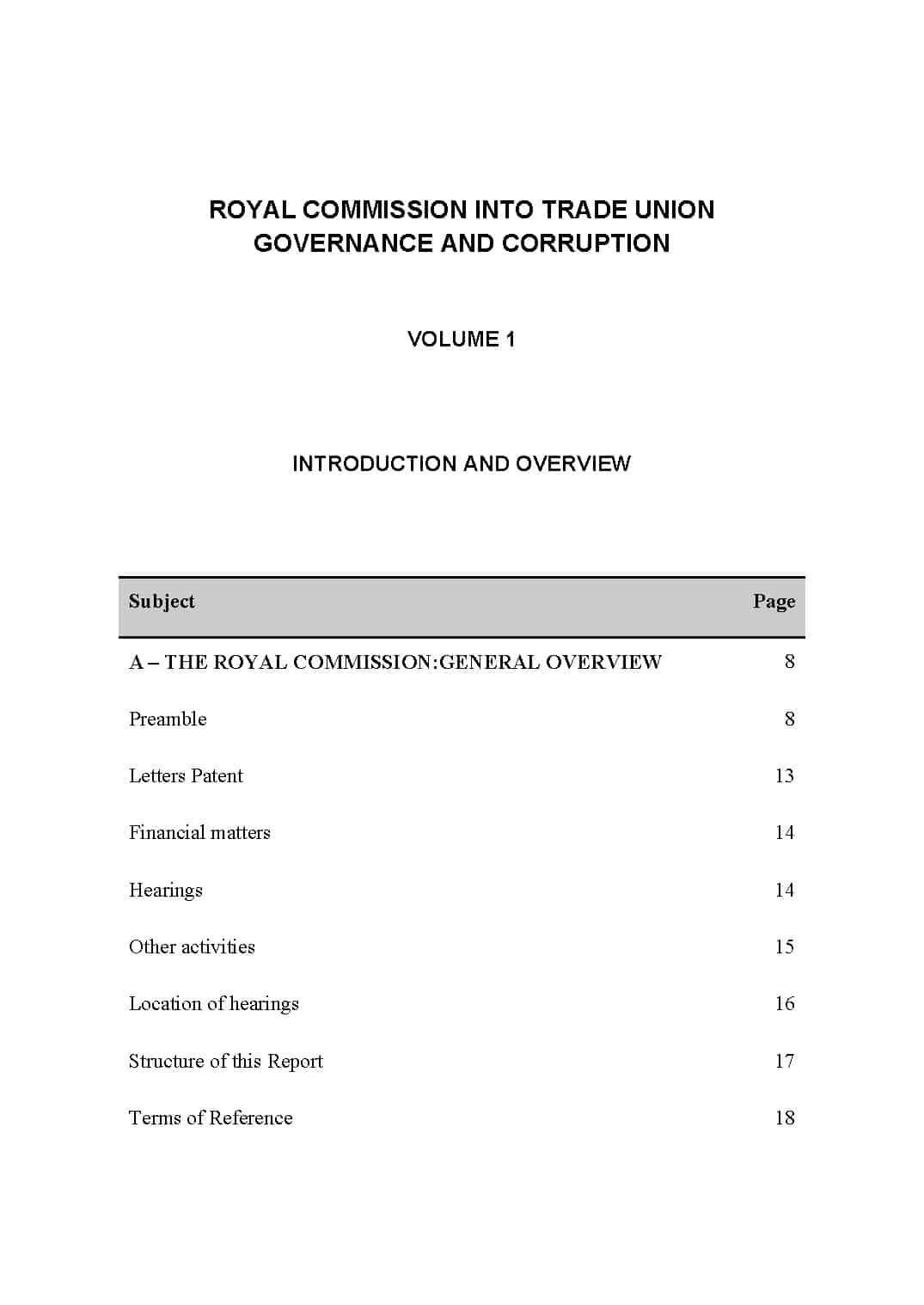
cover of V1-IntroductionIn January 2015, this blog said of Australia’s Royal Commission into Trade Union Governance and Corruption (TURC):

“Workplace safety has not been the focus of this Royal Commission but it is one of its victims”.

The Royal Commission’s final report was released on 30 December 2015, and it is time to look at the mentions of occupational health and safety (OHS), at least in Volume 1, and see how processes, decisions and reporting in the safety sector may change.

Subscribe to SafetyAtWorkBlog to continue reading.
Subscribe Help
Already a member? Log in here

Talking about safety – old skills in new ways

Australia’s latest Prime Minister, Malcolm Turnbull, has a strong background in technology investment and is urging the country to embrace innovation.  This has generated a focus on information technology start-ups but it may also create opportunities for occupational health and safety (OHS) professionals, if they are willing to change.

There has been a quick growth in

Subscribe to SafetyAtWorkBlog to continue reading.
Subscribe Help
Already a member? Log in here

Zero Harm is dead, long live ……whatever comes next

Zero Harm was an enormously popular motivational aim for OHS.  It originated as a response in some large organisations where safety performance was plateauing and who felt that they had achieved as much as they could in redesigning work and improving physical safety.  The plateauing led to frustration and a reassessment of safety practices.  The remaining variable was seen to be the worker and so slogans were instigated to increase the care (or mindfulness) of workers.

However, this assessment seems to have taken the traditional, and shallow, approach.  One variable is, of course the worker but the assessors failed to see that the organisational structure and operations were, or should be, variable too.  In the words of the current Australian Prime Minister, Malcolm Turnbull, this variability, this adaptability, could lead to innovation, economic growth and increased sustainability.

The promotion of the zero harm approach to safety could be seen as a safety dead-end and an indication that organisations were fixed on only seeing the dead-end.  Safety thinkers, and there are a few, offered ways out of the dead-end by thinking differently about what we know.

Subscribe to SafetyAtWorkBlog to continue reading.
Subscribe Help
Already a member? Log in here

SafetyAtWorkBlog’s most popular articles of 2015

SafetyAtWorkBlog has had a successful 2015, consolidating itself as a valid independent voice on workplace health and safety, particularly in Australia. But readers don’t get access to some of the statistics for the site and as a year in review exercise below are the top five most-read articles written in 2015, highest readership first:

Impairment argument fails to convince Fair Work Commission over unfair dismissal

WorkSafe Victoria heads roll

Research raises serious questions on SIA’s certification push

Some are losing faith in the Victorian Workcover Authority 

Safety learnings from construction Continue reading “SafetyAtWorkBlog’s most popular articles of 2015”

Submission on Labour Hire disappoints on OHS

cover of Ai_Group_LabourHireandInsecureWork__November 2015_Final2The public submission phase for the Victorian Government’s inquiry into labour hire and insecure work closed last week.  Public hearings have occurred this week and will continue in February 2016. One industry association, the Australian Industry Group has released its submission.  Its discussion  of occupational health and safety (OHS) of labour hire workers and suppliers is very disappointing.

Representing Members

The AiGroup says, in its submission that

“The interests of both groups [labour hire companies and users of labour hire], as well as the interests of the broader community, are best protected by ensuring that a competitive market is maintained for the provision of labour hire services, and that impediments to competition are removed.” (page 4)

It could be argued that the competitive market has allowed unscrupulous labour hire suppliers to succeed as they have been offering the cheapest labour.  These suppliers have succeeded, mostly, because there is a ready market for opportunities to maximise profit by reducing the legal rights of workers.  A competitive market may help fix the problem but it is also a problem that it helped create. Continue reading “Submission on Labour Hire disappoints on OHS”

Concatenate Web Development
© Designed and developed by Concatenate Aust Pty Ltd