
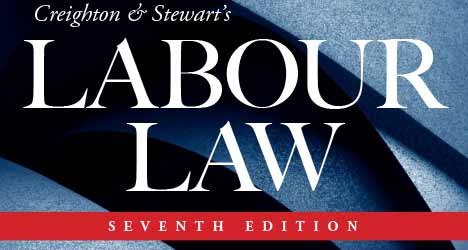
The latest edition of Creighton & Stewart’s Labour Law book (7th edition) has been released. I say “book”, but it is almost a brick, weighing in on my scales at 1.8 kilograms (see photo below). The book is excellent and probably authoritative, with the primary negative being its size and format. This article focuses on the 79-page occupational health and safety (OHS) chapter written by Richard Johnstone.
Category: politics

The recent recommendations into OHS penalties are likely to go nowhere
The Victorian Sentencing Advisory Council‘s report on OHS sentencing received minimal media coverage. Perhaps more will come when the government responds to the recommendations. However, the coverage focused on the recommendation for a substantial increase in financial penalties for those who breach occupational health and safety (OHS) laws. The report contained much more than financial penalties, but the political climate will likely stifle any significant reforms.
Farmers’ values need analysis and changing
Recent statistics on farm safety by AgHealth Australia reported in an earlier article, have also garnered attention from the Australian Broadcasting Corporation (ABC). The focus is on the number of deaths associated with side-by-side (SXS) vehicles, and farming seems to be treated as a special work health and safety case. Farming is not exceptional but represents different cultural values that deserve greater attention.
Mental health, neoliberalism and trade union myopia
The Australia Institute is a progressive (Left-leaning) research institute that recently commemorated its 30th anniversary with a book called “What’s the Big Idea?” Contributors are compatible with the Institute’s ideologies, but some chapters overlap with occupational health and safety (OHS).
All safety is political. It always has been
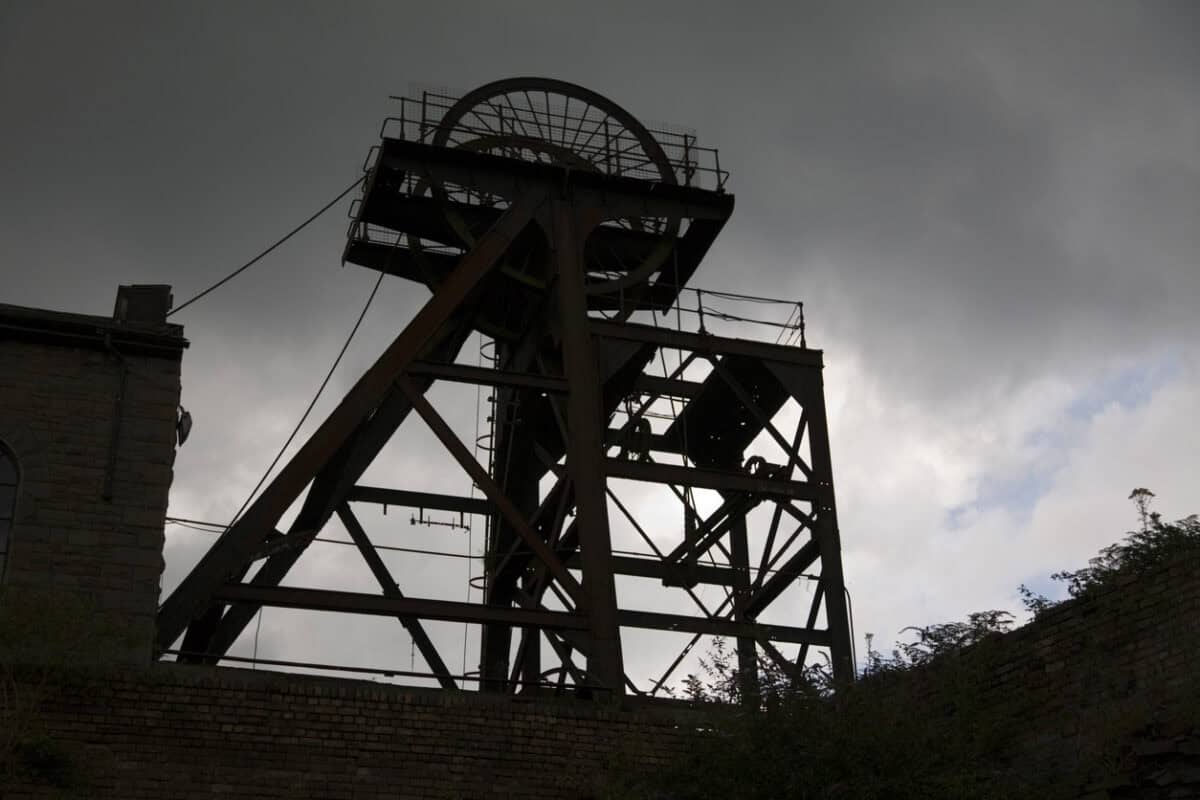
My great uncle dug into coal mine tailings with his bare hands to try and rescue the school children and teachers buried during the Aberfan disaster. His own grandchildren died. Both of my grandfathers suffered from lives spent underground; they both died young, one from lung cancer and silicosis.
For me, all safety is political. It always has been. It’s not party-political – but it can be. It’s political in the sense that all decisions in every aspect of our lives are a function of power and authority.
Politics on display at safety awards night
WorkSafe Vcitoria’s annual awards night for 2024 was held last week. It was an unexceptional night, with around 400 in the audience, most of whom were award finalists and their colleagues. Although unexceptional, it was not dull, as the finalists’ stories were often compelling. However, the event needs a boost. Perhaps not to the flamboyance of earlier this century with over 1000 attendees and dancing into the night, as that would not be a good political look, but it needs something.
What was not notable was the politics of the evening.
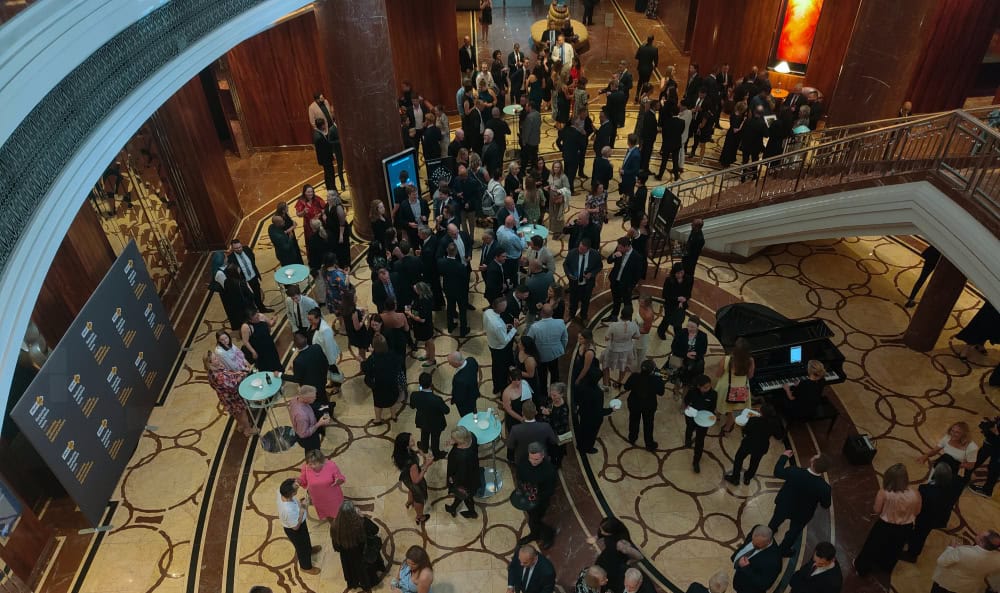
WorkSafe Victoria’s new 5-year plan
At WorkSafe Victoria’s Awards night, Minister Ben Carroll said he was pleased to be involved with WorkSafe’s new 5-Year Plan to be launched on February 28,2025. WorkSafe executive Sam Jenkin summarized the plan’s principal aims in his speech. He said: