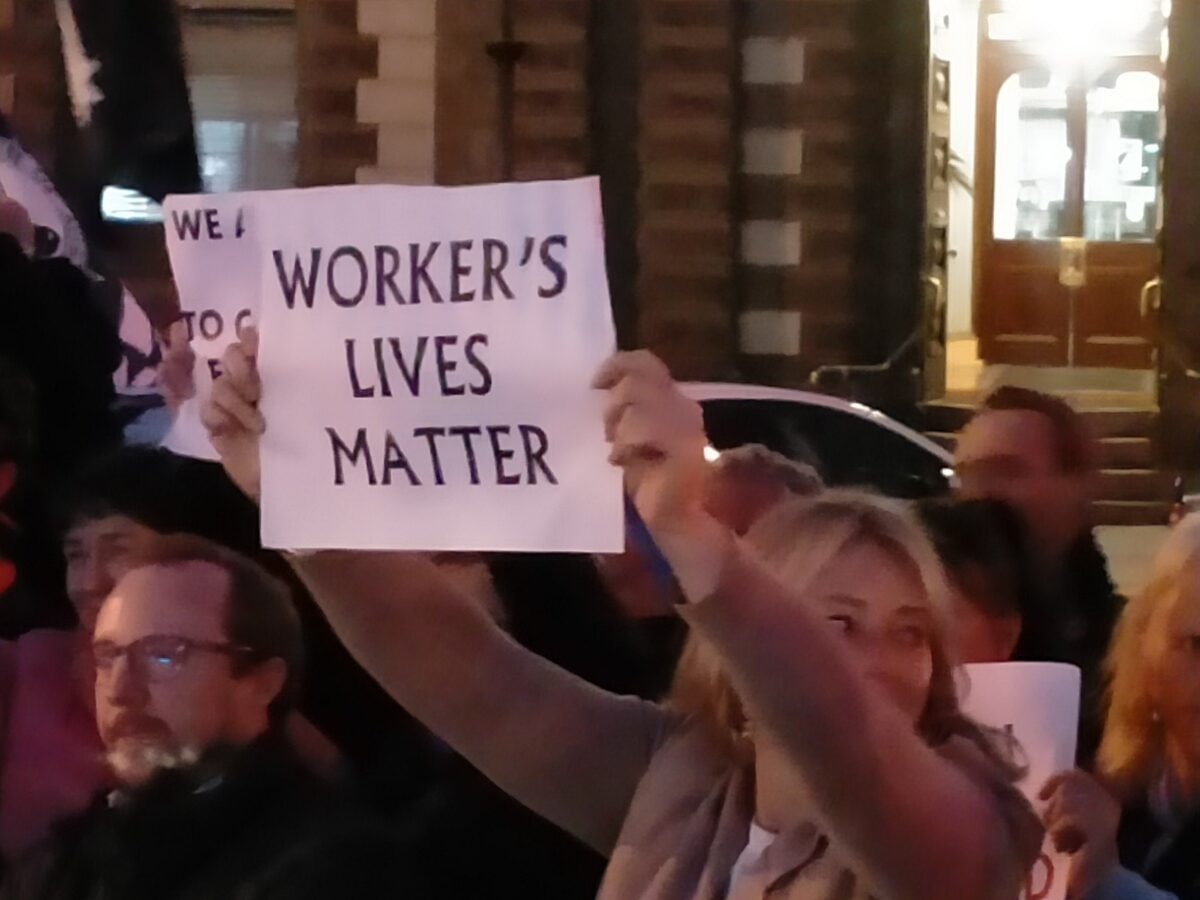
OHS issues for the Jobs and Skills Summit

Last week the Australian Government released an issues paper for its upcoming Jobs and Skills Summit. The main topics are broad but still not as inclusive as possible. The paper says:

“The goal of the Summit is to find common ground on how Australia can build a bigger, better trained and more productive workforce; boost real wages and living standards; and create more opportunities for more Australians.”

Occupational Health and Safety (OHS) is relevant to training, productivity, and living standards but is hardly mentioned in the issues paper and is likely to be ignored in the Summit itself, even though the issues paper includes a question about workplace safety,

Subscribe to SafetyAtWorkBlog to continue reading.
Subscribe Help
Already a member? Log in here

Major omissions from business perspective before the Jobs and Skills Summit

Next month the Australian government is conducting a “Jobs and Skills Summit“. Such consultative events have been held every so often for decades but usually after a new government is sworn in and after the previous one was in power for too long or lost its way. Such summits are seen as ways of reconnecting with disaffected and disempowered industry associations, trade unions and other organisations with the ear of the incoming government.

One of the most vocal industry associations is the Business Council of Australia. The BCA has existed since 1983. Its Wikipedia entry lists its large corporate membership, providing context to its policies and positions. On August 15 2022, its CEO Jennifer Westacott had an opinion piece, “What a Jobs Summit ‘win’ would look like“, published in the Australian Financial Review, but with a different headline. Workplace safety was mentioned in passing but is hiding in the subtext elsewhere.

Subscribe to SafetyAtWorkBlog to continue reading.
Subscribe Help
Already a member? Log in here

A Wellbeing Budget needs a strong cultural change strategy

Jim Chalmers has completed his first week of Australia’s Parliament as Treasurer. On Thursday, he presented a statement of the country’s finances without mentioning his well-being intentions (which some are claiming to be a gimmick). This does not mean that well-being is dead, as the “Wellbeing Budget” is not due until October; Chalmers needs to establish his authority, but it illustrates a common perspective on occupational health and safety (OHS) in the minds of many small business people.

Subscribe to SafetyAtWorkBlog to continue reading.
Subscribe Help
Already a member? Log in here

Why are farms becoming safer?

It is Farm Safety Week in Australia. These types of events are intended to raise awareness of specific issues. The biggest problem with these events is that solutions are rarely presented; it is assumed that raising awareness is sufficient. This is hard to justify in agriculture, where many of the smaller and high-risk farms have been run by families for many years and often generations. As a result, most people living in the country know of someone widowed after a workplace incident or of someone like the one-armed tennis player or lawn bowler who lost an arm in an unguarded Power Take-Off.

At some point, the strategy must move from raising awareness to providing solutions.

Subscribe to SafetyAtWorkBlog to continue reading.
Subscribe Help
Already a member? Log in here

“There is too little time and the ask is too big to try to change the system”.

There are many similarities between the management of occupational health and safety (OHS) and environment protection. Both seek to prevent and/or mitigate harm, and both have similarly focussed legislation. However, this similarity extends to vulnerabilities in each approach. Neither discipline is solely responsible for the lack of progress in prevention and protection, but both have not realised their potential for change.

Subscribe to SafetyAtWorkBlog to continue reading.
Subscribe Help
Already a member? Log in here

Heat and the need to change work

Europe is experiencing heat at, or close to, levels never recorded before. This has caused the mainstream media to issue advice on how to avoid adverse health impacts from heat exposure. However, the necessary changes to work are not receiving the attention they should.

Australia has faced such situations before, especially in the last decade, so there is some generic occupational health and safety (OHS) available for translation to the European circumstance.

Continue reading “Heat and the need to change work”

Action on Health and Safety is always a choice

Last week epidemiologist Hassan Vally wrote one article in The Age called either “Health or economy a false choice” or “COVID caution can be a win for both public health and business” (paywalled), depending on the sub-editor and format. Curiously one has a negative implication, the other, the opposite. Either way, the article illustrates the public health dichotomy that mirrors that of occupational health and safety (OHS).

OHS often requires a decision between profit or production and safety. Public Health deciders need to consider the interests of the public and the duties of government. I prefer the former headline because it states that this decision is a “choice”. Safety, occupational or public, is always a choice.

Subscribe to SafetyAtWorkBlog to continue reading.
Subscribe Help
Already a member? Log in here
Concatenate Web Development
© Designed and developed by Concatenate Aust Pty Ltd