
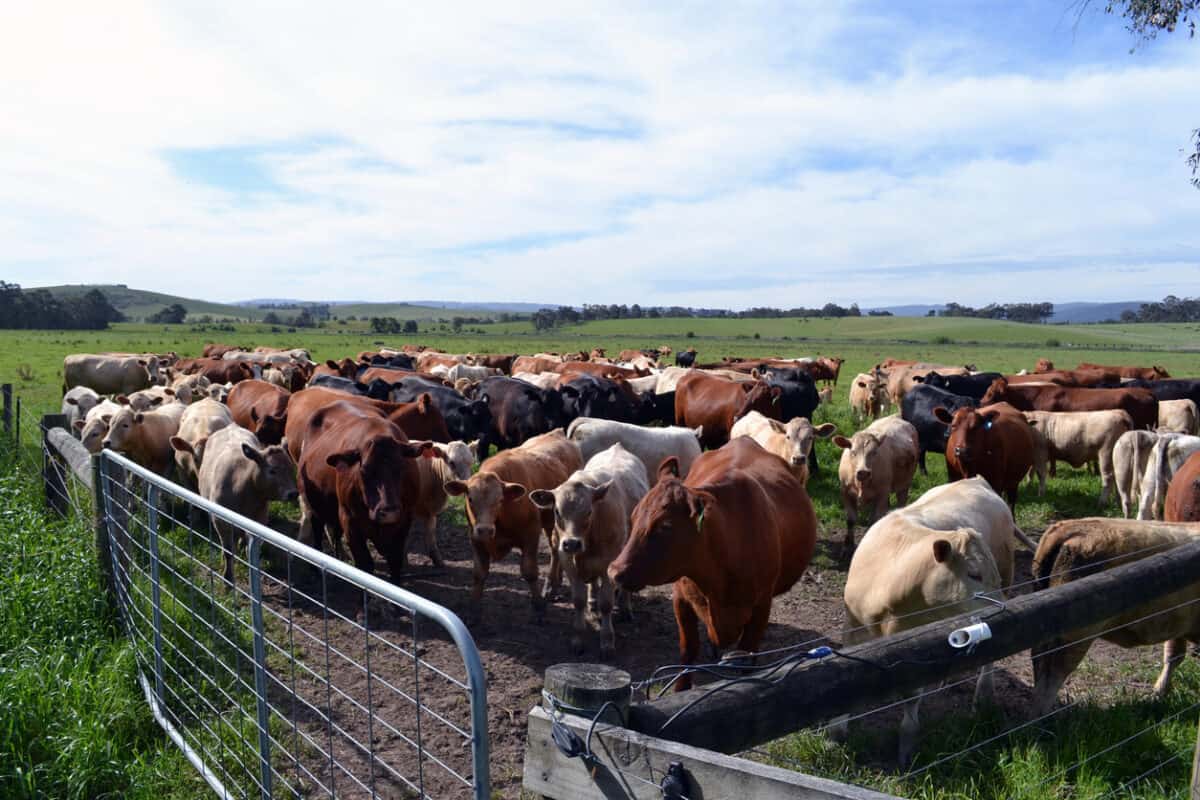
Recently The Monthly magazine took a close look at the labour practices of Midfield Meats (paywalled), a major Warrnambool company and meat exporter that had been, yet again, successfully prosecuted by WorkSafe Victoria. There are workplace safety elements to The Monthly’s story that were not as prominent as other issues and there were some questions for companies and governments that have supported Midfield in the past.
Category: politics
COVID, Blame and Employers
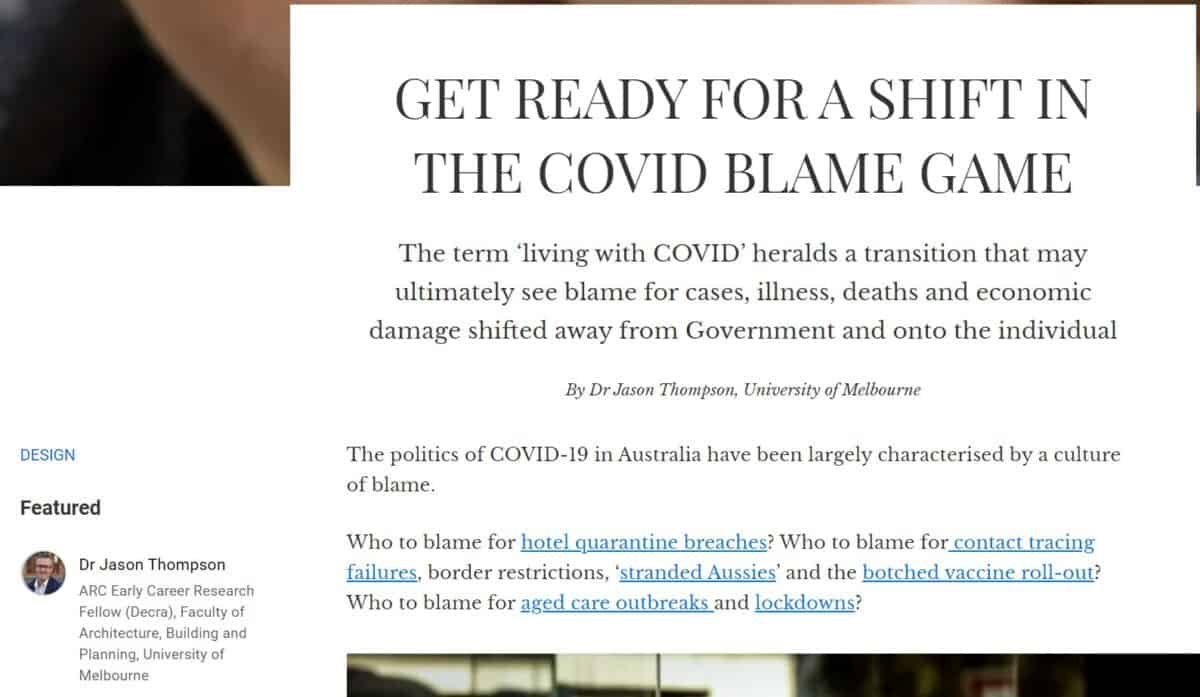
Australia has not had a crisis in public health to the magnitude of COVID-19 for a very long time. It is understandable for people to look at a public health crisis through the reference point of their own experience and profession. There is an overlap between the management of the pandemic and occupational health and safety (OHS), but that overlap should not be inflated.
Jason Thompson wrote an excellent (and recommended) article on COVID-19 and blame for the University of Melbourne titled “Get Ready for a Shift in the COVID Blame Game”. I had the chance to put a few questions to him about the article.

Political attack falls flat
There is an animosity between the Liberal Party in Victoria and some of its sympathetic media and WorkSafe Victoria, particularly aimed at the CEO, Colin Radford. Most of this has been played out in the mainstream media, but recently, in the Public Accounts and Estimates Committee (PAEC) of the Victorian Parliament, the Deputy Chair, Richard Riordan (Liberal), slagged off WorkSafe and Radford over Victoria’s Hotel Quarantine Program. His attack was ineffective and showed a lack of understanding of WorkSafe’s enforcement role and occupational health and safety (OHS) laws.
This performance overshadowed some of the points being made by the Minister for Workplace Safety, Ingrid Stitt (ALP), in the hearing. However, she omitted the upcoming imposition of on-the-spot fines.

Is Ken Phillips shooting the messenger and missing the real reform target?
Ken Phillips of Self-Employed Australia is continuing his pursuit of Victorian politicians for breaches of the occupational health and safety (OHS) laws after the failure of the State’s Hotel Quarantine Program that led to the deaths of some Victorians from COVID-19. He has supporters in some of the mainstream media and was recently interviewed by Peta Credlin on Sky but perhaps the clearest explanation of his aims is in an interview with George Donikian on The Informer in May 2021. Just recently, Phillips obtained an update from WorkSafe Victoria and has been doing the media rounds again.

Speak Global, Implement Local
Most of the international reporting in June 2021 was about the G7 meeting, but the International Labour Organisation (ILO) also conducted a World of Work Summit as part of its 109th International Labor Conference. Several world leaders recorded messages for the event, and two are particularly interesting – President Joe Biden and Pope Francis. Such statements do have global influence and can support local occupational health and safety (OHS) initiatives.
The OHS agenda of the Australian Labor Party
Given that the protection of worker health and safety will gain more attention and support under progressive parties and governments, the release of the 2021 National Platform for the Australian Labor Party (ALP) is notable. The 2021 document, unsurprisingly, focuses on the role of Health and Safety Representatives, appealing to its financial and political trade union base as major influencers on occupational health and safety (OHS).
This article will focus on the chapters in both the 2021 and 2018 platform documents related to safe and healthy workplaces, although there are OHS-related issues dotted throughout both documents.

The restricted state of knowledge – NDAs and OHS
A core element of the management of occupational health and safety (OHS) is creating and maintaining a “state of knowledge” on hazards and risks. There is an enormous amount of information already available in various OHS encyclopaedias, wikis and bodies of knowledge, but some of the most important information continues to be locked up in non-disclosure agreements and confidentiality clauses. On the issue of workplace sexual harassment, a recently established inquiry in Victoria, Australia, is set to look at the mechanisms that are principally used to protect the reputation of companies and executives but that could also have broader OHS benefits.
Liberty Sanger and Bronwyn Halfpenny are heading a task force designed by the Victorian Government to
“…develop reforms that will prevent and better respond to sexual harassment in workplaces.”