Tough but fair – Allan Fels

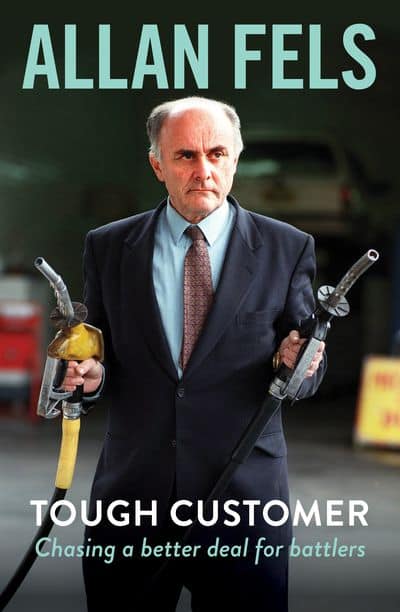
Allan Fels has served the Australian public for decades as the head of the Australian Competition and Consumer Commission, a Mental Health Commissioners and recently a Royal Commissioner for the Victorian Government in its inquiry into mental health. His level of activity and the breadth of that influence is extraordinary and should be no surprise that his service has overlapped and influenced workplace health and safety.

That experience has generated a book – Tough Customer – in which Fels reflects on his public service roles but also about how his life and that of his family have influenced his view of the world and his policy priorities. SafetyAtWorkBlog was able to speak with him for a short while earlier this week on the topics of

  • mental health
  • workplace health and safety
  • executive and political perspectives
  • the gig economy
  • ethics and social justice
  • the ACCC.
Subscribe to SafetyAtWorkBlog to continue reading.
Subscribe Help
Already a member? Log in here

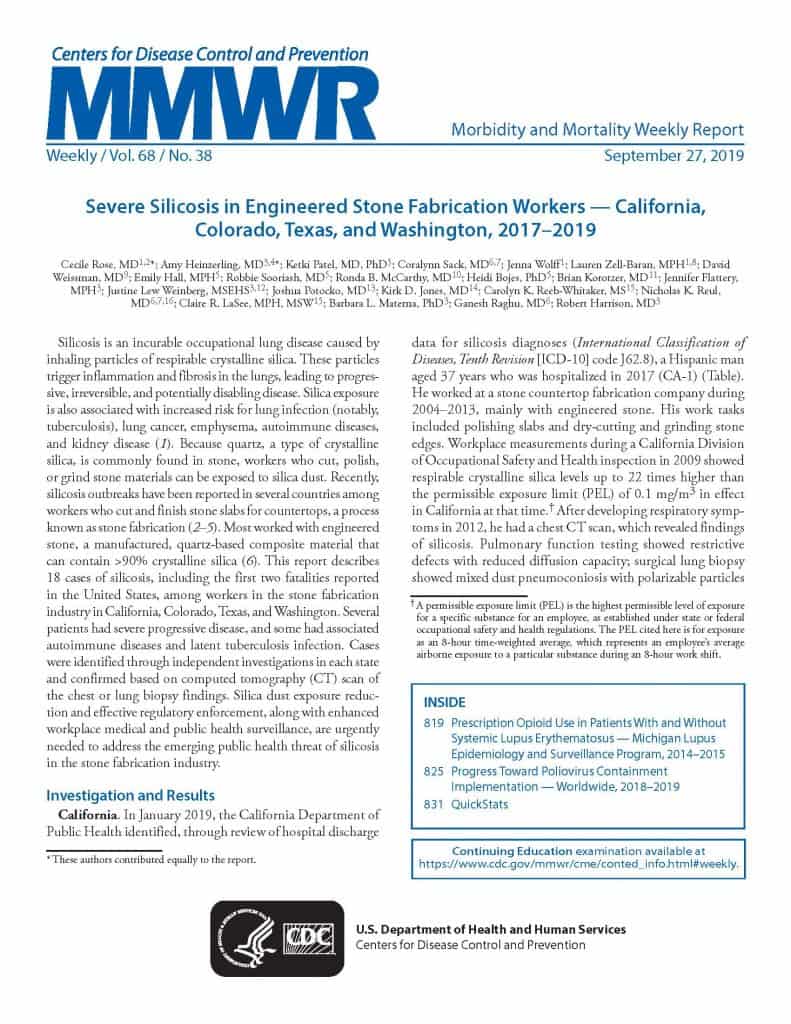
Australian silicosis research mirrored in the US

At the end of October 2019 the Australia New Zealand Society of Occupational Medicine (ANZSOM) will be conducting its annual scientific meeting in Adelaide. There are many issues on the agenda but silicosis is likely to figure prominently as it did last year, and as it should. The politics, knowledge and regulatory action has changed in the intervening twelve months.

Australia has new guidances from several occupational health and safety (OHS) regulators and agencies which restrict or ban dry-cutting of engineered stone and change other safety-related practices. There is also at least one political move to ban the use of engineered stone. But perhaps more important is that new research on silicosis risks is appearing and not just from Australia. The United States’ Centers for Disease Control and Prevention published new research on 27 September 2019 based on medical assessments and several silicosis-related deaths.

Subscribe to SafetyAtWorkBlog to continue reading.
Subscribe Help
Already a member? Log in here

Bystanders, safety hazards and prevention of harm – “what you do or don’t do”

Occupational health and safety (OHS) relies on workers to “blow the whistle” on the existence of hazards to their employers, even though the process is not considered whistleblowing. The avoidance of many workplace hazards has always relied on bystanders – one’s work colleagues who may say “watch out!” In recent years, the action of notifying employers and authorities of hazards, and of drawing colleagues’ attention to0 hazards has increased in prominence and debate, especially around the issue of psychological harm and, a subset of that harm – sexual harassment.

In September 2019, the Victorian Government released what it describes as a toolkit on bystander interventions in relation to sexual harassment and sexism. The full document is useful but, as with many government guidances on this issue, almost ignores the role of health and safety management in the prevention and reduction of this type of hazard.

Subscribe to SafetyAtWorkBlog to continue reading.
Subscribe Help
Already a member? Log in here

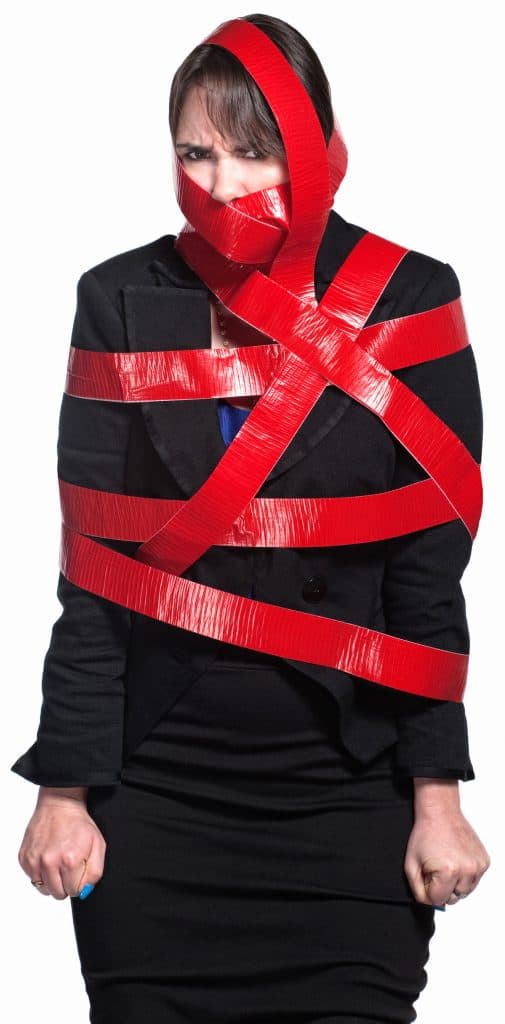
Red Tape comeback

The need to reduce Red Tape is getting another run in Australia through the lobbying of the Business Council 0f Australia and its CEO, Jennifer Westacott. “Red Tape” can be defined in many ways but it is often synonymous with government interference, of which occupational health and safety (OHS) regulation and enforcement is considered part.

In an interview with Laura Tchilinguirian on ABC News Radio on 16 September 2019 Westacott said that the community, which sounds mostly like business people:

Subscribe to SafetyAtWorkBlog to continue reading.
Subscribe Help
Already a member? Log in here

More safety in politics

Here’s a quick summary of several mentions of occupational health and safety (OHS) in the various Parliaments in Australia over the last week or so.

Answers to Questions on Notice

In Parliamentary Committees, speakers often put questions “on notice” as they do not have the answer at hand. Often these questions fade from memory but answers do appear, usually. A good example has been provided in the South Australian Parliament on September 11, 2009 with the Treasurer, Rob Lucas, providing answers to questions from Estimates Committee B on July 24 2019. For the number junkies out there, according to Hansard, in 2018/19 SafeWork SA:

Subscribe to SafetyAtWorkBlog to continue reading.
Subscribe Help
Already a member? Log in here

Listening anew to the voice that has always been there

The growth of visible and prominent customer services, such as those in the collective term of “gig economy” – has coincided with an increased consideration of alternative socioeconomic structures and broader political diversity, especially in the UK and to a lesser extent Australia and New Zealand. One manifestation of this change is an emerging consideration of Co-operatives and worker ownership. This may seem outside the occupational health and safety (OHS) purview of this blog but co-operatives often allow workers more input into business operations and therefore more influence on OHS standards and management. However, should this influence come from increased worker wealth or is OHS more fundamental than money?

Subscribe to SafetyAtWorkBlog to continue reading.
Subscribe Help
Already a member? Log in here

Industrial Manslaughter campaign messages need scrutiny

Recently the State Secretary of the CFMEU Construction & General WA, Mike Buchan, wrote in Construction Weekly about the need for Industrial Manslaughter laws in Western Australia. There are several points made that deserve some assessment and clarification.

He starts by stating that current occupational health and safety (OHS) laws are inadequate. This may be the case, but as Nicole Rosie from WorkSafe NZ has, supposedly, said “you can’t regulate your way to safety”. What may be inadequate is people’s compliance with OHS laws, and there may be many reasons for this non-compliance – ignorance, illiteracy, lack of enforcement by government, complexity of laws and guidance, and/or a total disregard. According to Buchan, and the wider trade union movement, Industrial Manslaughter (IM) laws are supposed to fix this inadequacy.

Buchan writes that

“The penalties that are handed down, even when a builder is found guilty of negligence, have been a disgrace in the face of the extraordinary loss of life and the suffering of families left behind.”

Subscribe to SafetyAtWorkBlog to continue reading.
Subscribe Help
Already a member? Log in here
Concatenate Web Development
© Designed and developed by Concatenate Aust Pty Ltd