Glyphosate presents an OHS problem but maybe OHS is the path to a solution

Occupational health and safety (OHS) related decisions are made on the state of knowledge about hazards and it is up to OHS people to make sure the state of knowledge is at its best so that the best decisions can be made.  But what do you do if the state of knowledge on a hazard seems to be made purposely uncertain and that uncertainty is leading to the status quo, which also happens to provide a huge income for the owner of the product creating the hazard.

This seems to be a situation at the moment in Australia in relation to the use of the weedkiller, glyphosate, marketed heavily by the global chemical company, Monsanto.  The alleged corruption of data on which OHS people and workers base their safety decisions was perhaps one of the most disturbing elements of the recent ABC Four Corners program on the chemical (

Subscribe to SafetyAtWorkBlog to continue reading.
Subscribe Help
Already a member? Log in here

CFMEU steps up the OHS pressure

SafetyAtWorkBlog has dipped into the occupational health and safety (OHS) and political issues around the death of Jorge Castillo-Riffo in Adelaide in 2014.  On October 4 2018, the CFMEU issued a media release outlining the recommendations it made to the Coronial inquest into Castillo-Riffo’s death.  They deserve serious consideration:

  • Mandatory coronial inquests should be held into all deaths at work, with a mandatory requirement for the reporting of any action taken, or proposed to be taken, in consequence of any findings and recommendations made;
  • Families should receive funding to be represented;
  • An independent safety commissioner should be established in SA whose duty it is to review, comment and provide recommendations concerning the safety record of companies who tender for government construction contracts work over $5 million;
Subscribe to SafetyAtWorkBlog to continue reading.
Subscribe Help
Already a member? Log in here

Mixed bag conference format succeeds

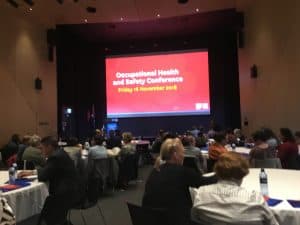
The Safety Institute of Australia (soon to be trading as the Australian Institute of Health and Safety) conducted its Perth Safety Symposium on September 28 2018.  It was the event’s second year and, overall, was a success.  But how does one measure the success of a one-day conference?

Firstly, one has to have an interesting and, if possible, fascinating pool of speakers. The keynote speakers included:

Simon Millman MLA represented the West Australia Premier Continue reading “Mixed bag conference format succeeds”

OHS needs to accept the influence of neoliberalism and rebuild

Many have been claiming that the era of neoliberal economics and the associated politics is over or, at least, coughing up blood.  However, occupational health and safety (OHS) is rarely discussed in terms of the neoliberal impacts, and vice versa, yet many of the business frustrations with red tape, regulatory enforcement strategies, reporting mechanisms and requirements and others have changed how OHS has been managed and interpreted.

One of the most readable analyses of neoliberalism in Australia comes from

Subscribe to SafetyAtWorkBlog to continue reading.
Subscribe Help
Already a member? Log in here

Bill Shorten reflects on the Esso Longford disaster

Tonight, SafetyAtWorkBlog will be attending the launch of a new book that includes personal stories about the 1998 Esso Longford explosionWorkers’ Inferno.  The book is being released on the 2oth anniversary of the explosion that killed two workers, injured many others, disrupted gas supplies to the State of Victoria, resulted in a then-record fine for occupational health and safety (OHS) breaches and generated a Royal Commission.  It is also, perhaps, the best example of a company trying to blame the worker for a major incident.

The Federal Opposition leader, Bill Shorten, was an official of the Australian Workers Union at the time and today he published an opinion piece Continue reading “Bill Shorten reflects on the Esso Longford disaster”

Is OHS suffering from policy AND structural capture?

The Grattan Institute has released a report about the political influence of lobbyists.  Understandably the media is giving the report a lot of attention, particularly as it identifies lobby groups that have more access to politicians than other groups and how public interest policies have failed after intense lobbying. But the report also addresses the matter of “policy capture”.  Although the report analyses the activities of lobbyists, perhaps research could be undertaken into the high level of policy influence on workplace health and safety matters from a tripartite consultative structure that no longer reflects the Australian workforce.

In its Overview the Grattan Institute writes:

Subscribe to SafetyAtWorkBlog to continue reading.
Subscribe Help
Already a member? Log in here

An OHS-based investigation of suicides should identify new control options

Melbourne, Australia – December 28, 2016: Melbourne Metro Train at Ringwood Station

Why is rail-related suicide an occupational health and safety (OHS) issue?

I looked into the issue of rail-related suicide when writing an OHS chapter for the Metro Trains Melbourne’s (MTM) bid for a franchise renewal for running trains on the metropolitan network. Each rail-related suicide, MTM describes these as trespasser suicides, creates major work-related psychological trauma for the train drivers as well as grief for the families of the deceased.  These incidents have secondary impacts on the rail workers who need to clean the trains which are taken out of service after each incident and driven to the nearest biowash, as well as those MTM staff, and emergency service workers, who were required to attend the scene.

There is also massive harm, pain and cost to those whose suicide attempts fail to result in death, and those who will care for those who are now disabled.

Addressing the hazard of rail-related suicides needs a new and broader discussion; one which must involve a broad, enlightened occupational health and safety approach.

Subscribe to SafetyAtWorkBlog to continue reading.
Subscribe Help
Already a member? Log in here
Concatenate Web Development
© Designed and developed by Concatenate Aust Pty Ltd