Reviewing fundamentals is part of cultural change

The most recent stuff-up by the Commonwealth Bank of Australia has strengthened calls for a Royal Commission into Australia’s finance and banking sector. This is of interest to workplace safety professionals because it contains the liveliest current discussion about corporate cultures – how flawed ones are supposedly behind the errors and how proactive ones are supposed to be the solution.

Occurring at the same time is a growing social movement that is recalibrating occupational health and safety (OHS) to see workers as humans of value rather than units of labour.

Paralleling all of this is increased attention on the sociology and psychology of work, perhaps linked to a decline in the neoliberalism of the past forty years.  As Australia enters the time of OHS conferences and Work Safe Month in October, it may be worth considering a couple of fundamental questions, such as absolute safety, AFAIRP, and invisible hazards.

Subscribe to SafetyAtWorkBlog to continue reading.
Subscribe Help
Already a member? Log in here

University sexual assault – an OHS perspective

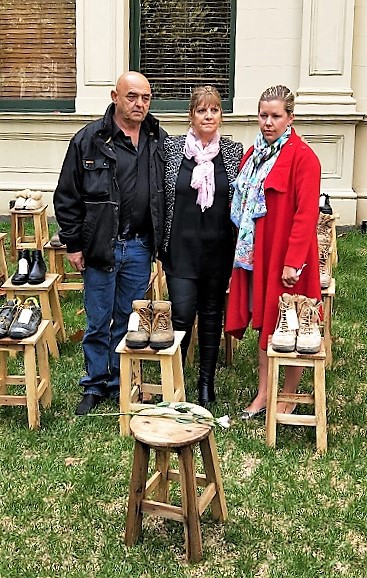
The community and media responses to the Australian Human Rights Commission report into sexual assault and harassment in Australian universities continue but until the Australian Government responds, it is unclear how the risks will be reduced, particularly as many members of the current Federal Government have been openly hostile to the AHRC and its previous Commissioner, Gillian Triggs.  After having rubbished the Commissioner and the institution, how will the government respond?

Following on from the very popular SafetyAtWorkBlog article about the report yesterday, it is worth looking at the AHRC recommendations in the occupational health and safety (OHS) context.

It should be noted that OHS places the principal responsibility on the employer, in this instance, the universities and the Vice-Chancellors.  Some have already started to call on the government to play a role, with implications that it should be leading the change: Continue reading “University sexual assault – an OHS perspective”

Psychology, Leadership and Jonathan Lincolne

Episode 47 of Andrew Barrett’s Safety On Tap podcast consisted of an interview with  Jonathan Lincolne of Pockets of Brilliance.  Several comments are of note.

Psychology

Around the 47 minute mark, Lincolne is asked about the level of psychological knowledge that the occupational health and safety (OHS) professionals should possess.  Lincolne refreshingly describes himself as a skeptic about a lot of the recent psychological discussion, particularly the promotion of neuroscience.

Subscribe to SafetyAtWorkBlog to continue reading.
Subscribe Help
Already a member? Log in here

Me! Me! Me! – OHS needs to grow up for the new world structure

There is much general discussion about the Fourth Industrial Revolution,  The Future of Work and other speculative work-related concepts. Klaus Schwab of the World Economic Forum wrote:

“We stand on the brink of a technological revolution that will fundamentally alter the way we live, work, and relate to one another. In its scale, scope, and complexity, the transformation will be unlike anything humankind has experienced before. We do not yet know just how it will unfold, but one thing is clear: the response to it must be integrated and comprehensive, involving all stakeholders of the global polity, from the public and private sectors to academia and civil society.”

For the purposes of this blog “work” is the focus and health and safety the discussion points.  Occupational health and safety (OHS) professionals have a unique opportunity to participate in the early stages of this societal disruption.  But there is also a risk that OHS could miss out. Continue reading “Me! Me! Me! – OHS needs to grow up for the new world structure”

Canberra Hospital demolition deserves a unified safety story

It is the twentieth anniversary of the explosive demolition of the Canberra Hospital.  The demolition was meant to be an implosion but instead debris scatter well outside the designated safety zone resulting in the death of one person and injuries to nine.  Such events are significant at the time but fade from memory until anniversaries are noted, however, there are important occupational health and safety (OHS) lessons from such incidents which do not have the drama of a Piper Alpha or a Challenger but are nevertheless as instructive.

Subscribe to SafetyAtWorkBlog to continue reading.
Subscribe Help
Already a member? Log in here

Important research into domestic violence strengthens OHS context

It is useful to consider corporate wellness and mental wellbeing programs in the context of work-related suicides.  By considering what many consider a worst-case scenario, the effectiveness of these programs can be tested.  The increased attention on domestic violence and its relationship to work over the last few years in Australia can play a similar role. New research on “intimate partner violence” provides mental health scenarios for which safety professionals need to be prepared. Continue reading “Important research into domestic violence strengthens OHS context”

New report provides important data on occupational health

A recent report from the UK Society of Occupational Medicine highlights several issues of note to the occupational health and safety (OHS) professional. But it is also worth looking at the SOM’s media release.

As well as offering financial costs and benefits of good occupational health management the full report also contextualises occupational health:

“The report cites a survey of 1,000 UK employers in which respondents gave their most common reasons to spend on health and wellbeing initiatives as: a motivated and healthy workforce is more productive (41%); to attract and retain staff (25%); to be perceived as a caring employer that takes duty of care requirements seriously (21%). Meanwhile, a survey of 1,000 employees found that they were more likely to choose an employer who took employee health and wellbeing seriously (66%) and would feel they have a duty to work harder for such an employer (43%). The survey results are reflective of the intangible as well as tangible benefits of occupational health.”

Continue reading “New report provides important data on occupational health”

Concatenate Web Development
© Designed and developed by Concatenate Aust Pty Ltd