

Australia has held an annual “Go Home on Time Day” for many years, but the amount of unpaid work workers give to their employers and the time their families miss out on remains high. Looking at new data in light of the legislative need for Australian employers to identify and assess psychosocial hazards, there are noticeable changes that employers need to make to comply with their occupational health and safety (OHS) obligations.
Category: research

The HSR Obsession that Skews OHS Reform
Safe Work Australia has many submissions to its Best Practice Review after a very slow start. Consultation has been extended to the end of November 2025. A curious request appeared by email invitation on November 14, 2025, developed in conjunction with the Australian Council of Trade Unions (ACTU).
The email says:
“Responses will help shape future improvements to consultation, representation and participation in Australia’s WHS laws. If you’re an HSR [Health and Safety Representative], there’s a short additional section specific to that role.”
I find some of the questions and its focus odd.
Stretching Programs Miss the Mark on Injury Prevention
A recent edition of the Professional Safety Journal from the United States included a cover story about pre-work stretching. This common activity on some construction and manufacturing sites is promoted as a means of preventing injury or reducing the severity of, especially, musculoskeletal injuries, but I don’t think there ever was evidence to support either of these intentions, and there still isn’t.

Beyond COVID Toward Safer Smarter Workplaces
The recent COVID-19 pandemic is over, but the virus and risk continue. Like any biological hazard that occurs in or affects workplaces, occupational health and safety (OHS) personnel need to be ready to respond appropriately should the hazard emerge or expand.
It is generally accepted that Safe Work Australia responded as quickly as possible when developing COVID-19 guidance, given that everyone was trying to work out what the hell was happening. Shortly before the pandemic, WorkSafe Victoria had published the first edition of a guide on how employers could respond to pandemics.
But where is Australia at now? How prepared are we for the next disease pandemic or epidemic? I asked Safe Work Australia and WorkSafe Victoria for an update.
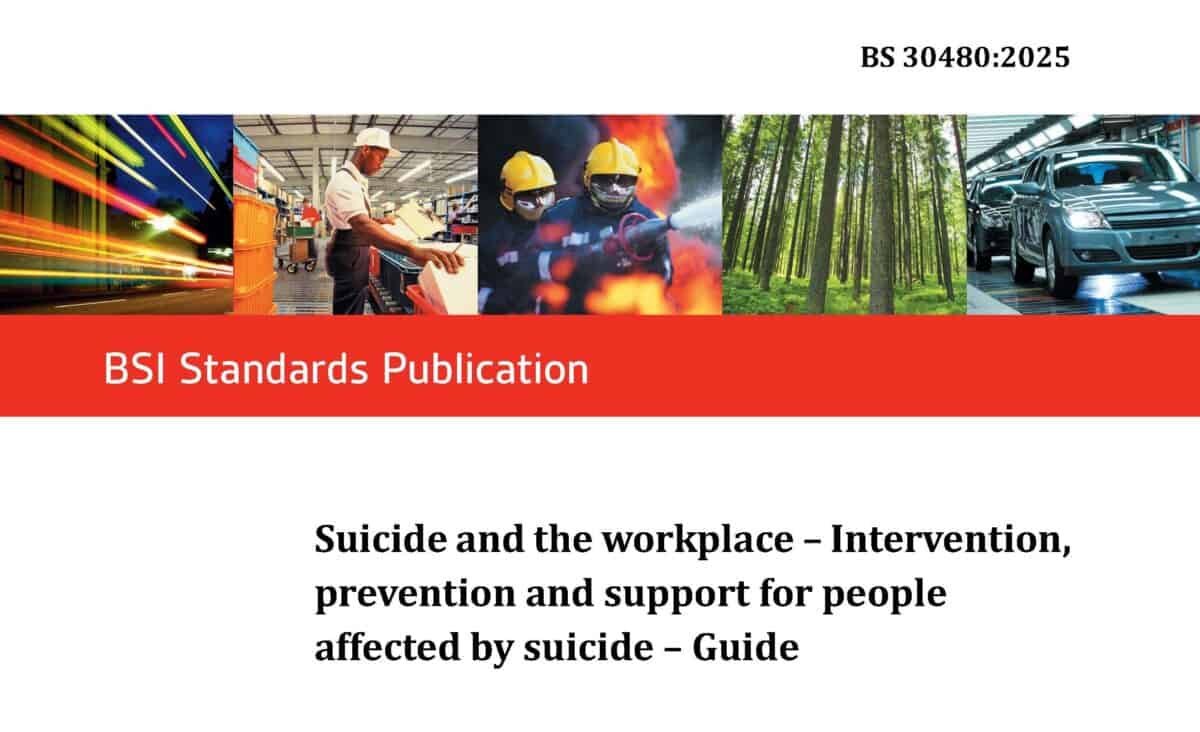
How BS30480 Challenges Tokenistic Mental Health Programs
British Standards Institute has just published BS30480, a standard called “Suicide and the workplace – Intervention, prevention and support for people affected by suicide – Guide”. It has come at the right time to show that the changes in psychological health at work in Australia are not in isolation.
Note: this article discusses workplace suicide factors.

What the Evidence Really Says About Working from Home
The chairwoman of Australia’s Productivity Commission, Danielle Woods, produced an op-ed in an Australian newspaper on 30 October 2025 about working from home. In this contentious workplace matter, Woods referred to evidence several times that the newspaper format does not readily allow for. Below are links to that important evidence and some analysis.

Are emotion and anger also types of energy?
One of my previous employers was highly committed to occupational health and safety (OHS), but always gave the program, the schedule or utilisation a higher priority. Whether that was a justifiable compliance level was of little concern, as long as the auditors recertified the OHS management systems. The company realised their approach to OHS was not working, so it turned its focus on “critical risks”, which were, bluntly, anything that would kill you. But such was the strength of the culture that even this focus on critical risks failed to cut through and give OHS the respect that it legislatively deserves.
Matthew Hallowell‘s latest book, “Energy-Based Safety – A Scientific Approach to Preventing Serious Injuries and Fatalities (SIFs)“, discusses this focus on critical risks.