
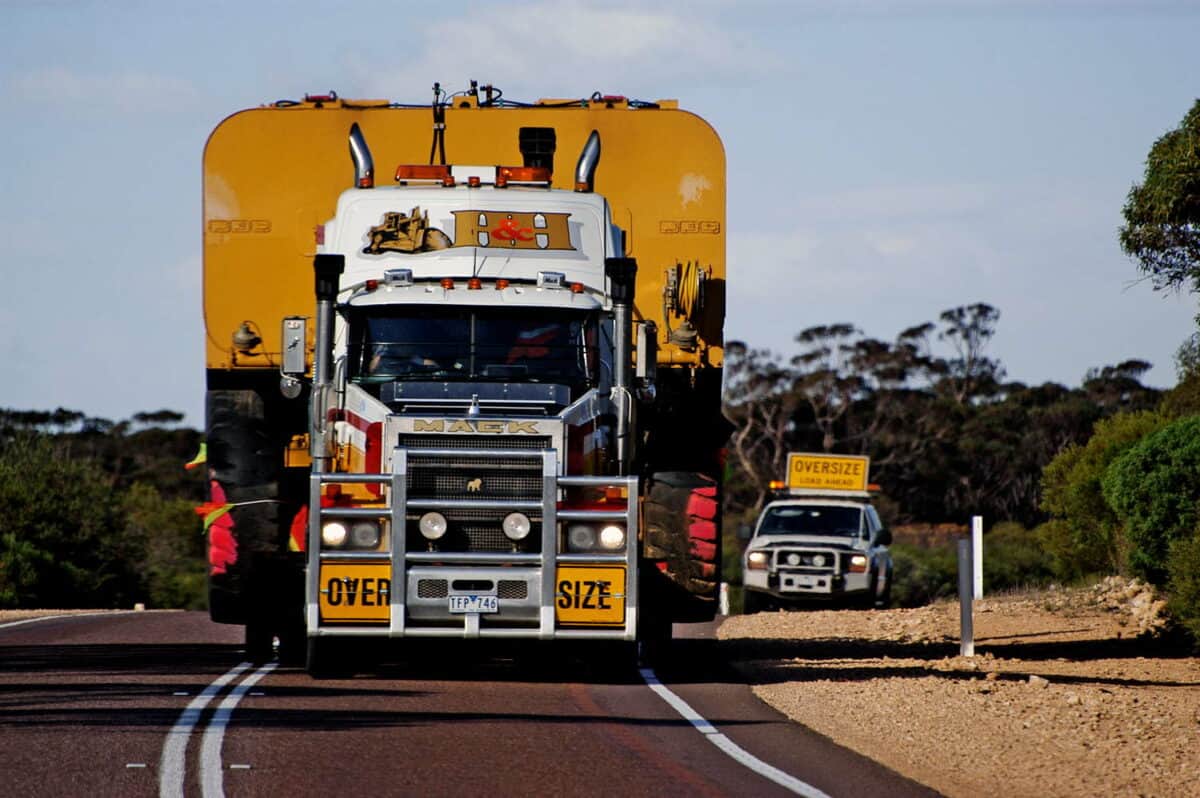
Australia’s heavy vehicle transport industry has been involved in arguing about workplace health and safety for decades. It is also one of those issues that have been largely dominated by anecdotal evidence, as shown by the recent Australian Senate Committee hearings into the “Importance of a viable, safe, sustainable and efficient road transport industry“, much to the detriment of the occupational health and safety (OHS) of the drivers, the public safety of other road users and the families of those who die in road incidents.
Category: research
Give Duty of Care and Workers’ Compensation a good shake
At the2020 Australia and New Zealand Society of Occupational Medicine (ANZSOM) annual scientific meeting, Dr David Goddard spoke about “Regulation: when expectations go unmet”. In a wide-ranging presentation Goddard spoke of Australia’s occupational health and safety (OHS) laws touching on a couple of contentious governance issues:
“…… Robens-inspired law introduced the employers’ general duty of care with responsibility for self-regulation. Indeed, self-regulation is essential. Without self-regulation, duty of care simply becomes a game of who to blame if things go wrong.”

Biden reverses Trump’s position on workplace safety
It is fair to say that the term of office for President Trump was not supportive of occupational health and safety (OHS). Former President Trump did not seem to see the need for OHS regulations and his attitude to the COVID-19 pandemic meant that it would never be considered as an occupational disease. Reports over the last week in the United States media, and the issuing of an Executive Order, indicate that new President Biden values workplace health and safety.
The New York Times (paywalled) is reporting that
“President Biden directed the Occupational Safety and Health Administration [OSHA] on Thursday to release new guidance to employers on protecting workers from Covid-19.
In one of 10 executive orders that he signed Thursday, the president asked the agency to step up enforcement of existing rules to help stop the spread of the coronavirus in the workplace and to explore issuing a new rule requiring employers to take additional precautions.”
Lindstrom, Common Sense and OHS
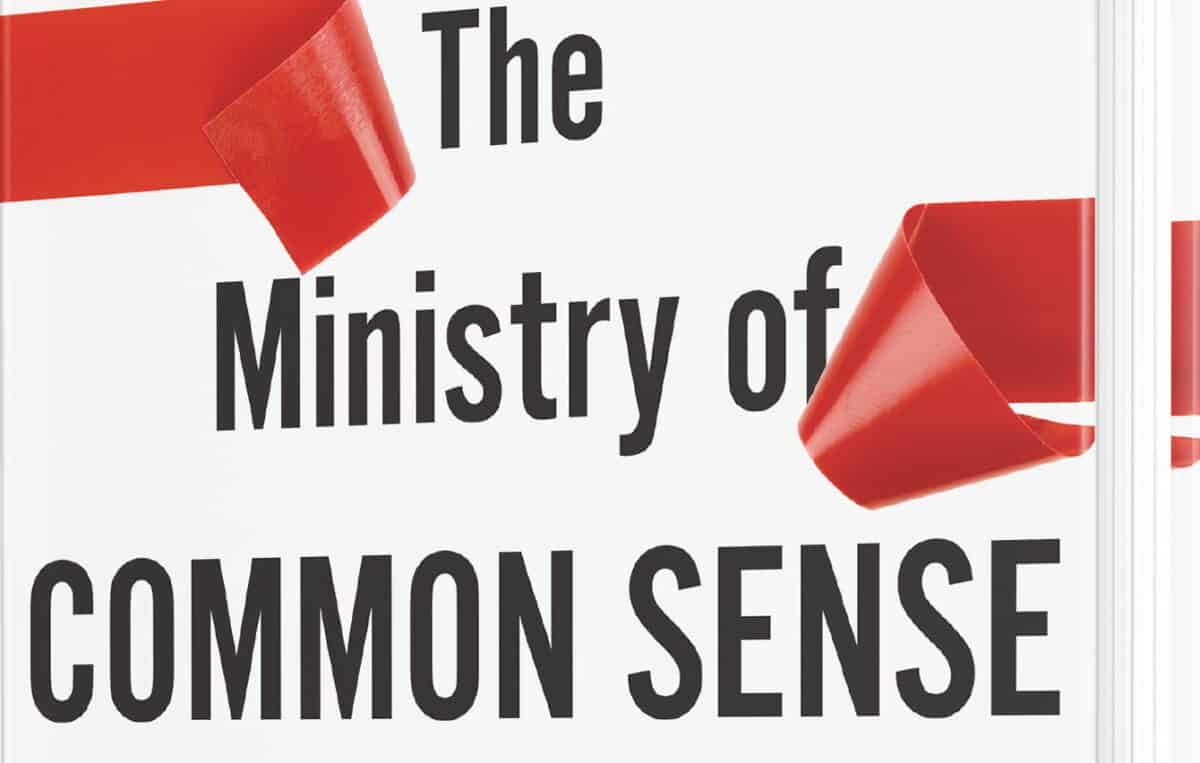
I found Martin Lindstrom’s latest book, The Ministry of Common Sense, very funny, then anger replaced funny and I had to put down the book and come back to it later. The book is excellent but all the examples of corporate nonsense that Lindstrom provides can be overwhelming. It also contains dozens of examples that are very close to my own experience and, in many cases, nonsense that I have created or supported when advising clients about occupational health and safety (OHS). SafetyAtWorkBlog asked Lindstrom about how Common Sense fits with OHS.
Interesting? Yeah. Useful? Nah.
The last six months have seen a spate of marketing surveys about the impact of COVID19 on workplaces as well as the secondary consequences, such as mental health. On 18 January 2021, The Australian Financial Review (AFR) published an article based on one of these types of surveys conducted by the “work management platform Asana” which claimed:
“Almost three-quarters of Australians suffered burnout last year and the average office worker’s overtime nearly doubled from 236 hours in 2019 to 436 hours, a global study of more than 13,000 office workers reveals.”
This is inaccurate.
Culture, greed and safety heckles
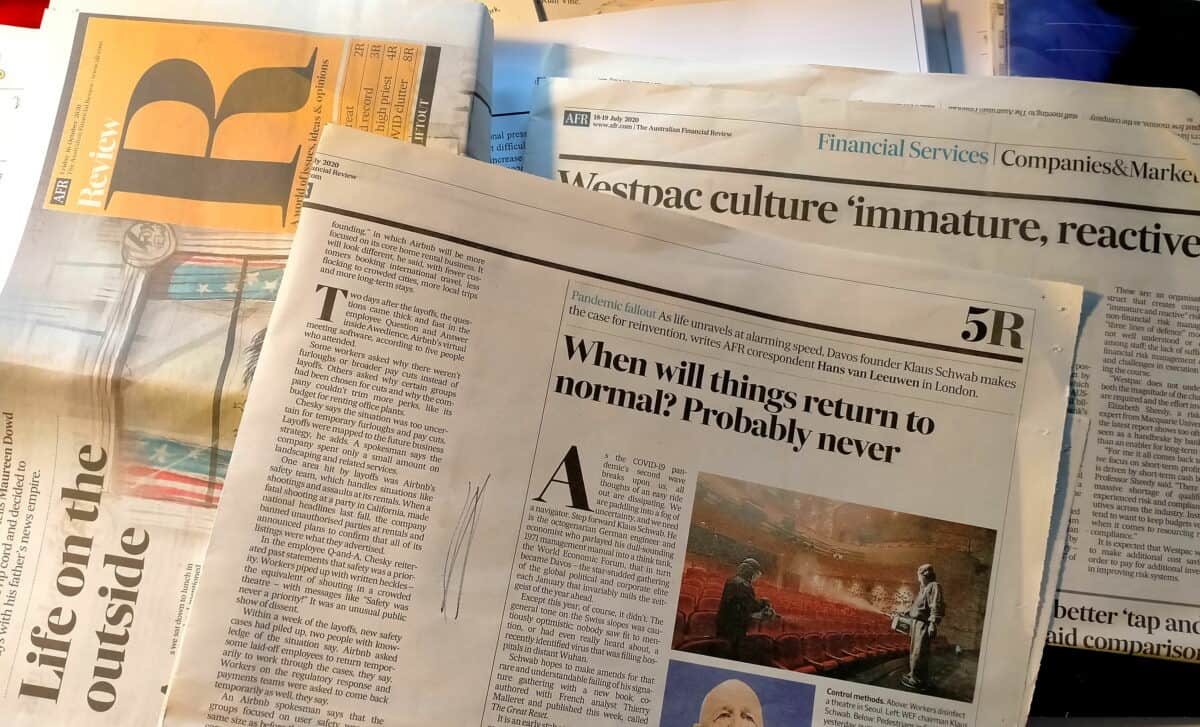
More business “gems” from the Australian Financial Review (AFR).
The potential for corporate change from Australia’s Royal Commission into Misconduct in the Banking, Superannuation and Financial Services Industry is fading fast. Back in July 2020, the Australian Financial Review (AFR) reported on an investigation by the Australian Prudential Regulation Authority (APRA) that found, according to the AFR’s headline, that Westpac bank’s culture was immature and reactive.
Safety culture, or an organisational culture that integrates safety, has been a running theme in Australian occupational health and safety (OHS) circles for several decades now but it has rarely gained traction. Partly this is due to the distraction presented by corporate wellbeing programs which address symptoms of ill-health and un-safety and provide a comfortable excuse for company executives who can then claim some action even if the results are dubious.
Building a resilient society
In the middle of a pandemic, it is easy to be locked into small issues, especially if they directly relate to you, such as lockdowns or sick relatives but it is important to be reminded of the broader social context. Professor Michael Quinlan recently wrote an editorial for the Annals of Work Exposures and Health, entitled “COVID-19, Health and Vulnerable Societies”.