The Interconnectedness Challenge

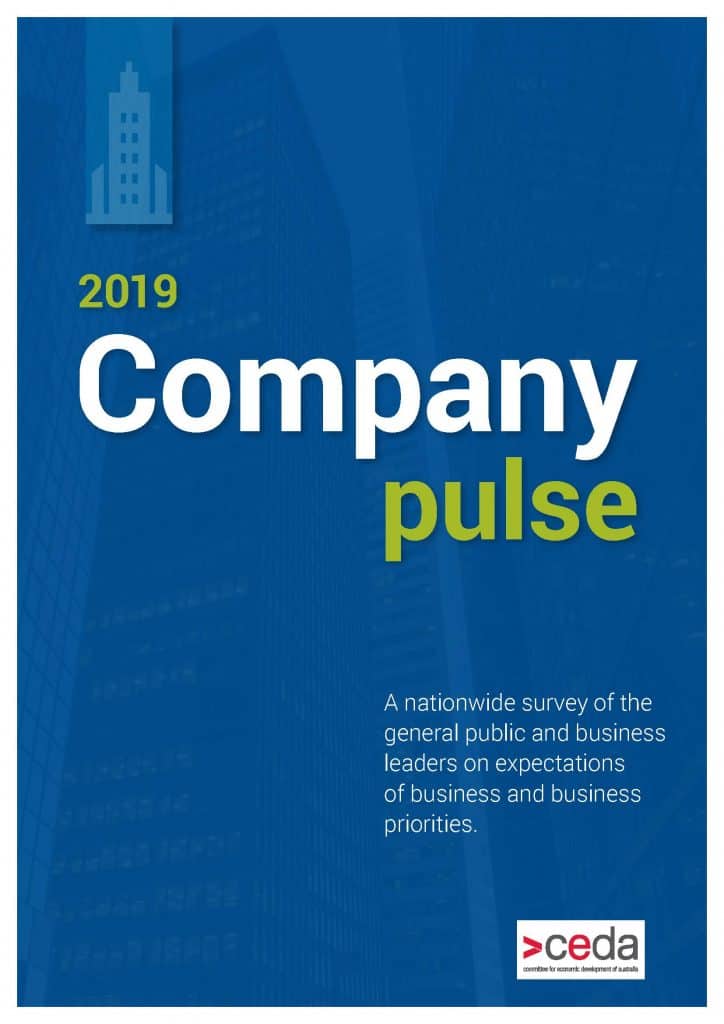
The solutions to most occupational health and safety (OHS) issues are multidisciplinary meaning that solutions are rarely simple and rarely come from a single source of information or knowledge. Recently I have been challenging my colleagues to spread their voices and experience beyond their own disciplines to illustrate how a worker’s health and safety is affected by a broad range of hazards and environments. I extend that challenge to all organisations including employer and industry groups like the Business Council of Australia (BCA) which has recently released a report on “The state of enterprise bargaining in Australia”.

Many organisations undertake research into different elements of work but rarely take an overall perspective, or one that analyses the interconnection of societal and occupational conditions and pressures. The latest BCA report is one example

Subscribe to SafetyAtWorkBlog to continue reading.
Subscribe Help
Already a member? Log in here

Interesting but not representative

The Australian Council of Trade Unions (ACTU) released the results of its latest occupational health and safety (OHS) survey. In past surveys respondents have been trade union members. This survey was opened to non-union members, but to what extent is unclear but this has not stopped the ACTU speaking of the respondents as workers rather than workers who are all union members.

This differentiation is important. In the 1990s when union membership was much larger, the argument that the survey results were representative of Australia’s workforce was stronger although still debatable. Representation is harder to claim now with union membership being well below 20% overall and below 10% in the private sector.

Subscribe to SafetyAtWorkBlog to continue reading.
Subscribe Help
Already a member? Log in here

Chinese Whispers on drugs and alcohol at work

Evidence-based policy making needs make sure that the evidence is accurate and valid. Evidence is also the foundation of the state of knowledge of the occupational health and safety (OHS) professional, action and regulations. To achieve and sustain these aims and requirements, evidence needs to be questioned in order to verify it.

On July 17 2019 WorkSafe Victoria distributed an email newsletter which stated that

“… 15% of workplace injuries worldwide are caused by alcohol and drug use”

and referencing Comcare as its source. But that source says something significantly different.

Subscribe to SafetyAtWorkBlog to continue reading.
Subscribe Help
Already a member? Log in here

Big potatoes, small potatoes, trust and transparency

The Australian Council of Superannuation Investors (ACSI) has released a research paper that discusses the reporting of workplace fatalities by major companies in their Environmental, Social and Governance (ESG) reports. There are many informational benefits in this report but perhaps the most important is that the report reinforces occupational health and safety (OHS) in ESG reports. The risk is that OHS is seen only in relation to the ESG criteria in Annual Reports.

Australia has experienced a gentle push for inclusion of OHS performance measurements in company and government department Annual Reports. SafetyAtWorkBlog has reported on this and some peer-reviewed research and recommendations over many years. The ACSI report progresses this but also illustrates the sluggish rate of change.

Subscribe to SafetyAtWorkBlog to continue reading.
Subscribe Help
Already a member? Log in here

What’s the fuss? Stay focused on safety

The debate about quad bike safety has gone global with the United States telling the World Trade Organisation that the imposition of operator protection devices (OPDs) on general quad bikes (those not used for recreation or sport) may be a trade barrier. To some this would appear silly, and the argument has little to do with worker safety, but this action by the US impedes progress on safety.

Recently the Victorian Coroner made findings into the quad bike-related death of 69-year-old farmer Gustaav Walta in September 2017. The finding is not yet publicly available but the story of Walta’s death sounds very familiar.

One evening around 6pm Walta advised his friend that he was putting the sheep away. His friend did not receive the regular phone call the next morning and drove to the property finding a quad bike that had rolled over and Walta’s body in an adjacent paddock. It was determined that Walta had died from severe chest injuries caused by the quad bike incident, that he had been ejected from the bike, the bike rolled over him and he then had tried walking to a neighbour’s property before he collapsed and died.

The chronology in the Findings is not very clear on Walta received his chest injuries but what is clear is that, like so many before, the quad bike had not been fitted with an OPD and that Walta had not been wearing a helmet.

Subscribe to SafetyAtWorkBlog to continue reading.
Subscribe Help
Already a member? Log in here

Long commute times need to be factored into OHS structures

The mainstream media reported on the release of new demographic statistics from the latest HILDA survey (Household, Income and Labour Dynamics in Australia). Most of the attention is on the increasing commuting times to and from work in the urban centres. Traffic is not usually an occupational health and safety (OHS) issue but traffic congestion reduces the effectiveness of our social recuperation and recovery structures and work/life balance initiatives.

Subscribe to SafetyAtWorkBlog to continue reading.
Subscribe Help
Already a member? Log in here

Getting the most out of your conference experience

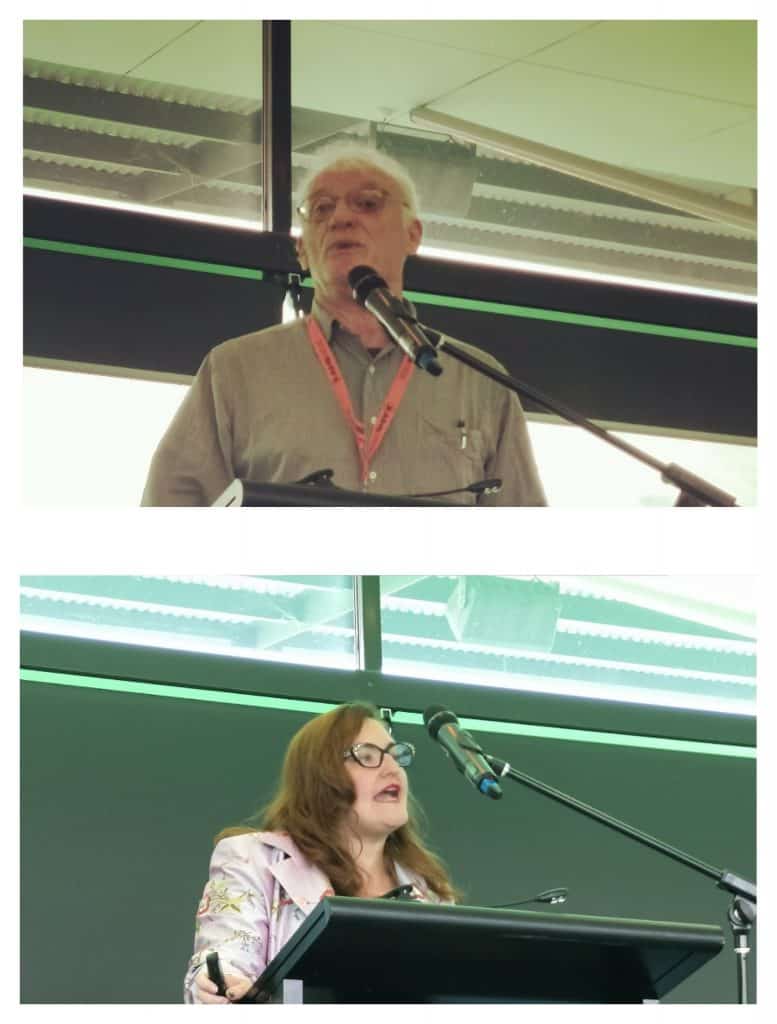
National Suicide Prevention Conference, Melbourne, July 2019

Single-day occupational health and safety (OHS) symposia, colloquia and seminars seem to be increasing in popularity in Australia. The latest that SafetyAtWorkBlog attended was for the Victorian Institute of Occupational Safety and Health but Tasmania had a couple last year and in the upcoming months is one in Perth, one in Tasmania and another in Sydney. The advantage with this format is that

  • the event is cheap (some are free)
  • it is easier to take one day away from work than two or three days
  • the costs of running them are minimised,
  • local delegates have minimal travel costs, and
  • although the pool of delegates is usually local, it can be more diverse.

These seminars occupy the middle ground between webinar and conferences and, as a regular at these events, SafetyAtWorkBlog has some tips for organisers and delegates that will increase the value of attendance.

Subscribe to SafetyAtWorkBlog to continue reading.
Subscribe Help
Already a member? Log in here
Concatenate Web Development
© Designed and developed by Concatenate Aust Pty Ltd