If all you have is a hammer, everything looks like a nail

The trade union movement has often been instrumental in affecting and sometimes creating government policy on occupational health and safety (OHS).  The latest generation of hazards – psychosocial – can be traced back to a survey late last century of workplace stress conducted by the Australian Council of Trade Unions (ACTU).  This week the ACTU released its survey into sexual harassment at work.

The current survey should not be seen as representative of any social group other than trade union members even though the survey was completed by 10,000 of them.  Also, this survey is far less likely to be as newsworthy as last century’s surveys as the agenda on workplace sexual harassment has already been established by reports from groups like Universities Australia and, especially, the current work by the Sexual Discrimination Commissioner and the Australian Human Rights Commission.  It is also likely to be covered, probably as a secondary issue, in the various mental health inquiries scheduled for 2019.

The ACTU survey provides additional information to our understanding of sexual harassment at work but certainly not the whole picture.

Subscribe to SafetyAtWorkBlog to continue reading.
Subscribe Help
Already a member? Log in here

The measuring of culture creates debate

Today, Siobhan McHale, Head of HR at Dulux posted a comment and video on LinkedIn about measuring cultural change.  She introduces her post with:

“Can culture be measured? In my view it can and should be measured – in the same way as any other business activity that’s important to your success.”

The responses have been speedy and this conversation is likely to continue for sometime as McHale is monitoring the comments, some of which dispute McHale’s position.

Subscribe to SafetyAtWorkBlog to continue reading.
Subscribe Help
Already a member? Log in here

Fels sets the scene for inquiries into workplace mental health

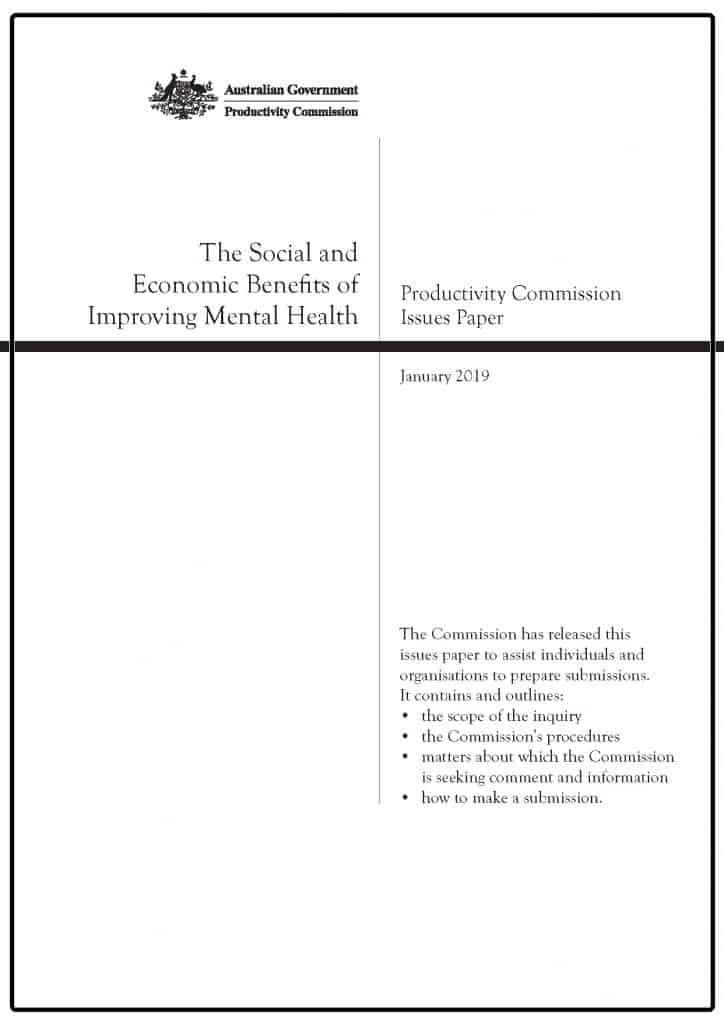
Earlier this week former chair of the Australian Government’s National Mental Health Commission, Allan Fels (pictured right) addressed a lunch hosted by the Committee for Economic Development of Australia.  The topicality of his presentation stemmed from two major inquiries into mental health – one by the Federal Government and undertaken by the Productivity Commission (PC), the other is a Royal Commission from the Victorian Government.  The breadth of the Terms of Reference (ToR) of the PC inquiry has generated a very broad level of interest across the social spectrum.  The Royal Commission ToR are yet to be released.

Fels acknowledged the role that workplaces have in addressing mental health

Subscribe to SafetyAtWorkBlog to continue reading.
Subscribe Help
Already a member? Log in here

Timeline for PC Mental Health Inquiry

One of the Commissioners of Australia’s Productivity Commission (PC), Julie Abramson, spoke briefly at a lunchtime seminar on Mental Health and the Economy, hosted by the Committee for Economic Development of Australia.  It is very early in the PC’s inquiry into the role of improving mental health but Abramson was able to provide some draft timelines.

Abramson told the audience that the Presiding Commissioner on this inquiry

Subscribe to SafetyAtWorkBlog to continue reading.
Subscribe Help
Already a member? Log in here

The Challenges of Future Workplaces – Part 1

This article is part one of an edited version of a keynote presentation I made at the a special WHS Inspectors Forum organised by WorkSafe Tasmania.  The audience comprised inspectors from around Australia and New Zealand.  I was asked to be provocative and challenging so posed some questions to the audience about how occupational health and safety (OHS) is managed, regulated and inspected.

The audio of the presentation is available at SoundCloud and Podbean and below.

 “The purpose of this session is to provide insight into the future challenges for work health and safety regulators due to changes in the nature of work, the workforce, supply chains, and the social and political environments, and encourage inspectors to consider how the way they do their work may need to change to meet these challenges.”

Be Critical

I encourage you all to analyse what you say, what you are told, what you do and how you do it.  Too often we accept information and our situations uncritically and I want you to question everything, including what you read in this article.

Subscribe to SafetyAtWorkBlog to continue reading.
Subscribe Help
Already a member? Log in here

Productivity Commission sets stage for inquiry into mental health

The Australian Government has released the terms of reference into its Productivity Commission inquiry into mental health.  The inquiry has broad aims that clearly include occupational health and safety (OHS) and may set some evidence challenges for some of those in the workplace wellbeing sector:

“It will look at how governments across Australia, employers, professional and community groups in healthcare, education, employment, social services, housing and justice can contribute to improving mental health for people of all ages and cultural backgrounds.” (emphasis added)

The Treasurer Josh Frydenberg MP has written that

“the Commission should consider the role of mental health in supporting economic participation, enhancing productivity and economic growth.”

Subscribe to SafetyAtWorkBlog to continue reading.
Subscribe Help
Already a member? Log in here

One of the most useful books about OHS law

It is difficult to make a book about occupational health and safety (OHS) law interesting.  Some try with creative design but the most successful is when laws are interpreted into real world circumstances.  Thankfully Breen Creighton and Peter Rozen have written the latter in the 4th edition of Health and Safety Law in Victoria. Independent Australian publishers, Federation Press, recognise the significance of this edition:

“This is an entirely re-written and greatly expanded edition of this standard text on occupational health and safety law in Victoria….[and]

…Critically, the new edition locates the 2004 Victorian Act firmly in the context of the harmonised work health and safety regime…”

This discussion of context lifts this book from an analysis of one State’s OHS laws to an analysis of harmonisation, which may be offer a useful counterpoint to

Subscribe to SafetyAtWorkBlog to continue reading.
Subscribe Help
Already a member? Log in here
Concatenate Web Development
© Designed and developed by Concatenate Aust Pty Ltd