Advertorial over-simplifies workplace health and safety

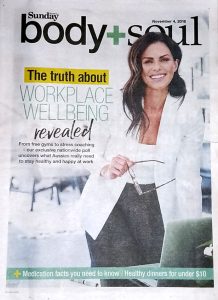
On Sunday November 4 2018, The Herald-Sun newspaper’s regular Body & Soul supplement devoted several pages to an exclusive article about workplace wellbeing ($). It is clearly an advertorial as the supplement has several full page advertisement from Medibank Private and the article includes a text box labelling it as the

“b+s 2018 Worklife Survey in partnership with Medibank”.

The article and survey is less than helpful from an occupational health and safety (OHS) perspective as there is no mention of organisational control measures or even the recent campaign in National Safe Work Month by WorkSafe Victoria on wellness!
Subscribe to SafetyAtWorkBlog to continue reading.
Subscribe Help
Already a member? Log in here

A new statistical perspective on work-related injuries and illnesses

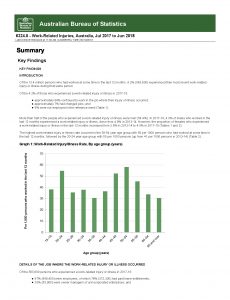
In late October 2018, the Australian Bureau of Statistics (ABS) released a summary of the latest work-related injury and illness data, although it was easy to miss as few, if anyone, reported on it. On first view, that mental health is barely mentioned in the Summary is surprising and the workers compensation data raises interesting policy questions.
Subscribe to SafetyAtWorkBlog to continue reading.
Subscribe Help
Already a member? Log in here

Misunderstanding sleep – Part 2

Most non-transport industries do not look for the lack of sleep or fatigue as a factor in their investigations.  Unless a formal investigation is undertaken, fatigue is rarely mentioned and, if it is, it is categorised as a “contributory factor”, which often means it is given such a low priority that nothing will be done about it.  This is partly a legacy of silo thinking that sleep is a non-work personal activity, which it is, but is still one that can affect work and all the relationships and decisions made at work.  But it is also partly due to the enormous disruption that could result if the lack of sleep and fatigue were taken seriously and effective control measures were introduced.

The most effective control for fatigue may be human-friendly shifts and “reasonable” working hours but that might not fit the shift rosters which are required to satisfy clients.  We know that night shift has higher health and physical risks than day shift so logically, get rid of night shift ….

Subscribe to SafetyAtWorkBlog to continue reading.
Subscribe Help
Already a member? Log in here

Liability insurance products get some serious criticism

In 2017 the Queensland Government was advised to prohibit business insurance products that cover the costs associated with financial penalties that may occur after a successful prosecution of a breach of work health and safety (WHS) laws. This recommendation (page 47) was one of only two that were not accepted by the government and which were “referred to the WHS Board” for further consideration (footnote page 3).

On 17 October 2018 the Senate Education and Employment Committee’s report into industrial deaths similarly recommended the Commonwealth, State and Territory governments:

“amend the model WHS laws to make it unlawful to insure against a fine, investigation costs or defence costs where they apply to an alleged breach of WHS legislation;” (Recommendation 21, page xi)

Given the

Subscribe to SafetyAtWorkBlog to continue reading.
Subscribe Help
Already a member? Log in here

Bad bosses

Benjamin ArtzAmanda H. Goodall  and Andrew J. Oswald determined that

“There are no published papers — to our knowledge — that assess in an internationally consistent way the rarity or commonness of ‘bad bosses’.”

So they undertook there own research, published under the title “

Subscribe to SafetyAtWorkBlog to continue reading.
Subscribe Help
Already a member? Log in here

The importance of evidence in addressing workplace mental health issues

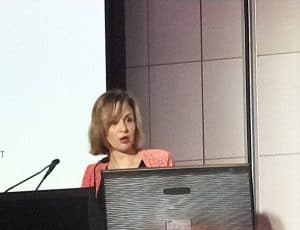
At the recent Scientific Meeting of the Australia and New Zealand Society of Occupational Medicine (ANZSOM), Allison Milner stepped in for an ill Tony La Montagne and added value to his intended presentation on workplace mental health. This meeting is different from other conferences in one particular way, in relies on evidence and not marketing for its presentations.  This difference made Milner’s presentation very powerful.

Milner set the scene with a broad picture of mental health:

“1 in 5 Australians have a mental illness, which equivalates to about 1.5 million.  And over 3000 people lose their life to suicide every year, and the vast majority of these people being men.  But suicide affects far more people than those people who attempt or sadly lose their life.  It affects their work colleagues, it affects people in our community and it affects our family.”

Continue reading “The importance of evidence in addressing workplace mental health issues”

ACCI on silicosis

The business sector of Australia has been remarkably quiet on the recent media attention given to hazard of silicosis in, particularly, the synthetic stone commonly used as kitchen benchtops.  However the Australian Chamber of Commerce and Industry (ACCI) did make a media statement.

It largely emphasised its role as a member of Safe Work Australia and the action taken on silicosis matters through that mechanism.  However membership of a tripartite consultative mechanism does not mean that that is the only pathway for change.  SafetyAtWorkBlog put some questions to ACCI about silicosis and its Associate Director, Work Health & Safety and Workers’ Compensation Policy, Jennifer Low, responded:

SAWB: The media statement says that ACCI will continue to be active through its representation on Safe Work Australia.  Are there any specific dust-related initiatives that ACCI is recommending to its members?  Perhaps in relation to supply chain safety on high silica-content products? Continue reading “ACCI on silicosis”

Concatenate Web Development
© Designed and developed by Concatenate Aust Pty Ltd