
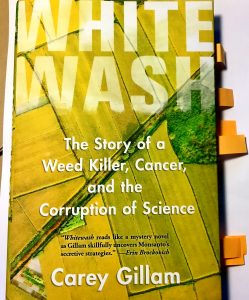
 Occupational health and safety (OHS) related decisions are made on the state of knowledge about hazards and it is up to OHS people to make sure the state of knowledge is at its best so that the best decisions can be made. But what do you do if the state of knowledge on a hazard seems to be made purposely uncertain and that uncertainty is leading to the status quo, which also happens to provide a huge income for the owner of the product creating the hazard.
This seems to be a situation at the moment in Australia in relation to the use of the weedkiller, glyphosate, marketed heavily by the global chemical company, Monsanto. The alleged corruption of data on which OHS people and workers base their safety decisions was perhaps one of the most disturbing elements of the recent ABC Four Corners program on the chemical (
 Many companies have bloated workplace procedures. Many of these seem to involve workplace health and safety. Some people blame this on a bureaucracy designed in the olden times by someone, that somehow still exists and is maintained by someone or some process that no one sees or knows. Some prominent Australian researchers have looked into this issue and have written about “safety clutter”* which they say is:
 Some organisations struggle to understand the prevention of harm. In September 2018 the Chartered Institute of Personnel and Development (CIPD) released its “
 Many have been claiming that the era of neoliberal economics and the associated politics is over or, at least, coughing up blood. However, occupational health and safety (OHS) is rarely discussed in terms of the neoliberal impacts, and vice versa, yet many of the business frustrations with red tape, regulatory enforcement strategies, reporting mechanisms and requirements and others have changed how OHS has been managed and interpreted.