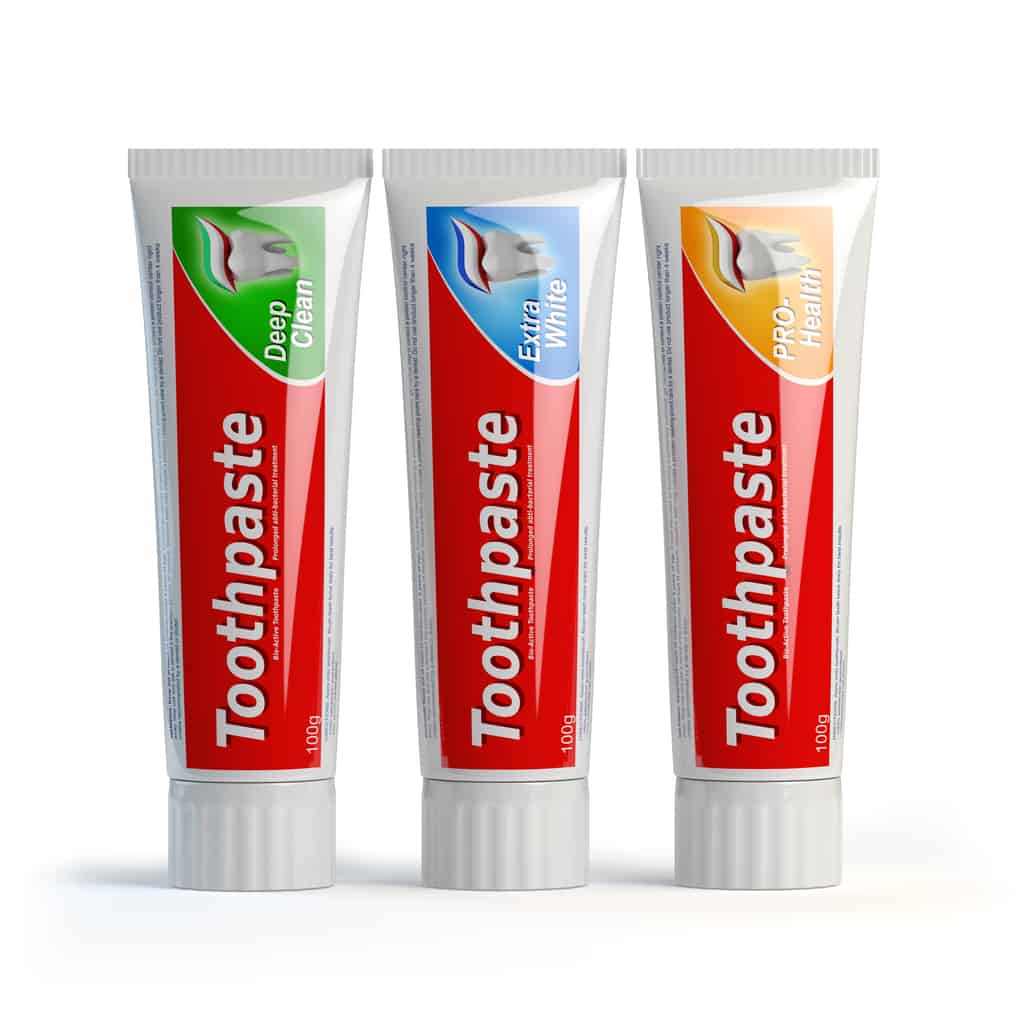
Now there is too much mental health information, and it’s like toothpaste

Australia is experiencing a boom in occupational health and safety (OHS) information about work-related psychological harm, including sexual harassment at work. This level of information is long overdue, but a consequence of this “boom” is that employers can be very confused about which information to use and which source they should trust or even what relates to their specific circumstances, especially after years of denying there is a problem.

Putting on my consultant hat, I would advise any State-based organisation to comply with the OHS guidances issued by that State’s OHS regulator. If a national company, look towards the guidance of Comcare or Safe Work Australia for the national perspective. The challenge is greater for companies that operate in multiple States, but these have been rumoured to be less than 10% of Australian businesses. If multi-State, they should be big enough to have the resources for OHS compliance.

However, some State-based mental initiatives have evolved into a national platform.

Subscribe to SafetyAtWorkBlog to continue reading.
Subscribe Help
Already a member? Log in here

Workplace wellbeing, mental health and cake

Recently Australians Jason van Schie and Joelle Mitchell released a podcast series called Psych Health and Safety focussing on psychological health and health promotion at work. Recently Carlo Caponecchia spoke on the podcast about mental health at work and the soon-to-be-released International Standard 45003 for managing psychosocial risks at work, a “child” of ISO45001 the occupational health and safety (OHS) management standard.

Caponecchia was asked to outline the statistics for workplace mental health in Australia. He stated that the official figures are that 9% of workers compensation claims related to mental health at work and that claims for this type of injury have increased substantially since the year 2000. However, he also added a caveat to those figures, a caveat that should apply to all official OHS statistics:

Subscribe to SafetyAtWorkBlog to continue reading.
Subscribe Help
Already a member? Log in here

Norms and culture continue to impede change in Australia’s transport sector

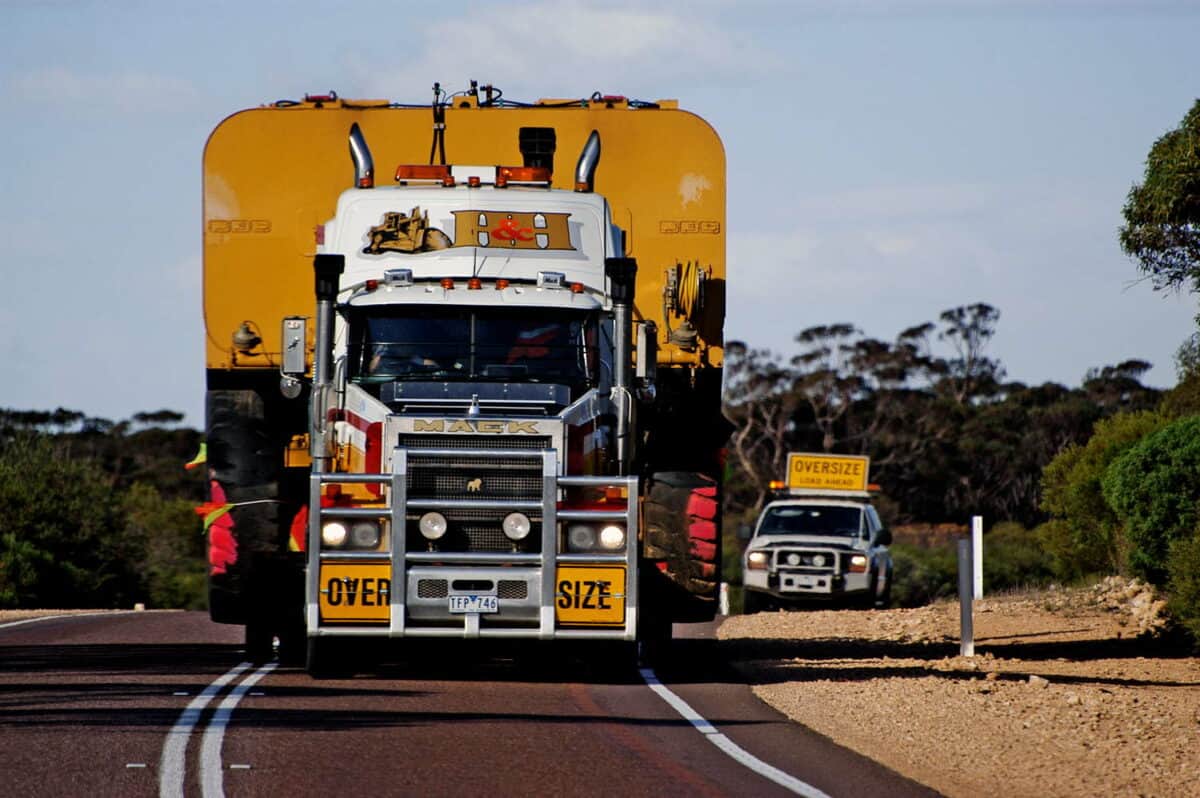
Australia’s heavy vehicle transport industry has been involved in arguing about workplace health and safety for decades. It is also one of those issues that have been largely dominated by anecdotal evidence, as shown by the recent Australian Senate Committee hearings into the “Importance of a viable, safe, sustainable and efficient road transport industry“, much to the detriment of the occupational health and safety (OHS) of the drivers, the public safety of other road users and the families of those who die in road incidents.

Subscribe to SafetyAtWorkBlog to continue reading.
Subscribe Help
Already a member? Log in here

Business continuity planning by another name

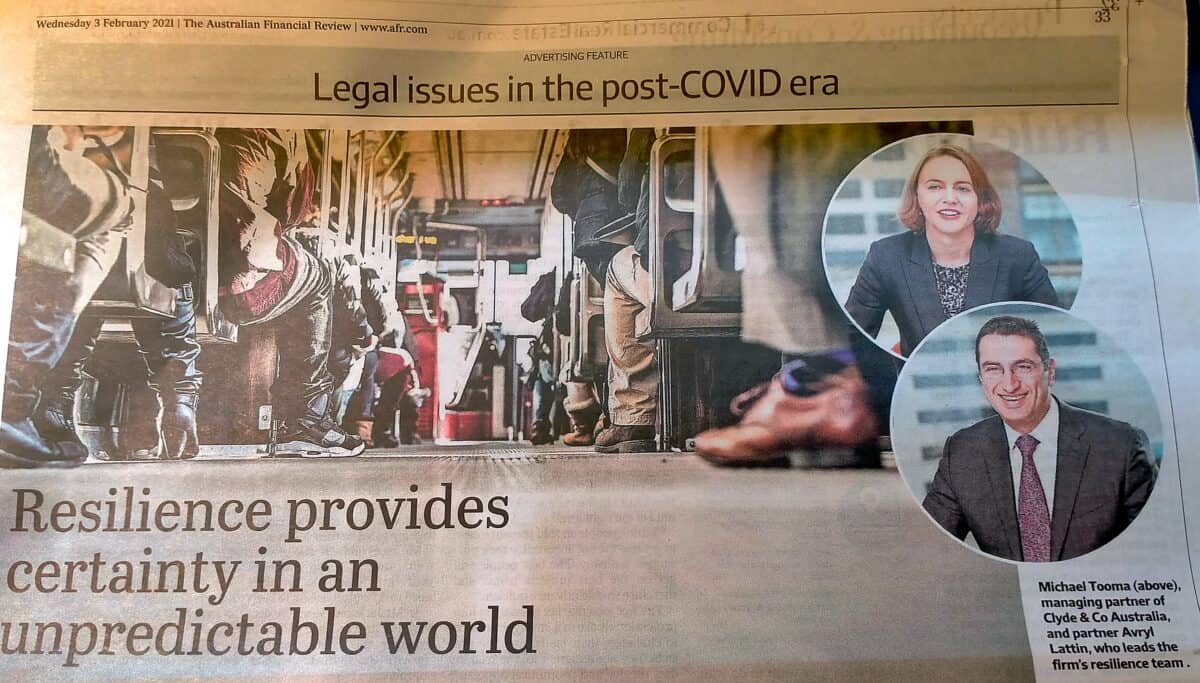
Occupational health and safety (OHS) gets a mention in a full-page advertorial in the Australian Financial Review (AFR) (February 3 2021, page 33) revolving around the legal and business services of Clyde & Co. The advertorial contains a good example of the contemporary business jargon such as “organisational resilience” – a concept that has come to the fore during the COVID-19 pandemic.

“Organisational resilience” has several definitions but here is one used by the British Standards Institution:

“….the ability of an organization to anticipate, prepare for, respond and adapt to incremental change and sudden disruptions in order to survive and prosper.”

This has very strong similarities to the much longer-established concepts of “business continuity” or sustainability within which OHS has dabbled for decades.

Subscribe to SafetyAtWorkBlog to continue reading.
Subscribe Help
Already a member? Log in here

Odd sexual harassment guidance

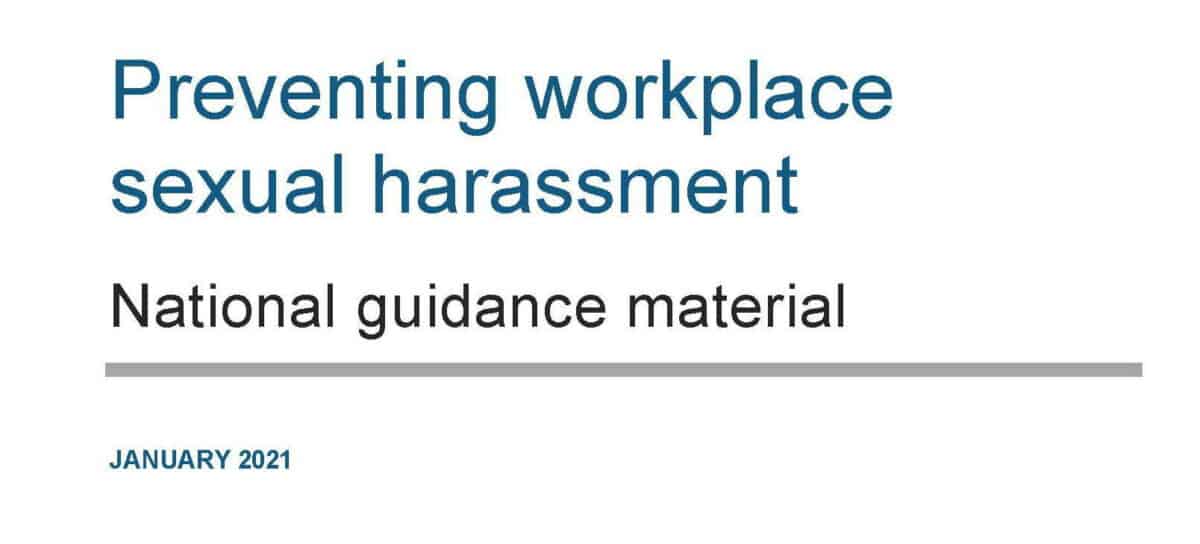
Safe Work Australia has released an important national occupational health and safety (OHS) guidance called “Preventing workplace sexual harassment.” The advice included is very good, but the presentation is so plain and vanilla as to be unattractive – unattractive in that there is little to encourage anyone from reading what is very important information. No images, no flowcharts, no graphics, no infographics but perhaps most importantly – no case studies.

This is not to suggest that SWA guidance needs to look like a “Dummy’s Guide”, but readability is more than grammar, understanding comes from more than just information.

Subscribe to SafetyAtWorkBlog to continue reading.
Subscribe Help
Already a member? Log in here

Ask not what WorkSafe can do for you, but what you can do to improve safety

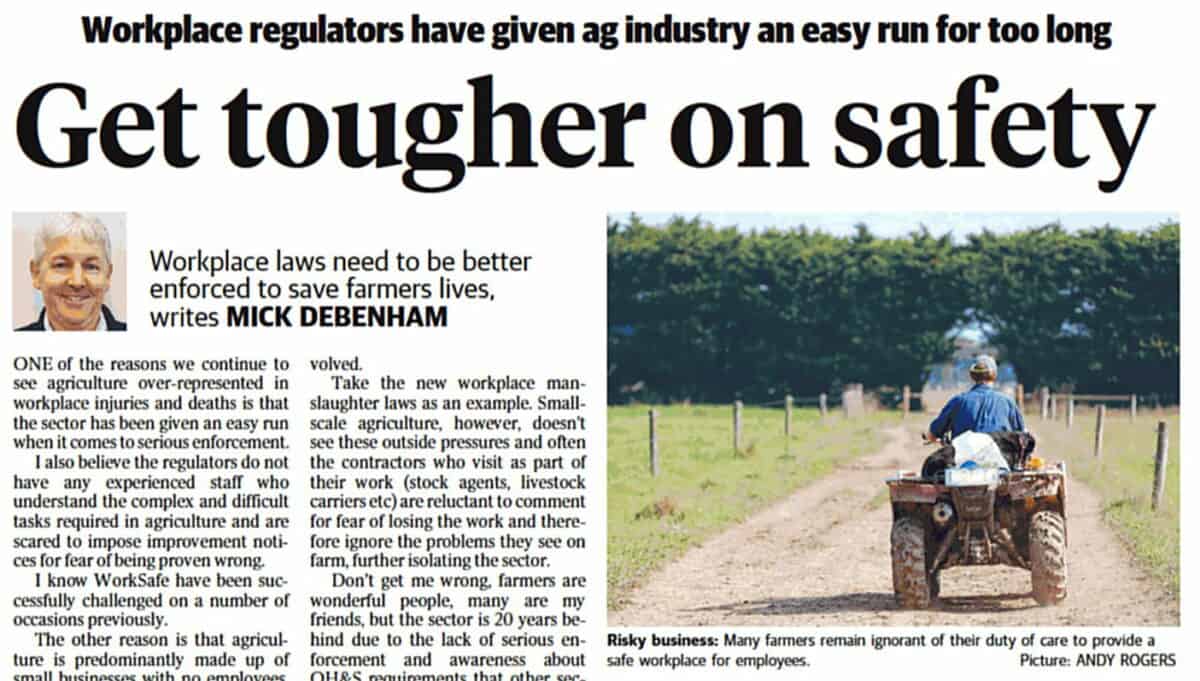
One of the most difficult industries in which to achieve occupational health and safety (OHS) improvements is farming, especially in areas where farming continues to be done by small family units. The safety culture of farming is unique as the workplace is embedded in community and rural culture. Some people believe that OHS regulators have given the agricultural industry an easy run for too long, as stated by Mick Debenham in a recent opinion piece in The Weekly Times (paywalled), but farmers should perhaps ask themselves why people continue to die on their farms and what they can do to change this.

Subscribe to SafetyAtWorkBlog to continue reading.
Subscribe Help
Already a member? Log in here
Concatenate Web Development
© Designed and developed by Concatenate Aust Pty Ltd